
Single Phase UPS vs.Three Phase UPS: Which to Choose

Mon, 07/28/2025

Coming to today’s world, where technology is advancing , having a stable power supply, Whether it be for personal or corporate use, is extremely critical. If a business is looking to invest in any form of Uninterrupted Power Supply (UPS) System, understanding the key differences between Single Phase UPS and Three Phase UPS is critical. This article explains the these systems so you understand and can make an educated decision based on your needs.

Let Us Further Discuss Single Phase UPS

For small businesses and home users, Single Phase UPS comes extremely handy. It is compatible with smooth smaller applications. A single phase UPS is capable of providing one power stage, meaning 120V or 240V can be issued. One benefit of Single Phase UPS is the less complicated structure along with ease of installation which further drives down expenses. Additionally, these types of UPS units generate less noise which greatly makes them preferred in quiet settings like hospitals.

However, Single Phase UPS System have a low to moderate level of power capacity and are limited in scope. These systems are most effective when providing backup power to low-level devices such as computers, routers, and small-sized servers. If a Single Phase UPS is used, devices that consume more power over time or have larger needs will be poorly served in the long term.

Moving on to Three Phase UPS

On the contrary, Three Phase UPS systems are more appropriate for larger applications since they can support additional power requirements with margin. These systems often support 208V or 400V which makes them suitable for industrial and large sized data center workplaces. One of the most remarkable advantages of a Three Phase UPS is better performance in overload scenarios and improvements in efficiency due to better power distribution.

This type of UPS can have more advanced models which are easily added to lower capacity units, along with greater scalability, allowing expansion without replacement costs on the company's UPS systems. However, they do offer a higher price and increased maintenance.

Key Considerations for Choosing Between a Single Phase or a Three Phase UPS

Like any other critical decision, choosing between the Single Phase and the Three Phase UPS requires consideration of a number of factors such as:

  1. Power Requirements: Consider all the equipment you want to support and their total wattage consumption. If the demand cannot be met with a Single Phase UPS, then a Three Phase UPS will surely be needed.

  2. Budget: This may cover the purchase, installation, and even the maintenance costs. Generally, Single Phase UPS Systems are cheaper, however, for users planning on expansion, a more appealing option would be a Three Phase.

  3. Space and Installation: Assess real estate that can be allocated for the system before installation. Other considerable structures that support the system can drain additional real estate.

  4. Future Growth: Assess if your organization will grow over the years. If considerable growth is anticipated, then early investment of a Three Phase UPS could be a smart decision.

By Industry

Cloud computing, the Internet of Things (IoT), and other smart technologies are advancing, increasing the need for complex power protection systems. There are also growing expectations in regards to the efficiency of battery technology. This impacts the demand for Single Phase and Three Phase UPS Systems, making them more reliable, cost-effective, and highly demanded. Companies are preferring as their priority investment in Uninterrupted Power Supply (UPS) Systems that help in power backup, energy saving, and sustainability improvement.

To summarize, it depends on your requirements of power, budget, and the growth plans you have for your ventures when deciding between Single Phase UPS Systems and Three Phase UPS Systems. So, they can make better decisions considering the discussed pros and cons and sustain the required power flow to the critical devices.
Recommended for you
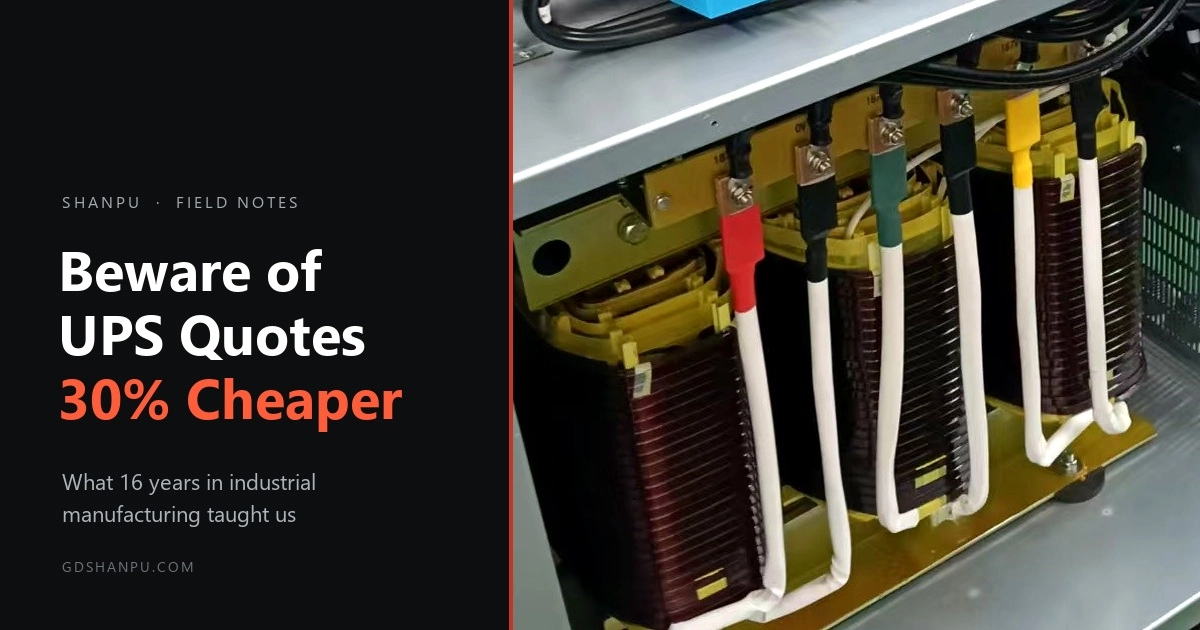
Interior of an industrial line-frequency UPS cabinet: four iron-core transformers with porcelain insulators and bolted copper terminations - ShanPu

Beware of UPS Quotes 30% Cheaper: What 16 Years in Industrial Manufacturing Taught Us
Beware of UPS Quotes 30% Cheaper: What 16 Years in Industrial Manufacturing Taught Us
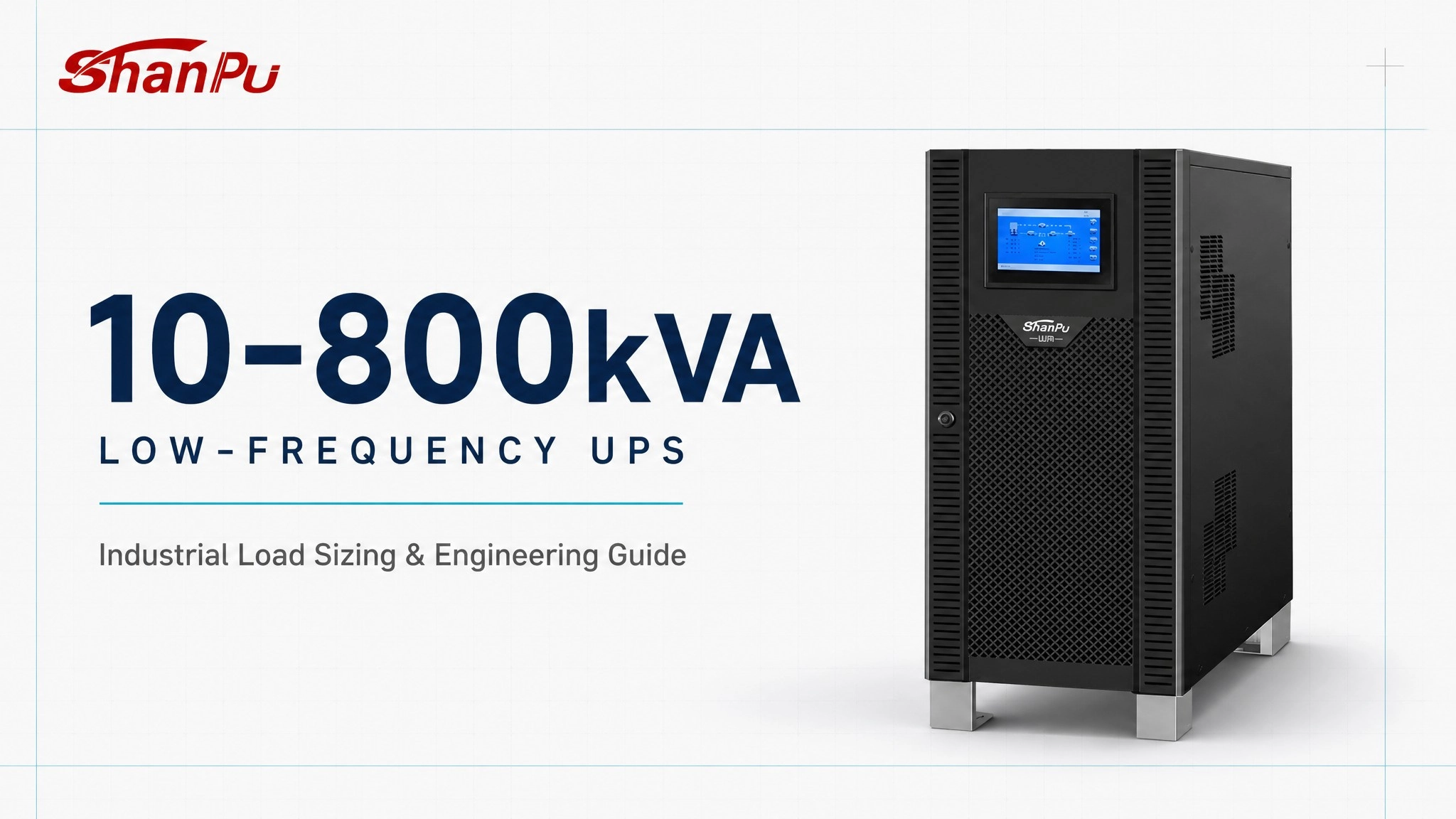
ShanPu 10-800kVA low-frequency industrial online UPS cabinet with touch display for plant load sizing and power protection - ShanPu

Low-Frequency UPS Engineering Guide: Sizing 10–800kVA Systems for Industrial Plant Loads
Low-Frequency UPS Engineering Guide: Sizing 10–800kVA Systems for Industrial Plant Loads
How a 1200kVA Modular UPS ProjectWas Rescued by Bus Distribution Box Selection - ShanPu

Voltage Sag Case Study: How a 1200kVA Modular UPS Project Was Rescued by Bus Distribution Box Selection
Voltage Sag Case Study: How a 1200kVA Modular UPS Project Was Rescued by Bus Distribution Box Selection
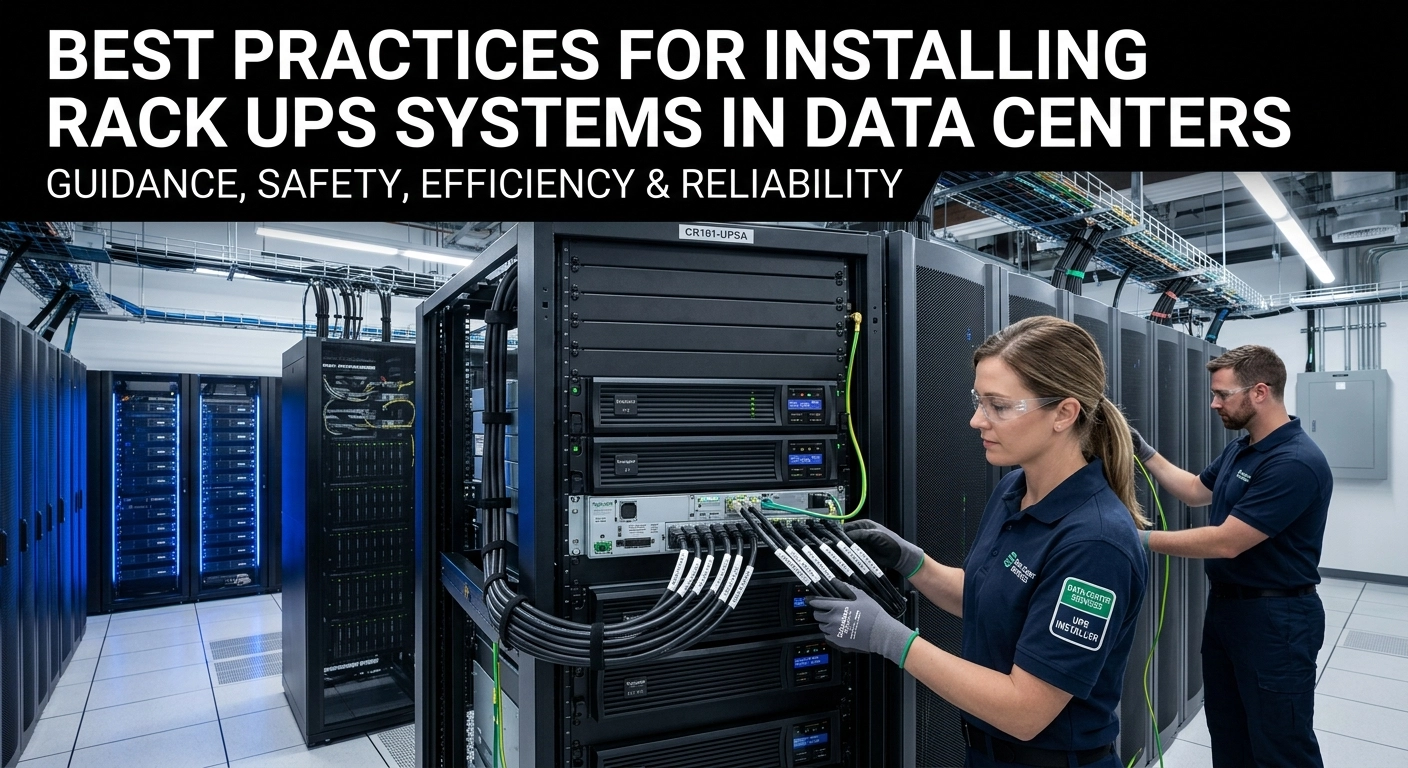
Technicians installing rack UPS systems in a data center. - ShanPu

Best Practices for Installing Rack UPS Systems in Data Centers

Best Practices for Installing Rack UPS Systems in Data Centers

Product Categories
You may also like
ShanPu 3C33 series 10-800kVA low frequency industrial online UPS for manufacturing plants - ShanPu
Three-Phase Low-Frequency Industrial Online UPS 10-800kVA
  1. ShanPu 3C33 10-800kVA three-phase industrial UPS is a low-frequency UPS with transformer-based online double conversion for factories and plants. Equipment, automation and control loads stay online through grid disturbance and outage with 0ms transfer.

  2. Rated 10-800kVA with three-phase input and output at 380/400/415Vac, the 3C33 scales from single machines to full production lines. A low-frequency isolation transformer blocks surge, harmonic and common-mode disturbance before reaching PLCs and drives; microprocessor control keeps output within ±1% across a 304-456Vac input window. External VRLA banks size backup time to the process.
Three-Phase Low-Frequency Industrial Online UPS 10-800kVA
ShanPu all-in-one hybrid inverter for home solar and battery storage - ShanPu
12KW ALL-IN-ONE HYBRID INVERTER

ShanPu SP-12KW/48V is an all-in-one hybrid inverter that integrates dual MPPT solar charging, 48V battery management and dual-output DC-to-AC inversion in one unit for large residential, commercial and light industrial storage systems. Two independent MPPT channels harvest power from separate PV arrays and convert it into regulated 48V DC, charging the battery bank at up to 160A while feeding the inverter stage; the controller automatically selects between solar, utility and battery based on the configured priority mode (SUB / SBU / SUF).The dual AC output design separates critical loads from non-critical circuits, while the 160A MPPT charging current and up to 160A AC charging rapidly recharge 48V battery banks after prolonged cloudy periods or heavy discharge. The 48V architecture reduces line losses and supports higher power delivery, and the Pro model adds parallel expansion plus optional WiFi monitoring for larger projects.

12KW ALL-IN-ONE HYBRID INVERTER
ShanPu all-in-one hybrid inverter for home solar and battery storage - ShanPu
3.6KW ALL-IN-ONE HYBRID INVERTER

ShanPu SP-3.6KW/24V is an all-in-one hybrid inverter that combines a 100A MPPT solar charger, 24V battery management and DC-to-AC inversion in one compact unit. Built for residential and small commercial systems, it delivers reliable power management with efficient energy conversion and straightforward installation.The inverter supports up to 5000W PV array power with a 60-500Vdc MPPT tracking range and up to 96% peak conversion efficiency from PV to AC. It can also run directly from solar PV or utility without a battery connected, and RS485 communication with automatic lithium battery activation makes LiFePO4 integration straightforward.

3.6KW ALL-IN-ONE HYBRID INVERTER
ShanPu all-in-one hybrid inverter for home solar and battery storage - ShanPu
6KW ALL-IN-ONE HYBRID INVERTER

ShanPu SP-6.2KW/48V is an all-in-one hybrid inverter that integrates MPPT solar charging, 48V battery management and DC-to-AC inversion into a single unit for medium residential and small commercial storage systems. Solar PV power is processed by the MPPT charger and converted into regulated 48V DC, which simultaneously charges the battery bank and supplies the inverter stage, while the built-in controller automatically selects the energy source - solar, utility or battery - based on the configured operating mode.

6KW ALL-IN-ONE HYBRID INVERTER

Get in touch with us

If you have any comments or good suggestions, please leave us a message; later our professional staff will contact you as soon as possible.

First Name must not exceed 100 characters.
Last Name must not exceed 100 characters.
Invalid email format or length exceeds 100 characters. Please re-enter.
Please enter a valid phone number!
Company Name must not exceed 150 characters.
Message must not exceed 3000 characters.
Contact customer service
×

Talk to Our Experts Today

Have any questions or need help?

Chat with our experts online now for instant answers.

First Name must not exceed 100 characters.
Last Name must not exceed 100 characters.
Invalid email format or length exceeds 100 characters. Please re-enter.
Please enter a valid phone number!
Company Name must not exceed 150 characters.
Message must not exceed 3000 characters.
×

Customized Solutions

Customize your UPS system according to your needs.

We will provide you with the most suitable solution to meet your specific requirements.

First Name must not exceed 100 characters.
Last Name must not exceed 100 characters.
Invalid email format or length exceeds 100 characters. Please re-enter.
Please enter a valid phone number!
Company Name must not exceed 150 characters.
Message must not exceed 3000 characters.
×

Submit a Request

Fill out your requirements information, and we will provide you with personalized services and solutions as soon as possible.

First Name must not exceed 100 characters.
Last Name must not exceed 100 characters.
Invalid email format or length exceeds 100 characters. Please re-enter.
Please enter a valid phone number!
Company Name must not exceed 150 characters.
Message must not exceed 3000 characters.
×

Get a Free Quote

Get a quote for a UPS power system that suits your needs.

Provide detailed information, and let us tailor the best solution for you.

First Name must not exceed 100 characters.
Last Name must not exceed 100 characters.
Invalid email format or length exceeds 100 characters. Please re-enter.
Please enter a valid phone number!
Company Name must not exceed 150 characters.
Message must not exceed 3000 characters.
×

Get the Product Catalog

Fill in your details to receive our latest UPS product catalog and explore our full range of power solutions.

First Name must not exceed 100 characters.
Last Name must not exceed 100 characters.
Invalid email format or length exceeds 100 characters. Please re-enter.
Please enter a valid phone number!
Company Name must not exceed 150 characters.
Message must not exceed 3000 characters.