


Voltage Sag Case Study: How a 1200kVA Modular UPS Project Was Rescued by Bus Distribution Box Selection

- Key Takeaways:
- The Problem: Equipment Was Fine. The Bus Box Was the Bottleneck.
- Why Bus Distribution Box Selection Is a Hidden Voltage Sag Risk
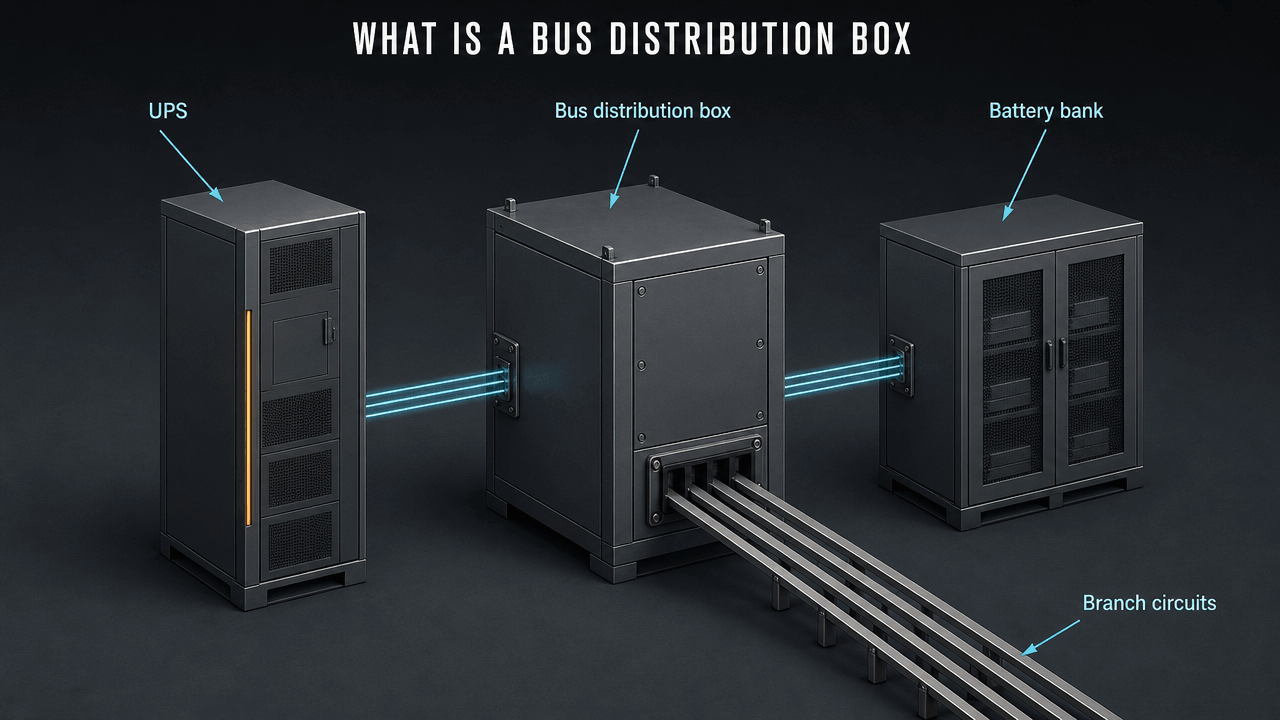
- What Is a Bus Distribution Box?
- This Client's Deadlock
- Anti-Voltage-Sag Is Systems Engineering — Not a Single-Device Fix
- How Our Engineering Team Solved It: Four Steps
- Step 1: Verify Equipment Parameters
- Step 2: Identify the Selection Error
- Step 3: The Shanpu Solution — Parallel Redundancy Design
- Step 4: Complete Technical Documentation Delivered
- Result: First-Time Commissioning Success — Client Places Phase 2 Order
- Why This Matters: The UPS Is Only Part of the Equation
- About Shanpu Power
- FAQ
Key Takeaways:
- Bus distribution box (busbar junction box) mis-selection is the hidden cause of voltage sag failures in commercial power systems — second only to the UPS unit itself
-
Selecting by peak current instead of rated operating current inflates specifications, making it nearly impossible to source a suitable product
-
A parallel redundancy approach using two standard-spec bus boxes can replace a custom oversized unit — cutting both lead time and procurement cost
-
The core of commercial power solutions is not a single device, but a systems engineering discipline: equipment + auxiliary components + parameter calculation
"Our equipment demands extreme power stability. Can you solve our voltage sag problem?"The answer is always: yes.But this case study isn't about the UPS itself. It's about a real project where the UPS wasn't the problem — the auxiliary components were. And how a systems-level approach turned a stalled deployment into a successful delivery — plus a repeat order.The Problem: Equipment Was Fine. The Bus Box Was the Bottleneck.
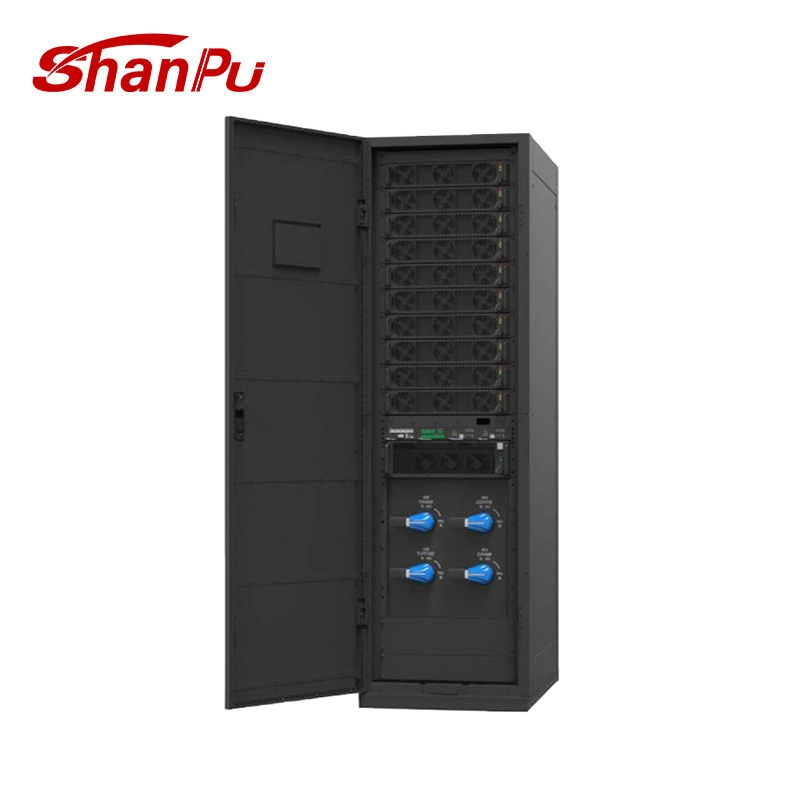
A client had purchased a Shanpu 1200kVA modular UPS for a critical power project. The site demanded absolute power stability — any momentary interruption or current fluctuation would paralyze the entire production line.The 1200kVA modular UPS is purpose-built for voltage sag resilience, maintaining stable output during voltage fluctuations, momentary outages, and other adverse grid conditions.Equipment: no issues. Installation: on track.But then the problem surfaced — in the bus distribution box.
Why Bus Distribution Box Selection Is a Hidden Voltage Sag Risk
What Is a Bus Distribution Box?
In simple terms, it's a current distribution unit installed between the UPS and the battery bank, responsible for routing current to each branch circuit.Many people treat it as a simple accessory — just buy something off the shelf. In reality, a mis-selected bus box becomes a ticking time bomb for voltage sag across the entire system.Why?Table 1
Failure Mode Root Cause Consequence Undersized bus bar Selected by peak current, not rated current Excessive resistance → overheating → voltage drop under load Insufficient breaker rating Breakers rated below sustained operating current Nuisance tripping during high-load periods Poor contact design Substandard terminal connections Contact resistance generates heat, degrading power quality No redundancy Single-path design, no parallel capability Single point of failure — one fault kills the entire circuit
This Client's Deadlock
The client needed a bus distribution box capable of handling the full current output of a 1200kVA UPS system. They contacted four or five bus box suppliers — and every single one said the same thing:"Our maximum capacity is 800A. We don't build for this current class.""We've never done a spec this large."The project timeline was frozen. Equipment was on-site. But without the bus box, nothing could be commissioned. The client was stuck.Anti-Voltage-Sag Is Systems Engineering — Not a Single-Device Fix
The client turned to Shanpu for help.To be clear: bus distribution boxes are not a Shanpu product. Industry convention is that the buyer procures auxiliary equipment independently. This is standard practice.But we made a decision — to proactively intervene and solve the auxiliary component problem for the client.The reasoning was simple: voltage sag resilience is not a device problem. It's a systems problem.No matter how strong the UPS is, if the auxiliary components can't keep up, the entire system remains vulnerable. This isn't just "the client's problem" — for us, the client's problem is our problem.How Our Engineering Team Solved It: Four Steps
Step 1: Verify Equipment Parameters
The technical team started by confirming the 1200kVA modular UPS output specifications — rated current, peak current, operating temperature range, and dynamic response time. These parameters form the baseline for determining whether auxiliary equipment is properly matched.Step 2: Identify the Selection Error
We discovered the client had been selecting the bus box based on peak current — and that was the wrong approach.Peak current is a transient maximum value. The actual sustained operating current is significantly lower. Designing to peak current inflated the bus box specification to a level where no standard product existed on the market — forcing the client into a custom-order dead end.Step 3: The Shanpu Solution — Parallel Redundancy Design
Our technical director proposed an alternative approach:
Step 4: Complete Technical Documentation Delivered
We compiled the solution into a full technical package:
Result: First-Time Commissioning Success — Client Places Phase 2 Order
The client procured two standard bus distribution boxes per our specification, installed them in parallel, and achieved first-time commissioning success.The project was delivered on schedule. The system operated stably with zero voltage sag incidents.More importantly — the client subsequently placed a Phase 2 project order with Shanpu.Their feedback:"You don't just sell equipment. You actually solve problems."Why This Matters: The UPS Is Only Part of the Equation
This case study illustrates a principle we've reinforced across hundreds of deployments:In commercial power, clients aren't buying equipment — they're buying solutions.A UPS can be bulletproof against voltage sags, but if the auxiliary components — bus boxes, cabling, breakers, battery connections — are mismatched, the entire system remains vulnerable. From equipment selection to auxiliary design, from installation guidance to after-sales support, every link must be engineered as one integrated system.Table 2
Component Single-Device Approach Systems Engineering Approach UPS selection Rated for load Rated for load + environmental derating + future expansion Bus distribution Sized by peak current Sized by sustained operating current + safety margin Battery matching Generic grouping Per-cell monitoring + zone-based redundancy Installation On-site trial and error Factory pre-commissioning → on-site execution only Commissioning Hope it works First-time success guaranteed by upstream validation About Shanpu Power
Voltage Sags? Choose Shanpu.Shanpu Power Technology Co., Ltd. — 16 years of focus on commercial power solutions, with manufacturing capacity exceeding 100,000 units per year.From data centers to performing arts venues, from tropical Southeast Asia to 3,650-meter-high plateaus — we deliver power reliability as a promise, not a possibility.
- 🔋 16 years of power industry expertise
FAQ
What is a bus distribution box in a UPS system?
A bus distribution box, also called a busbar junction box, is a current distribution unit installed between the UPS and the battery bank. It routes current to each branch circuit of the installation. Many projects treat it as a simple off-the-shelf accessory, but because every branch circuit passes through it, its current rating and contact design directly affect whether the whole system can ride through voltage sag events.
Can a mis-selected bus distribution box cause voltage sag failures?
Yes. In this 1200kVA modular UPS project the UPS itself passed every test, and the failure risk came from the auxiliary component instead. Bus distribution box mis-selection is the second most common hidden cause of voltage sag failures, after the UPS unit itself. A mis-sized box adds resistance, heat and voltage drop under load, which turns an otherwise healthy power system into a vulnerable one.
Should a bus distribution box be sized by peak current or rated operating current?
Rated operating current. Peak current is a transient maximum that lasts milliseconds, while the sustained operating current is what actually flows through the box hour after hour. The 100-1200kVA modular UPS in this project has a peak current ratio of 3:1, so sizing to peak current can inflate the required rating to roughly three times the real load requirement.
Why does sizing on peak current make a bus box impossible to source?
Because it pushes the specification outside the standard product range. Once the box was specified at peak current, no standard product on the market could meet it, and the client was locked into a custom-order path with longer lead time, higher cost and unproven delivery. Recalculating on sustained operating current brought the requirement back inside standard ranges.
Can two standard bus distribution boxes be installed in parallel instead of one custom oversized unit?
Yes, and that was the fix in this project. Two standard-specification bus boxes were installed in parallel, with combined capacity exceeding the 1200kVA system requirement plus an additional 20% safety margin. The approach removed the custom build entirely, and the project achieved first-time commissioning success with zero voltage sag incidents after handover.
Does a larger UPS alone eliminate voltage sag risk?
No. Voltage sag resilience is a systems problem rather than a device problem. A UPS can be bulletproof against voltage sags, but if the auxiliary components such as bus boxes, cabling, breakers and battery connections are mismatched, the system stays vulnerable. What removed the risk in this project was equipment plus auxiliary design plus parameter calculation, engineered as one integrated system.
What parameters should be verified before commissioning a 1200kVA modular UPS system?
Start with the UPS output specifications: rated current, peak current, operating temperature range and dynamic response time. Then confirm the cabinet configuration, since a 1200kVA system uses twelve 100kVA hot-swappable modules, along with the N+X redundancy level and the battery string voltage. Environmental limits matter too: operating temperature 0-40 degrees C and altitude below 1500m, with 1% derating per 100m above 1000m.
Does Shanpu supply bus distribution boxes or other auxiliary components?
Bus distribution boxes are not a Shanpu product, and by industry convention the buyer procures auxiliary equipment independently. In this project we intervened anyway: the engineering team recalculated the current requirement, specified two standard boxes in parallel and delivered the full technical package. The client's auxiliary component problem was solved by the UPS supplier, which goes beyond the usual industry convention.
Voltage Sag Case Study: How a 1200kVA Modular UPS Project Was Rescued by Bus Distribution Box Selection
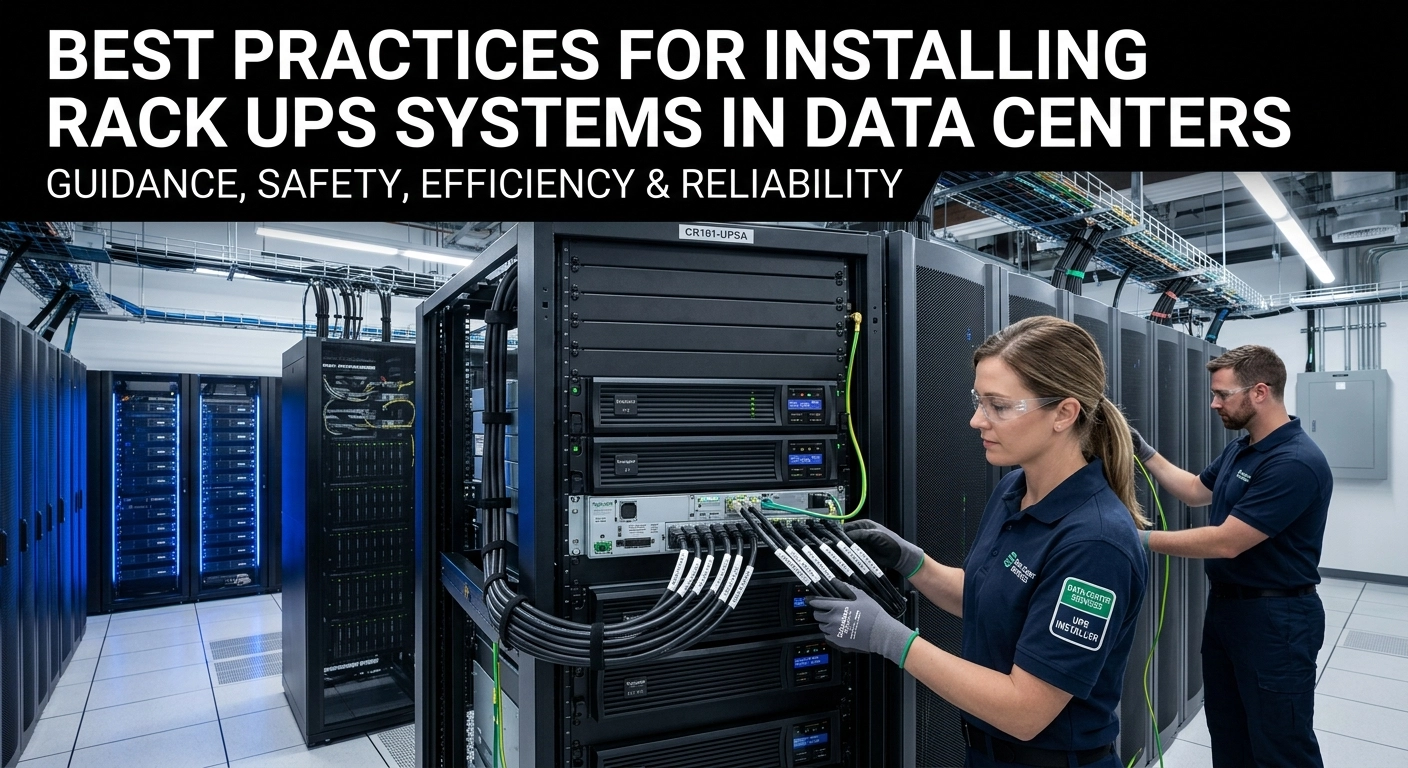
Best Practices for Installing Rack UPS Systems in Data Centers
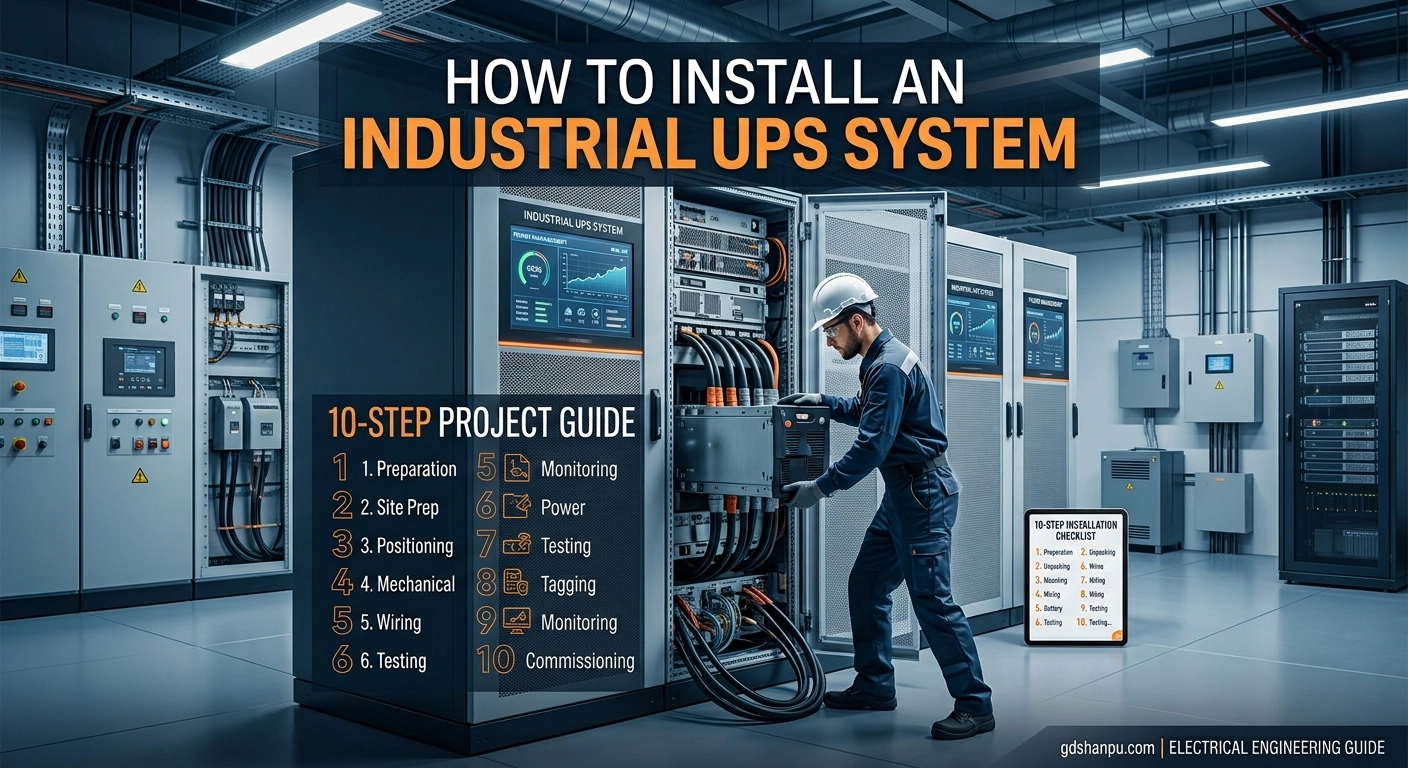
How to Install an Industrial UPS System: 10-Step Project Guide
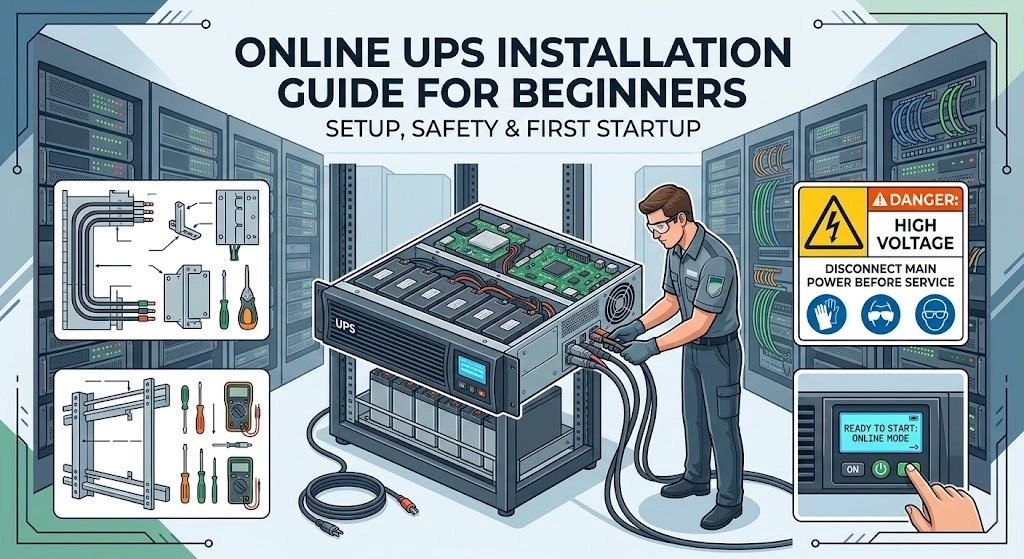
Online UPS Installation Guide for Beginners: Setup, Safety & First Startup
Get in touch with us
If you have any comments or good suggestions, please leave us a message; later our professional staff will contact you as soon as possible.
© 2026 ShanPu. All Rights Reserved.
Facebook
YouTube
SHANPU UPS