


which off-grid inverter specs matter most for solar projects? | Insights by ShanPu

Quick Answer
Which off-grid inverter specs matter most for solar projects? Start with continuous and surge power, battery bus voltage, MPPT input window, waveform quality, and idle consumption. These parameters decide whether loads start reliably, batteries charge within limits, and the PV array is used well. Final selection depends on the specific project, including load profile, climate, and battery chemistry.
How Our Team Supports Off-Grid Inverter Projects
We support buyers by reviewing project data against inverter specifications before a model is proposed. This typically covers load and surge calculation, battery voltage and chemistry matching, PV array compatibility with the MPPT window, and the protection and communication settings that suit the site.
Core buyer parameters include rated output power, surge capacity, nominal DC voltage, maximum PV open-circuit voltage, charge current, and output waveform. Customization options, MOQ, lead time, and quotation must be confirmed per project, because they depend on the model, configuration, and order quantity. Certification requirements should be stated up front so that documentation can be verified rather than assumed.
Discuss Your Off-Grid Inverter Specifications
Send us your daily load profile in watts and kWh, the largest motor or compressor surge, battery voltage and chemistry, PV array size and string voltage, site temperature range, and target-market certification needs. We can discuss inverter sizing, MPPT compatibility, bulk order planning, and quotation scope. Share these details at SPU@gdshanpu.com for a project-specific review.
FAQ
How do I size off-grid inverter continuous power versus surge rating?
Continuous power should cover the sum of all loads that can run at the same time, plus headroom. A margin of 20 to 25 percent is a common engineering practice, because inverter ratings are usually stated at about 25°C ambient and many units reduce output as heat sink temperature rises. Check whether the rating is given in watts or volt-amperes. Loads with a low power factor draw more apparent power than their wattage suggests, so a VA figure and a watt figure are not interchangeable.
Surge rating matters for inductive loads. Induction motors, well pumps, and refrigeration compressors can draw several times their running current at start-up, often in the range of three to seven times depending on design. Confirm both the surge multiple and its duration, since many inverters hold surge for only a few seconds. The battery must also deliver that current: a battery bank or BMS with a low maximum discharge current can limit the start-up capability, whatever the inverter nameplate says.
Which battery voltage should I choose, 12V, 24V, or 48V?
The decision follows from current. Power equals voltage multiplied by current, so a 3 kW load draws about 250 A at 12 V, about 125 A at 24 V, and about 63 A at 48 V. Resistive cable loss rises with the square of current, which means a low-voltage bank needs much thicker copper, larger fuses, and heavier busbars to hold losses and voltage drop in check. For this reason, 12 V is generally suited to small systems of around 1 kW or less, 24 V to the mid range, and 48 V to larger installations.
Higher voltage also helps with expansion, since the same cable can carry more power. A 48 V nominal bank, such as a 16-cell LiFePO4 pack at roughly 51.2 V, remains below the 60 V DC level commonly used as an extra-low-voltage reference, which simplifies some safety considerations. Match the inverter DC input range to the battery chemistry, including the full charge and low-voltage cutoff points, and verify that the BMS can communicate with the inverter if the project requires it.
Does pure sine wave output really matter for motors and electronics?
Waveform quality matters whenever loads are sensitive to harmonics. Pure sine wave inverters usually specify total harmonic distortion below roughly 3 to 5 percent, while modified sine wave designs can show far higher distortion. Induction motors on distorted power tend to run hotter and noisier with some loss of efficiency. Devices with phase-controlled dimmers, timers, or certain speed controllers can misbehave, and some switched-mode power supplies, chargers, and medical devices such as CPAP units specify clean sine input in their manuals.
For projects with mixed or unknown loads, such as rural homes, telecom shelters, or remote clinics, a pure sine wave output removes a common source of field complaints. Modified sine wave units may still run simple resistive loads, but the price gap between the two waveforms has narrowed considerably. Also check output voltage regulation and frequency stability under load, because these specifications affect equipment behavior as much as the waveform shape does.
How do MPPT voltage window and PV input limits affect array design?
The MPPT window defines the voltage range in which the charge controller can track the maximum power point, and the maximum PV input voltage is a hard ceiling. Crystalline silicon modules have a negative open-circuit voltage temperature coefficient, often around minus 0.25 to minus 0.30 percent per °C, so string voltage rises in cold weather. The string Voc must be corrected to the lowest expected site temperature and kept below the controller limit. NEC Section 690.7 describes this correction method for installations that follow that code.
The opposite problem occurs in heat. At high cell temperatures the string Vmp falls, and it must stay above the minimum MPPT voltage, which is usually set by the battery voltage plus a margin. Beyond voltage, check the maximum PV input current against module Isc, the maximum charge current into the battery, and the rated PV input power. Oversizing the array relative to the charge current is a recognized practice, but the surplus is clipped when the battery cannot accept more, so the ratio should be set by the load and battery profile.
What does inverter self-consumption mean for small off-grid solar systems?
Self-consumption, also called no-load or idle power, is the energy the inverter draws from the battery while powering no meaningful load. Figures vary by design and size, commonly from around 10 W to several tens of watts. A 30 W idle draw running around the clock consumes about 0.72 kWh per day. In a small cabin or monitoring station using 1 to 2 kWh daily, that is a large share of the energy budget and of the battery capacity needed.
Many inverters offer a power-saving or search mode that lowers idle draw by pulsing the output until a load is detected. The tradeoff is that very small loads, such as LED lights or chargers, may not trigger wake-up. Review the efficiency curve as well as the peak efficiency number: systems that spend most hours at light load depend on low-load efficiency, and a figure measured near rated power can overstate real daily performance.
Why do low-frequency and high-frequency off-grid inverters perform differently under load?
Low-frequency inverters use a large transformer operating at the mains frequency of 50 or 60 Hz. The transformer provides galvanic isolation and a large thermal and electromagnetic buffer, so these units typically tolerate high surge currents and reactive loads such as pumps and compressors. The cost is greater weight, larger size, and usually higher idle losses than comparable high-frequency designs.
High-frequency inverters switch at tens of kilohertz and use compact magnetics. They are lighter, often more efficient at light load, and easier to ship and install. Surge capability is typically lower for a given rated power, so the inverter may need to be oversized for motor-heavy sites. Isolation arrangements differ among models, so confirm the topology and protection design in the datasheet. Neither topology is better in every case: the choice should follow the load mix, the site conditions, and the installation constraints.
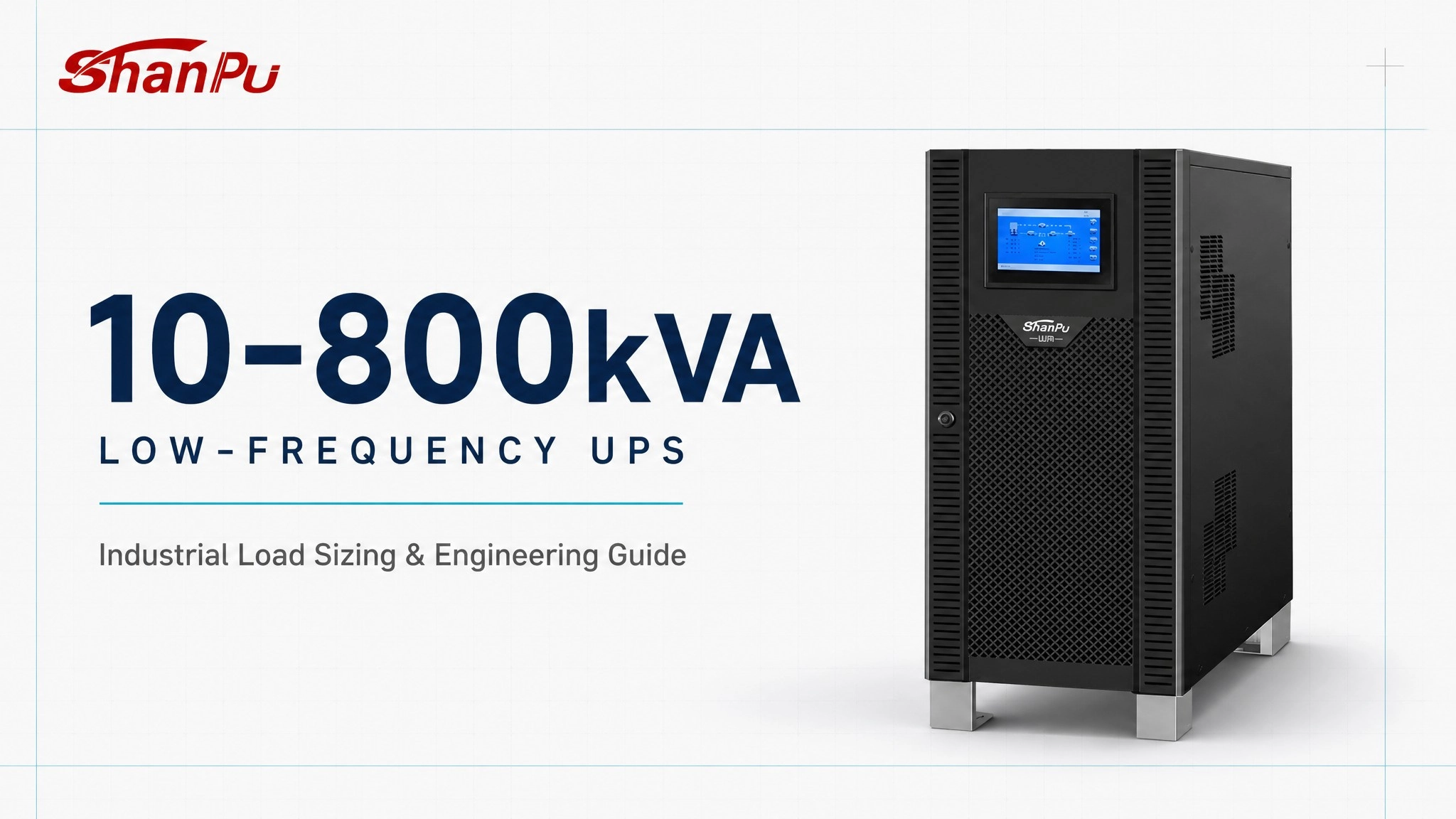
Low-Frequency UPS Engineering Guide: Sizing 10–800kVA Systems for Industrial Plant Loads
Voltage Sag Case Study: How a 1200kVA Modular UPS Project Was Rescued by Bus Distribution Box Selection
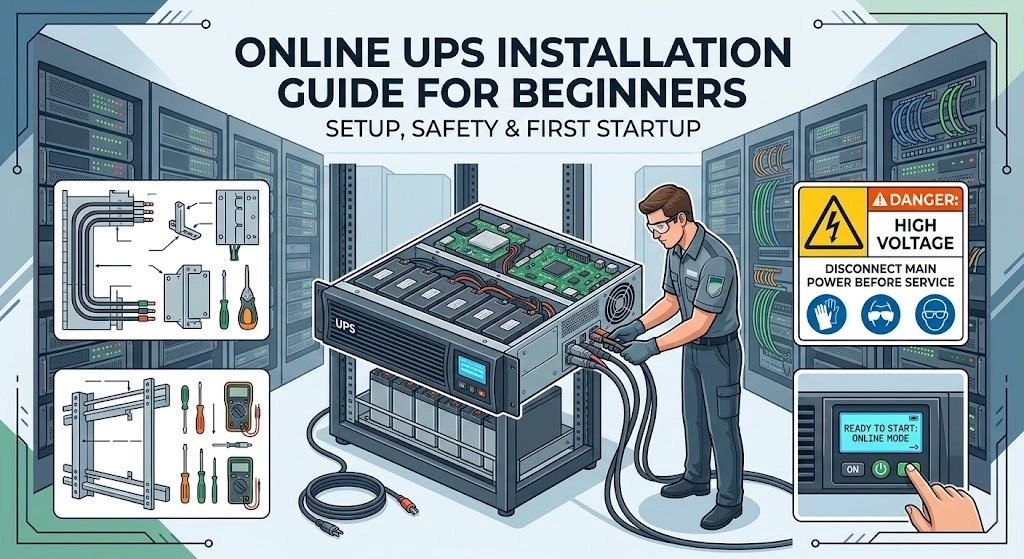
Online UPS Installation Guide for Beginners: Setup, Safety & First Startup
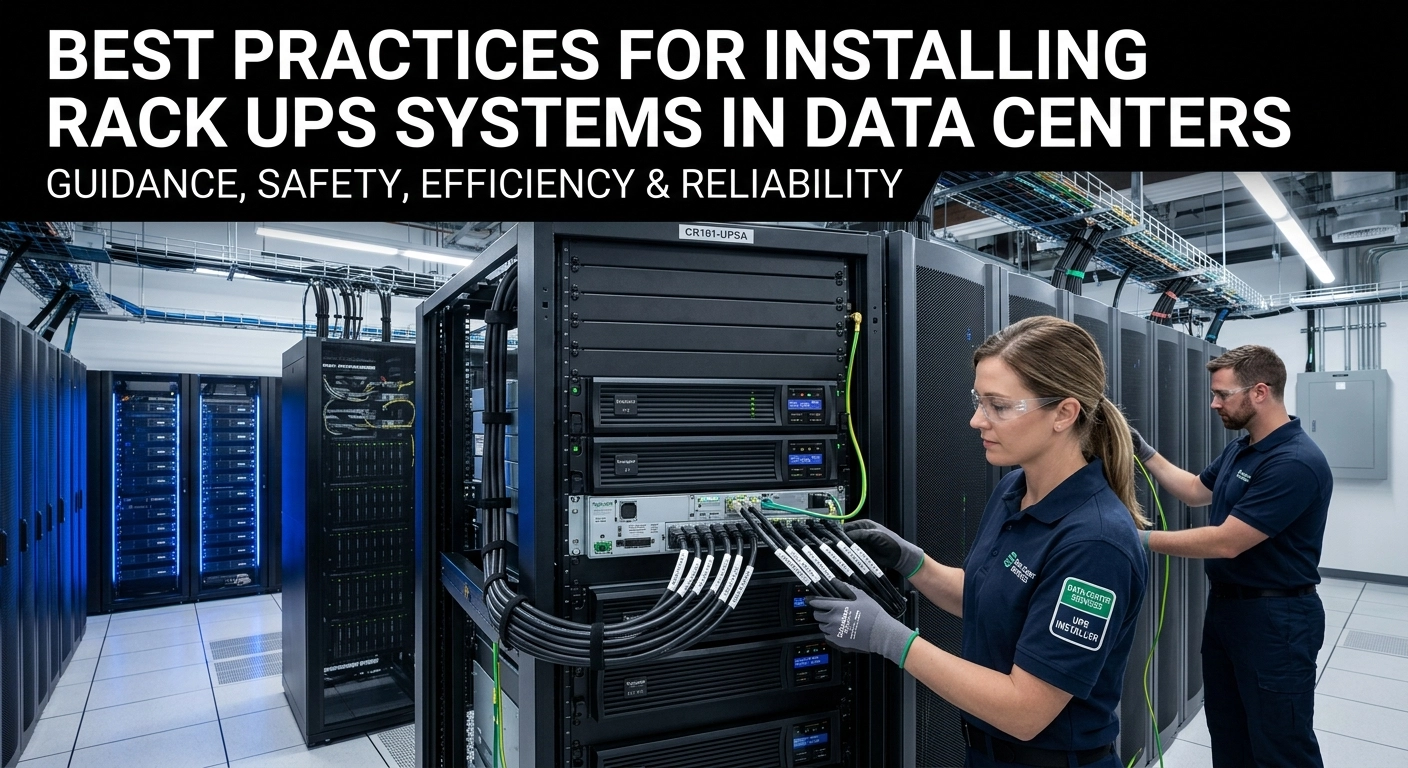
Best Practices for Installing Rack UPS Systems in Data Centers
Get in touch with us
If you have any comments or good suggestions, please leave us a message; later our professional staff will contact you as soon as possible.
© 2026 ShanPu. All Rights Reserved.
YouTube
SHANPU UPS
Shanpu