
what size hybrid inverter do i need for my solar system? | Insights by ShanPu

Fri, 10/23/2026
Senior technical engineer specializing in UPS power supply industry - ShanPu
Jane Zhong
Choose a hybrid inverter by matching continuous and surge loads, solar-array limits, battery power, and backup requirements—not by panel wattage alone. These six FAQs explain how beginners can size the inverter around real loads and equipment specifications.

Quick Answer

To determine what size hybrid inverter do i need for my solar system, start with the appliances you expect to run at the same time, then check their startup surges and backup priorities. Compare that load with the inverter’s continuous and surge ratings, compatible solar-input limits, and battery power capability. The final selection depends on equipment specifications, project requirements, and site conditions.

How to Evaluate Supplier Support for Hybrid Inverter Projects

No brand name or company profile was provided, so specific product-development, OEM or ODM, testing, quality-control, and manufacturing capabilities cannot be attributed here. Ask prospective suppliers for the inverter model’s datasheet, operating limits, supported battery specifications, and applicable documentation before comparing options.

Confirm the required AC output, grid configuration, backup-load profile, PV array characteristics, battery chemistry and voltage, and target market. MOQ, lead time, testing scope, and quotation must be confirmed for each project rather than assumed from a general product description.

Discuss Your Hybrid Inverter Project Requirements

To discuss suitable specifications, provide your location and grid voltage, appliance list with running and startup watts, desired backup circuits, PV module model and array layout, battery model and capacity, and expected order quantity. These details can support a discussion of compatible options, sample steps, and quotation scope; send them to SPU@gdshanpu.com.

Hybrid Inverter Sizing FAQs

Should I size a hybrid inverter by panel watts or household loads?

Start with the AC loads the inverter must supply, not simply the solar-array wattage. Add the running power of appliances expected to operate simultaneously, then check whether the inverter’s continuous output can support that combined demand. Separately compare the proposed PV array with the inverter’s maximum PV input power, voltage, and current limits. These are distinct constraints: a large array does not mean the inverter can provide equally large AC power at every moment, and the inverter’s datasheet defines its permitted input range.

How do I account for refrigerator and pump startup surge?

Motors and compressors can draw more power during startup than during normal operation, but the amount and duration vary by appliance. Check the appliance documentation or measure its startup demand, then compare the result with the inverter’s surge rating and the specified time for which that rating is available. Also consider whether several motor-driven devices might start together. A headline peak rating alone is insufficient if the inverter cannot sustain the required surge for the necessary duration; verify both figures in the specific model’s technical documentation.

Does a larger battery require a higher-rated hybrid inverter?

Not automatically. Battery energy capacity, usually expressed in kilowatt-hours, describes stored energy; inverter output power, expressed in kilowatts, describes the rate at which loads can be supplied. A battery may store ample energy yet be unable to deliver the inverter’s requested power if its discharge-current limit or battery-management system limit is lower. Check battery voltage, continuous and peak discharge limits, communication compatibility where required, and the inverter’s supported battery specifications. The usable backup duration also depends on load, conversion losses, and permitted depth of discharge.

How do battery voltage and discharge current affect inverter size?

For a given power demand, a lower DC battery voltage generally requires higher current. As a first-order relationship, DC power in watts is voltage multiplied by current, before accounting for conversion losses. Compare the inverter’s battery-side current requirements with the battery and BMS continuous and peak discharge limits, using the manufacturer’s stated operating conditions. Cables, protective devices, temperature, and voltage drop also matter to system design. Do not assume that matching nominal battery voltage alone proves a battery can support the inverter’s full output.

Can my solar panel array be larger than the inverter rating?

Some hybrid inverters permit a PV array with a DC nameplate rating greater than the inverter’s AC output rating, but permissible sizing is model-specific. The inverter may limit or clip output when available solar power exceeds its conversion capacity. More importantly, the array must remain within the inverter’s maximum PV voltage, current, and power specifications. Module open-circuit voltage rises in colder conditions, so string design must account for the module’s temperature coefficient and the site’s design temperatures. Follow the exact inverter and module documentation rather than applying a universal oversizing ratio.

What information should I gather before choosing a backup inverter?

Prepare a load schedule showing each appliance’s running watts, startup demand where relevant, and expected operating time. Identify which circuits need backup and whether loads may operate simultaneously. Record the grid voltage and phase configuration, solar-module model and proposed string arrangement, and battery model, nominal voltage, usable energy, and discharge limits. Also note site temperature conditions and any grid-interconnection requirements that apply locally. This information lets a designer check AC output, surge capability, PV input limits, battery compatibility, and expected backup operation against equipment datasheets.
Recommended for you
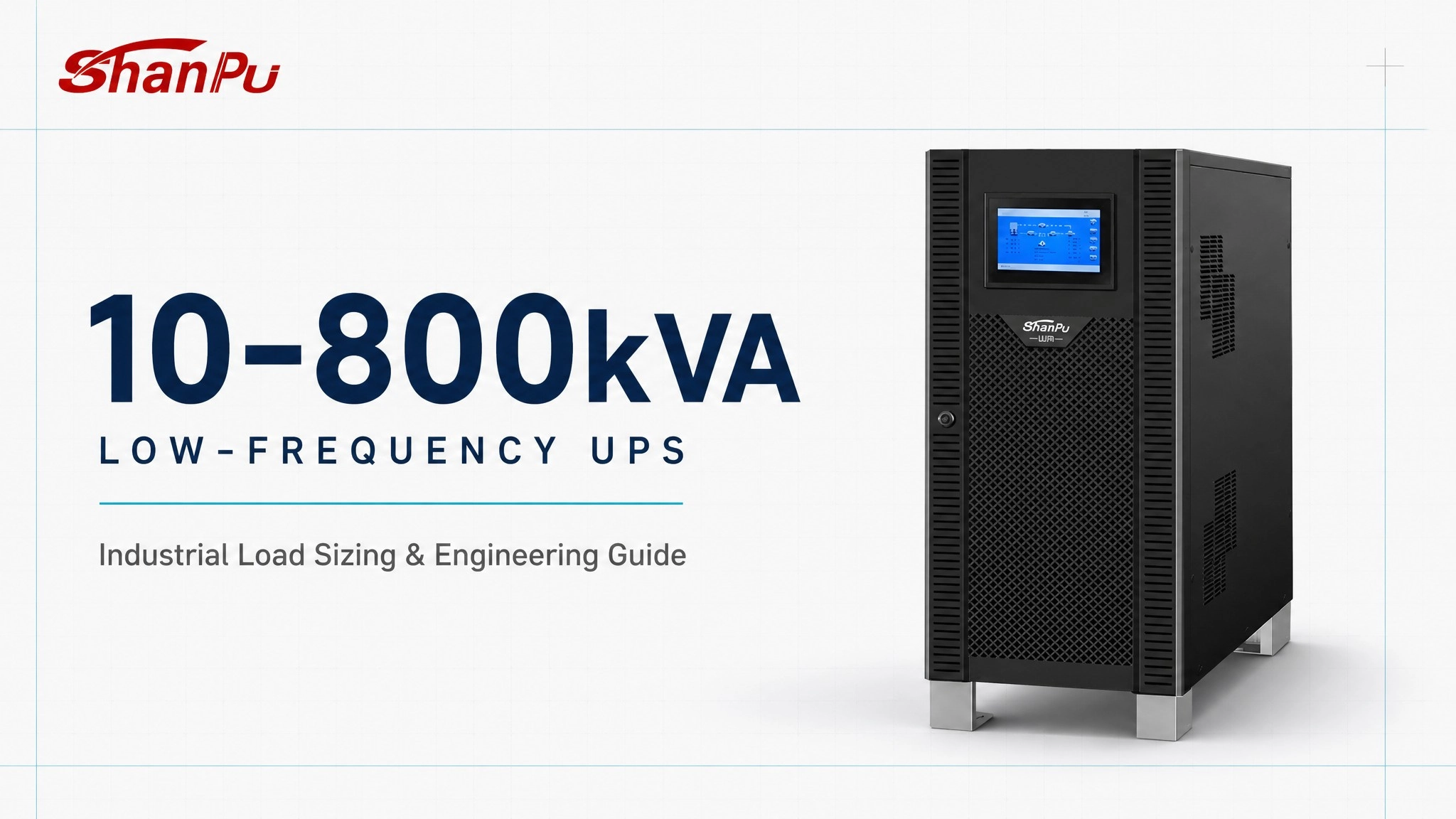
ShanPu 10-800kVA low-frequency industrial online UPS cabinet with touch display for plant load sizing and power protection - ShanPu

Low-Frequency UPS Engineering Guide: Sizing 10–800kVA Systems for Industrial Plant Loads
Low-Frequency UPS Engineering Guide: Sizing 10–800kVA Systems for Industrial Plant Loads
How a 1200kVA Modular UPS ProjectWas Rescued by Bus Distribution Box Selection - ShanPu

Voltage Sag Case Study: How a 1200kVA Modular UPS Project Was Rescued by Bus Distribution Box Selection
Voltage Sag Case Study: How a 1200kVA Modular UPS Project Was Rescued by Bus Distribution Box Selection
d5570f2c-08bc-4acd-86db-11a9480d6d58 - ShanPu

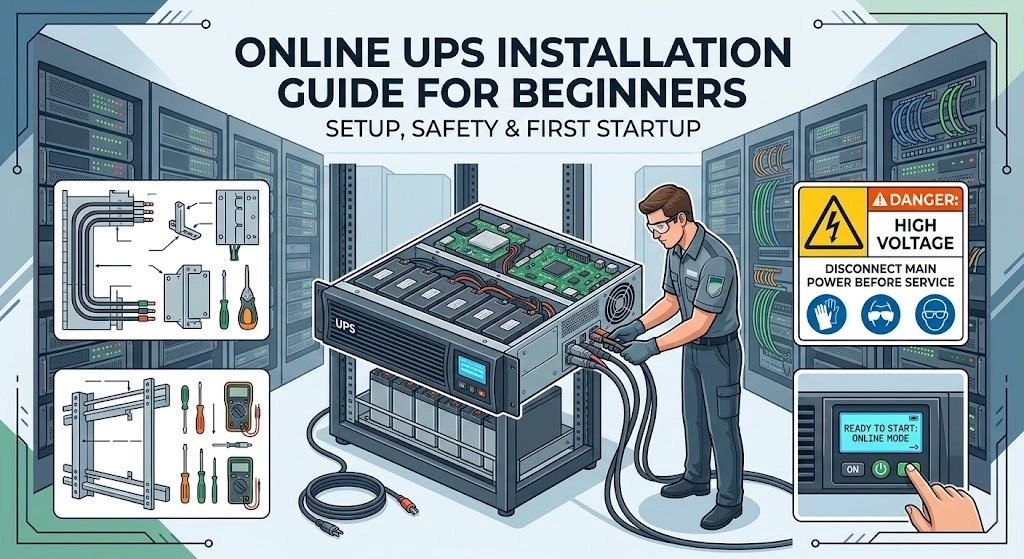
Online UPS Installation Guide for Beginners: Setup, Safety & First Startup
Online UPS Installation Guide for Beginners: Setup, Safety & First Startup
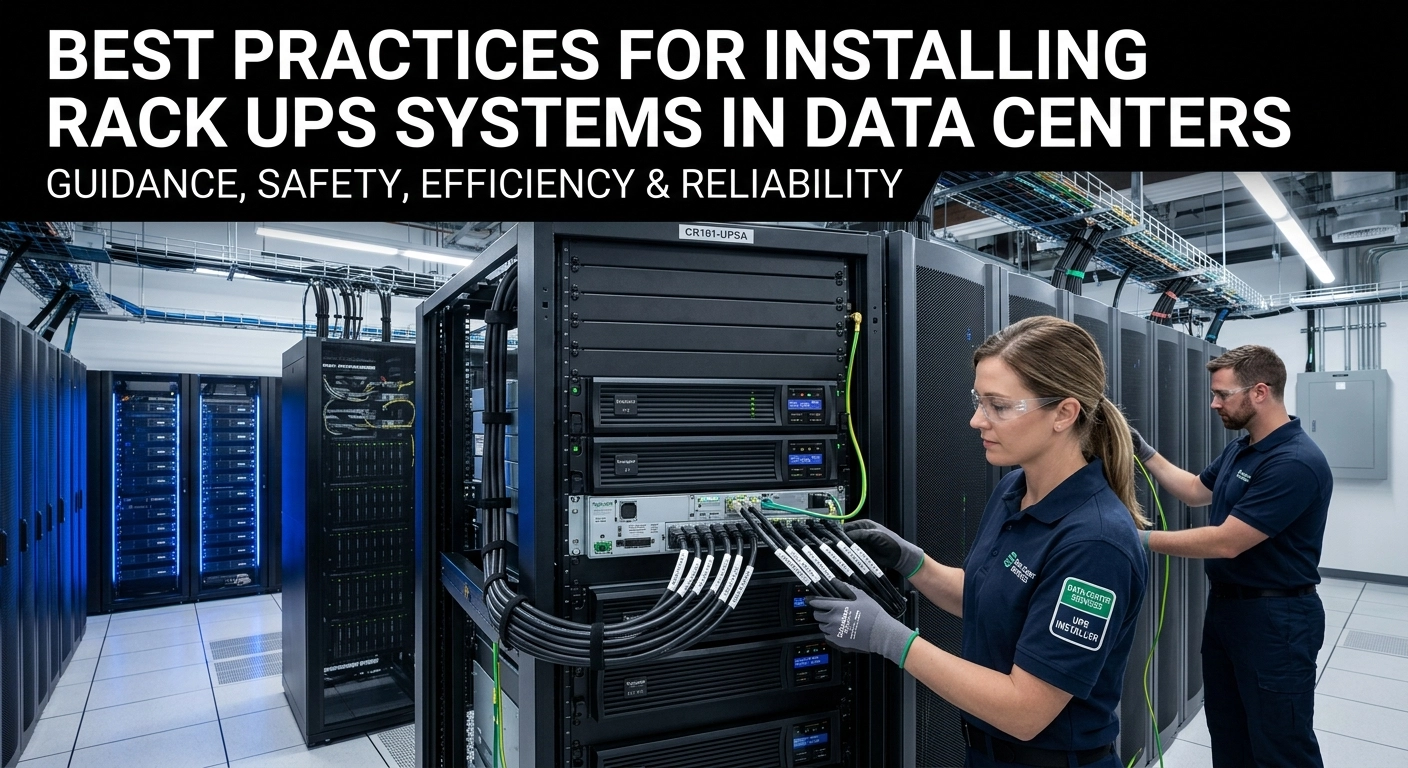
Technicians installing rack UPS systems in a data center. - ShanPu

Best Practices for Installing Rack UPS Systems in Data Centers

Best Practices for Installing Rack UPS Systems in Data Centers

Product Categories
You may also like
ShanPu 3C33 series 10-800kVA low frequency industrial online UPS for manufacturing plants - ShanPu
Three-Phase Low-Frequency Industrial Online UPS 10-800kVA
  1. ShanPu 3C33 10-800kVA three-phase industrial UPS is a low-frequency UPS with transformer-based online double conversion for factories and plants. Equipment, automation and control loads stay online through grid disturbance and outage with 0ms transfer.

  2. Rated 10-800kVA with three-phase input and output at 380/400/415Vac, the 3C33 scales from single machines to full production lines. A low-frequency isolation transformer blocks surge, harmonic and common-mode disturbance before reaching PLCs and drives; microprocessor control keeps output within ±1% across a 304-456Vac input window. External VRLA banks size backup time to the process.
Three-Phase Low-Frequency Industrial Online UPS 10-800kVA
ShanPu all-in-one hybrid inverter for home solar and battery storage - ShanPu
12KW ALL-IN-ONE HYBRID INVERTER

ShanPu SP-12KW/48V is an all-in-one hybrid inverter that integrates dual MPPT solar charging, 48V battery management and dual-output DC-to-AC inversion in one unit for large residential, commercial and light industrial storage systems. Two independent MPPT channels harvest power from separate PV arrays and convert it into regulated 48V DC, charging the battery bank at up to 160A while feeding the inverter stage; the controller automatically selects between solar, utility and battery based on the configured priority mode (SUB / SBU / SUF).The dual AC output design separates critical loads from non-critical circuits, while the 160A MPPT charging current and up to 160A AC charging rapidly recharge 48V battery banks after prolonged cloudy periods or heavy discharge. The 48V architecture reduces line losses and supports higher power delivery, and the Pro model adds parallel expansion plus optional WiFi monitoring for larger projects.

12KW ALL-IN-ONE HYBRID INVERTER
ShanPu all-in-one hybrid inverter for home solar and battery storage - ShanPu
3.6KW ALL-IN-ONE HYBRID INVERTER

ShanPu SP-3.6KW/24V is an all-in-one hybrid inverter that combines a 100A MPPT solar charger, 24V battery management and DC-to-AC inversion in one compact unit. Built for residential and small commercial systems, it delivers reliable power management with efficient energy conversion and straightforward installation.The inverter supports up to 5000W PV array power with a 60-500Vdc MPPT tracking range and up to 96% peak conversion efficiency from PV to AC. It can also run directly from solar PV or utility without a battery connected, and RS485 communication with automatic lithium battery activation makes LiFePO4 integration straightforward.

3.6KW ALL-IN-ONE HYBRID INVERTER
ShanPu all-in-one hybrid inverter for home solar and battery storage - ShanPu
6KW ALL-IN-ONE HYBRID INVERTER

ShanPu SP-6.2KW/48V is an all-in-one hybrid inverter that integrates MPPT solar charging, 48V battery management and DC-to-AC inversion into a single unit for medium residential and small commercial storage systems. Solar PV power is processed by the MPPT charger and converted into regulated 48V DC, which simultaneously charges the battery bank and supplies the inverter stage, while the built-in controller automatically selects the energy source - solar, utility or battery - based on the configured operating mode.

6KW ALL-IN-ONE HYBRID INVERTER

Get in touch with us

If you have any comments or good suggestions, please leave us a message; later our professional staff will contact you as soon as possible.

First Name must not exceed 100 characters.
Last Name must not exceed 100 characters.
Invalid email format or length exceeds 100 characters. Please re-enter.
Please enter a valid phone number!
Company Name must not exceed 150 characters.
Message must not exceed 3000 characters.
Contact customer service
×

Talk to Our Experts Today

Have any questions or need help?

Chat with our experts online now for instant answers.

First Name must not exceed 100 characters.
Last Name must not exceed 100 characters.
Invalid email format or length exceeds 100 characters. Please re-enter.
Please enter a valid phone number!
Company Name must not exceed 150 characters.
Message must not exceed 3000 characters.
×

Customized Solutions

Customize your UPS system according to your needs.

We will provide you with the most suitable solution to meet your specific requirements.

First Name must not exceed 100 characters.
Last Name must not exceed 100 characters.
Invalid email format or length exceeds 100 characters. Please re-enter.
Please enter a valid phone number!
Company Name must not exceed 150 characters.
Message must not exceed 3000 characters.
×

Submit a Request

Fill out your requirements information, and we will provide you with personalized services and solutions as soon as possible.

First Name must not exceed 100 characters.
Last Name must not exceed 100 characters.
Invalid email format or length exceeds 100 characters. Please re-enter.
Please enter a valid phone number!
Company Name must not exceed 150 characters.
Message must not exceed 3000 characters.
×

Get a Free Quote

Get a quote for a UPS power system that suits your needs.

Provide detailed information, and let us tailor the best solution for you.

First Name must not exceed 100 characters.
Last Name must not exceed 100 characters.
Invalid email format or length exceeds 100 characters. Please re-enter.
Please enter a valid phone number!
Company Name must not exceed 150 characters.
Message must not exceed 3000 characters.
×

Get the Product Catalog

Fill in your details to receive our latest UPS product catalog and explore our full range of power solutions.

First Name must not exceed 100 characters.
Last Name must not exceed 100 characters.
Invalid email format or length exceeds 100 characters. Please re-enter.
Please enter a valid phone number!
Company Name must not exceed 150 characters.
Message must not exceed 3000 characters.