


how do you verify an industrial ups factory's production capacity? | Insights by ShanPu

Quick Answer
How do you verify an industrial UPS factory's production capacity? Cross-check claims against evidence rather than a stated monthly figure. Focus on five factors: test-station count, burn-in throughput, component supply stability, shift labor, and shipment records. Final verification depends on the specific project, power rating, and order volume.
How Our Team Supports Your UPS Projects
Our team supports industrial UPS projects by sharing production information that buyers can review independently, such as process flow descriptions, test procedures, and quality control checkpoints. Where a project requires it, OEM or customized configurations can be evaluated against actual line availability instead of general estimates.
Core buyer parameters include rated power (kVA/kW), input and output voltage, topology, battery type and autonomy time, and expected monthly volume. MOQ, lead time, and quotation must be confirmed per project. Any video inspection or factory audit scope can be discussed once your requirements are clear.
Share Your Industrial UPS Capacity Verification Requirements
Please send the rated power and phase configuration, input/output voltage and frequency, battery type and backup time, order quantity and annual forecast, required certifications, installation environment, and target delivery date. We can then discuss audit scope, sample testing, customization options, and realistic production scheduling. Send your details to SPU@gdshanpu.com.
FAQ
How do I calculate monthly UPS output from assembly line layout?
Start with the bottleneck, not the headline line speed. A workable estimate is: monthly output = (parallel stations × available hours per month × utilization) ÷ test or assembly cycle time per unit. The station with the longest cycle sets the ceiling. In most UPS plants this is final test or burn-in, not wiring or cabinet assembly.
As an illustration, four final-test stations running 22 days at 16 hours give 352 hours each. At 80 percent utilization and a 3-hour cycle, the result is about 375 units per month. Ask the factory to repeat this calculation for each power class, because a small tower unit and a large cabinet system have very different cycle times and floor space needs. Also confirm how many shifts are actually staffed, and whether the layout separates incoming inspection, sub-assembly, wiring, aging, and packing zones. A layout that mixes these flows usually shows congestion once volume rises.
Which documents prove an industrial UPS factory's real production capacity?
No single document proves capacity, so request a set that can be cross-checked. Useful items include the business license with a manufacturing scope, an equipment list with purchase invoices, process routing sheets, recent work orders, and shipment records traceable by serial number. Test reports referencing IEC 62040-3, the performance and test standard for UPS, show the factory runs defined type and routine tests.
Verify any ISO 9001 certificate directly with the issuing certification body or through the IAF CertSearch database instead of relying on a scanned copy. Export records, packing lists, and customs data for recent shipments help confirm that volumes match claims. Where the factory agrees, a third-party inspection company such as SGS, Bureau Veritas, TÜV, or Intertek can audit these records on site. Treat inconsistencies in dates, serial ranges, or equipment counts as a reason to ask follow-up questions.
What bottleneck stations limit industrial UPS burn-in and testing throughput?
Testing is the most common constraint in UPS manufacturing. Burn-in racks need programmable AC sources, load banks, and monitoring, and the available test power must match the units being built. A 500 kVA system cannot be fully load-tested on equipment sized for 30 kVA, so large-unit capacity is limited by the rated kW of test loads and by the site's electrical supply and cooling.
Ask for the number of load banks and their ratings, whether regenerative loads are used, the standard burn-in duration per power class, and how failed units are retested. Duration varies by product and customer specification, so compare the stated hours with the factory's own quality procedure. Other frequent bottlenecks include transformer and inductor winding, sheet-metal fabrication for cabinets, and battery charging or discharge testing. Mapping the process step by step usually reveals which station caps real output.
How do I audit component supply chains behind UPS production volumes?
Capacity on paper means little if critical parts cannot be sourced in time. Key UPS components include IGBT or other power modules, DSP or microcontroller boards, DC-link capacitors, magnetics, contactors, and batteries. Request the approved vendor list, typical purchasing lead times, safety stock policy, and purchase order history for the last several months.
During the 2021 to 2023 supply disruptions, lead times for some power semiconductors extended well beyond normal, so ask how the factory managed that period and whether alternate parts are qualified in the bill of materials. Check incoming quality control records and how lots are traced. For lithium batteries, ask for the UN 38.3 transport test summary, since batteries are often sourced and shipped separately. A factory that can describe its supply risks in detail usually has a more reliable planning process than one that only quotes a large monthly figure.
Can a UPS factory handle custom orders without losing delivery stability?
Customization consumes engineering, procurement, and test time that standard models do not. Evaluate how the factory manages change: its engineering change process, firmware version control, and first-article inspection practice. Ask what share of current output is custom versus standard, and whether custom work runs on a separate line or competes for the same test stations.
Request a lead time breakdown covering engineering review, component procurement, assembly, testing, and packing, then compare it with the quoted delivery date. For OEM or ODM projects, a pilot batch before bulk order release is a reasonable way to confirm both quality and schedule. MOQ and lead time must be confirmed per project. Ask for references on on-time delivery performance, and consider milestone-based contract terms so delays become visible early.
How should I verify capacity remotely before a factory audit visit?
Begin with a live video walkthrough rather than a pre-recorded presentation. Ask the factory to show the assembly area, test stations, and burn-in racks in real time, and to display the serial number labels and test logs of units currently in process. Request a sample test report and the production records of a recent order so that serial ranges can be traced.
Confirm the company is a manufacturer rather than a trading intermediary by checking the business license scope, the registered factory address, and the equipment shown on camera. Compare what you see with the equipment list and capacity calculation provided earlier. Hiring a third-party inspector for a pre-audit is a cost-effective step before travelling. Prepare an on-site checklist covering test power capacity, calibration of measuring instruments, incoming inspection, and nonconformity handling, so the visit confirms the evidence already collected.
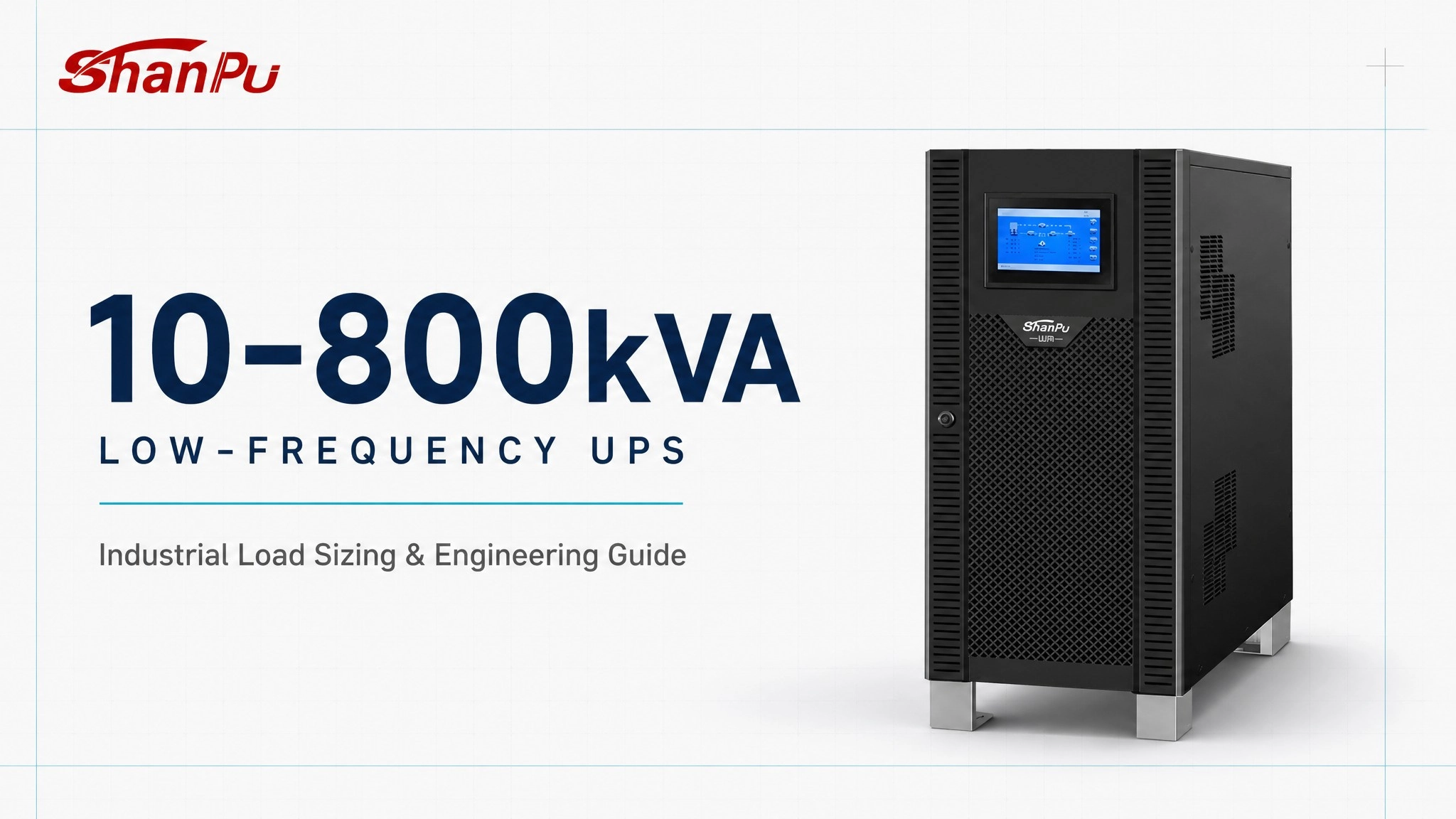
Low-Frequency UPS Engineering Guide: Sizing 10–800kVA Systems for Industrial Plant Loads

Voltage Sag Case Study: How a 1200kVA Modular UPS Project Was Rescued by Bus Distribution Box Selection
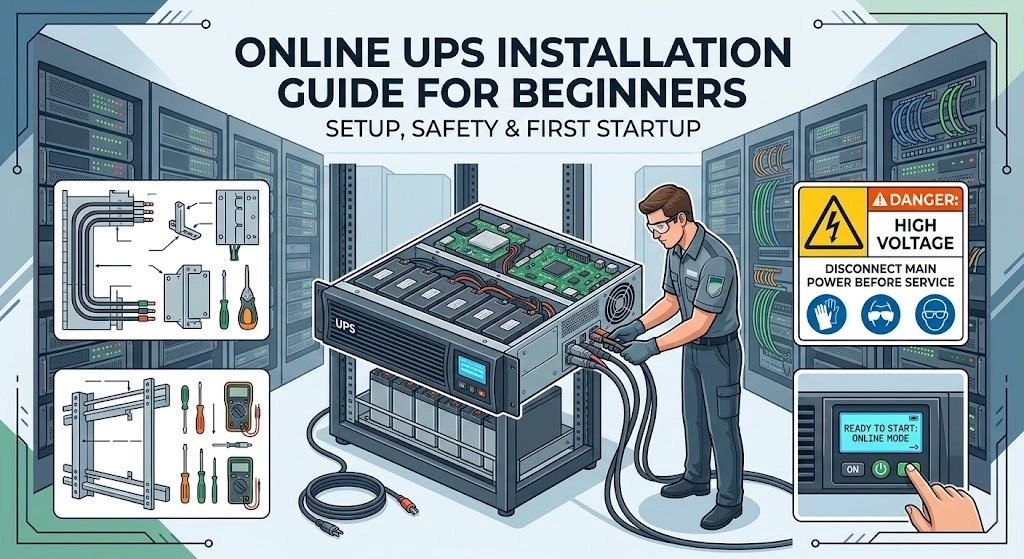
Online UPS Installation Guide for Beginners: Setup, Safety & First Startup
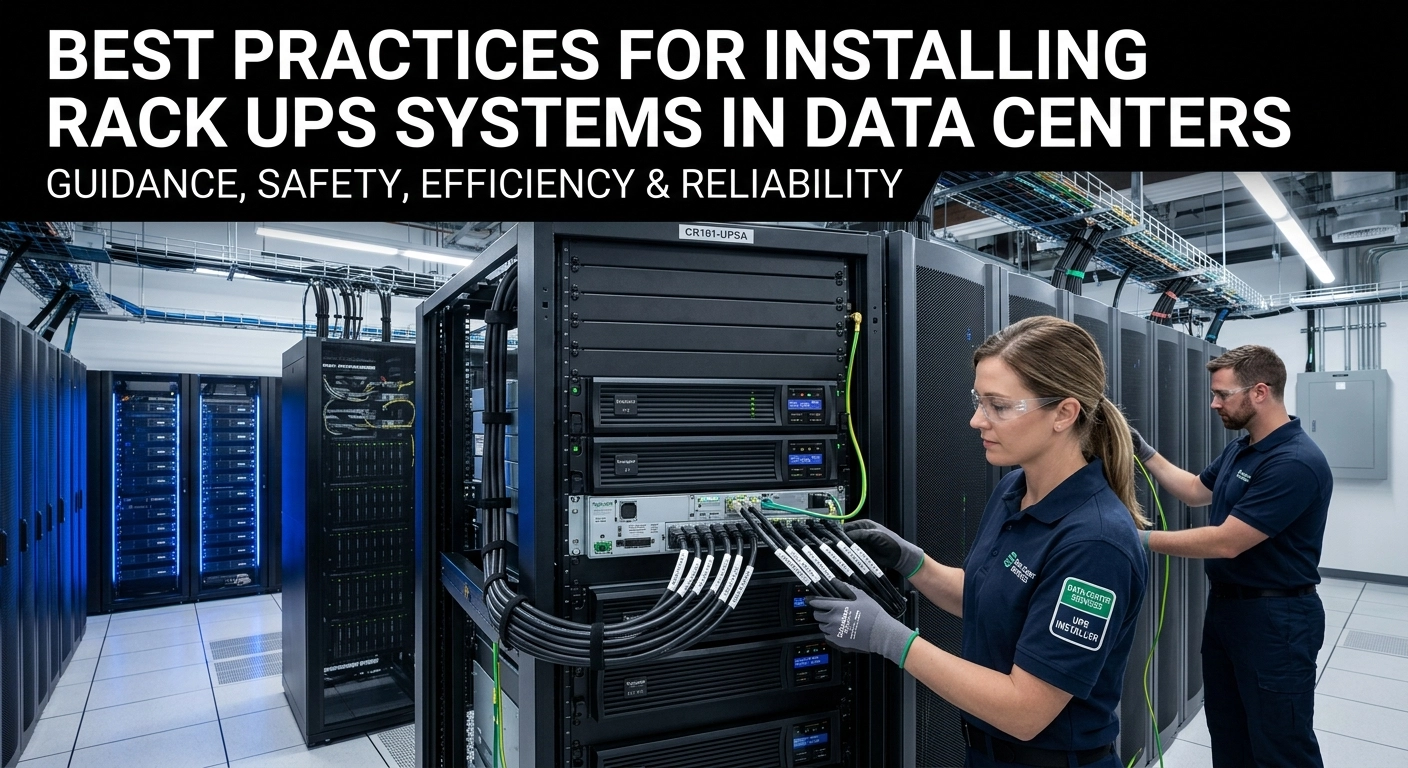
Best Practices for Installing Rack UPS Systems in Data Centers


Get in touch with us
If you have any comments or good suggestions, please leave us a message; later our professional staff will contact you as soon as possible.
© 2026 ShanPu. All Rights Reserved.
YouTube
SHANPU UPS
Shanpu