


how do string and central grid-tied inverters compare for buyers? | Insights by ShanPu

Quick Answer
The question “how do string and central grid-tied inverters compare for buyers?” has no universal answer: string architectures distribute conversion across multiple units, while central systems consolidate it into larger blocks. Compare plant layout, shading and mismatch exposure, AC/DC collection design, service strategy, and lifecycle cost. Final selection depends on project-specific modeling, equipment testing, and site conditions.
How Supplier Support Shapes Grid-Tied Inverter Projects
Because no brand name or company profile was supplied, no manufacturer-specific product development, OEM/ODM, customization, quality-control, or sample capability can be verified here. Buyers should request model-level datasheets and evidence for the exact inverter configuration rather than infer capabilities from supplier descriptions.
Before comparing suppliers, confirm rated AC output, DC voltage and MPPT operating windows, permitted DC/AC ratio, grid-support functions, communications, warranty terms, and service and spares arrangements. MOQ, lead time, testing scope, and quotation should be confirmed for each project; these vary by selected model, market, quantity, and contractual requirements.
Share Project Details for an Inverter Architecture Discussion
To assess a suitable architecture, share the project location and applicable grid code, plant capacity, module and string design, site shading profile, single-line diagram or layout, target commissioning date, and expected order quantity. These details support a focused discussion of configuration options, documentation, sample or validation steps where applicable, and a project quotation. Send the specification to SPU@gdshanpu.com.
Grid-Tied Inverter Buyer FAQs
How does partial shading affect string versus central inverter output?
The effect depends on array wiring, bypass-diode behavior, MPPT grouping, and the shading pattern—not just the inverter category. A string inverter can track a group of strings through one or more MPPT inputs, while a central inverter may also provide multiple MPPT channels. If shaded and unshaded strings share an MPPT input, their operating conditions can constrain one another. Compare the proposed stringing plan and MPPT allocation using site-specific irradiance and shade analysis; do not assume that every string inverter isolates each module or that every central inverter has only one tracking point.
When does plant size justify a central inverter architecture?
There is no universal capacity threshold at which a central inverter becomes the better choice. Larger, relatively uniform blocks may suit centralized equipment and consolidated service planning, but the result depends on DC block size, electrical layout, terrain, shading, transport and lifting constraints, spare-parts strategy, and the cost of collection wiring and equipment. String systems may fit irregular layouts or phased construction more readily, although they introduce more inverter units to monitor and service. Compare complete system designs and lifecycle assumptions rather than using plant capacity alone as the decision rule.
Which layout costs are overlooked in string inverter projects?
A comparison based only on inverter purchase prices can miss balance-of-system costs. For a string design, evaluate the number and placement of inverter units, AC collection circuits, cable routes, protective devices, communications, mounting, and the labor and access needed to inspect multiple units. For a central design, include DC collection and combiner arrangements where used, larger equipment pads or enclosures, AC transformation and collection, and access for transport or replacement. The exact equipment depends on the design. Request comparable bills of materials and construction assumptions for both alternatives, then test how each performs under the same site and operating assumptions.
How do maintenance risks differ across inverter configurations?
String architectures distribute equipment across the site: a single unit can be easier to isolate as a discrete component, but a plant may contain many units, creating more locations, communications endpoints, and potential service tasks. Central architectures concentrate conversion equipment, which can simplify access to fewer inverter locations but may require specialized logistics and planned spares for larger units. Neither arrangement removes maintenance needs. Compare monitoring coverage, replacement procedures, spare-unit availability, access conditions, service response obligations, and the consequences of taking equipment offline. Confirm which tasks are covered by the supplier’s warranty and service contract.
What happens during a string inverter failure at a plant?
A failed string inverter generally removes the generation connected to that unit until the fault is resolved, while other independent inverters can continue operating if the rest of the plant and grid connection remain available. The affected capacity depends on how much DC array capacity is assigned to the unit and on the fault type. A central inverter failure can affect a larger block when that block relies on the failed device. Actual plant impact also depends on protection behavior, redundancy, system controls, and repair time. Compare the capacity exposed per failure and the expected recovery process, not just the unit count.
Which grid-code functions should buyers compare before procurement?
Check the requirements that apply at the project’s point of interconnection and confirm that the exact inverter model and firmware support them. Relevant functions may include reactive-power control, voltage and frequency response, ride-through behavior, active-power limits or ramp-rate controls, anti-islanding protection, and plant-level communications. Requirements differ by jurisdiction, utility, interconnection agreement, and project type; for example, IEEE 1547 applies to specified distributed-energy interconnections in the United States, but it is not a universal global grid code. Request the applicable compliance documentation and settings capability, and verify system-level responsibility for controls with the project engineer or interconnecting authority.
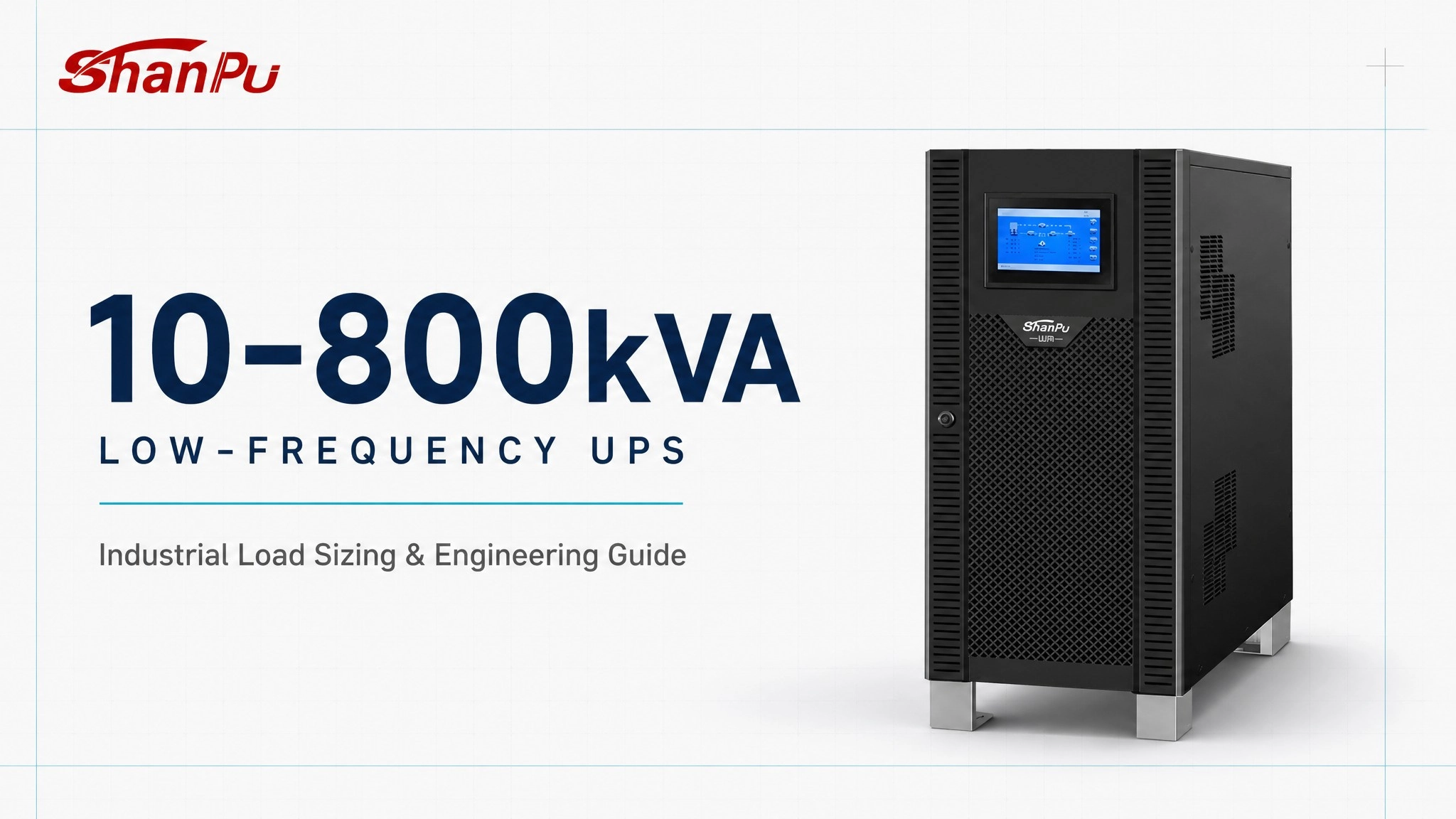
Low-Frequency UPS Engineering Guide: Sizing 10–800kVA Systems for Industrial Plant Loads
Voltage Sag Case Study: How a 1200kVA Modular UPS Project Was Rescued by Bus Distribution Box Selection
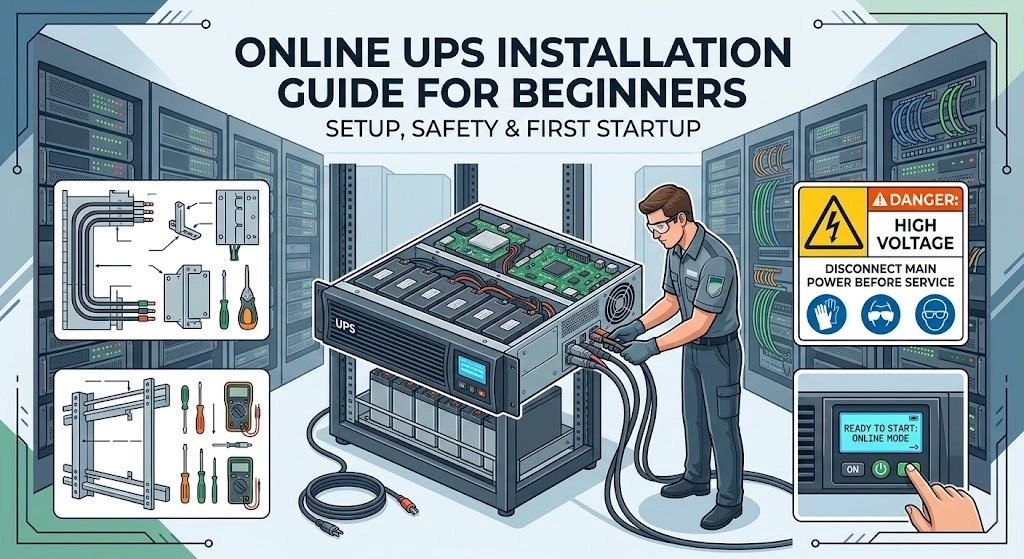
Online UPS Installation Guide for Beginners: Setup, Safety & First Startup
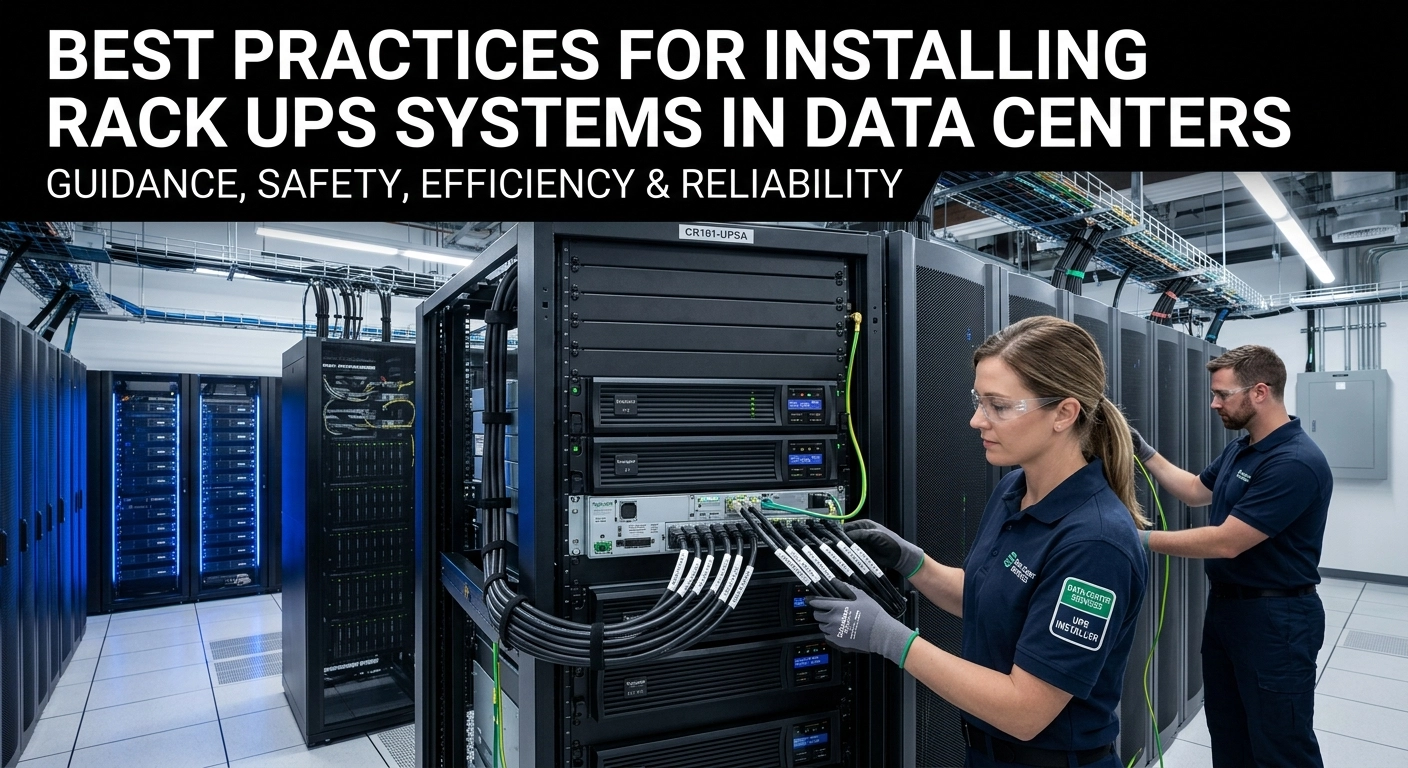
Best Practices for Installing Rack UPS Systems in Data Centers


Get in touch with us
If you have any comments or good suggestions, please leave us a message; later our professional staff will contact you as soon as possible.
© 2026 ShanPu. All Rights Reserved.
YouTube
SHANPU UPS
Shanpu