
what separates a reliable off-grid inverter manufacturer? | Insights by ShanPu

Tue, 11/3/2026
Hua lee
Learn how to assess off-grid inverter manufacturers through production-change controls, battery compatibility evidence, operating ratings, sample test records, warranty handling, and customization capacity. Because no company profile or product documentation was provided, manufacturer-specific capabilities cannot be verified; buyers should request evidence against their project requirements.

Quick Answer

A reliable off-grid inverter manufacturer can show that its design, production controls, and product documentation align with the intended loads and battery system. Compare battery compatibility, continuous and surge ratings, operating-temperature limits, and documented quality controls. Shanpu-specific capabilities cannot be verified from the information supplied; final selection depends on project specifications, testing, and site conditions.

How a Supplier Supports Off-Grid Inverter Projects

No company profile, product catalogue, or technical documentation was provided, so specific claims about product development, OEM or ODM, customization, quality control, or sample testing cannot be confirmed. Ask the proposed manufacturer for model-specific specifications and records rather than relying on general capability statements.

Before evaluating a quotation, confirm DC input voltage, battery chemistry and communication requirements, continuous and surge output, ambient operating range, target market, and applicable testing scope. MOQ, lead time, testing scope, and quotation need confirmation for each project; verify that any offered support is documented for the requested model.

Discuss Your Off-Grid Inverter Project Requirements

To assess a suitable inverter, provide the load profile and starting currents, system and battery voltage, battery chemistry and capacity, PV array details, installation environment, target market, and expected order quantity. You can ask about product options, sample evaluation, testing scope, and a project-specific quotation; send the details to SPU@gdshanpu.com.

Frequently Asked Questions

What evidence shows an off-grid inverter manufacturer controls production changes?

Ask for a documented change-control process showing how design or component substitutions are reviewed, approved, and reflected in product records. A change to switching devices, capacitors, firmware, or thermal components can affect performance or compatibility, so confirm whether the supplied model and revision match the test evidence and quotation. Traceable serial or batch identification can help connect a delivered unit to its applicable production records; a policy statement alone does not establish that controls are followed.

How should buyers verify battery compatibility beyond a listed voltage?

Nominal voltage is only one part of compatibility. Confirm the battery chemistry, permitted charge and discharge voltage range, current limits, low-voltage behavior, and any required battery-management-system communication. Ask which communication interface and protocol are supported, and whether compatibility has been checked with the exact battery model and firmware versions. If communication is unavailable, establish how charging limits and protective shutdown behavior are configured; do not assume that connectors or voltage labels prove interoperability.

Which inverter ratings reveal usable capacity under real operating conditions?

Compare continuous output with surge capability, including the surge duration and conditions under which it applies. Check whether ratings are specified for the relevant ambient temperature and whether output is derated at higher temperatures or other stated operating limits. Match the inverter to both steady loads and motor or compressor starting demand. Also review output voltage and frequency, waveform specifications, and overload or shutdown behavior; a single peak-watt figure does not describe sustained usable capacity.

What test records should accompany an off-grid inverter sample?

Request records that identify the tested model or revision, test conditions, measured results, and acceptance criteria. Depending on the product and destination market, relevant checks may cover output voltage and frequency, load response, protection behavior, temperature rise, and operation with the intended battery. IEC 62109-1 and IEC 62109-2 describe safety requirements for power converters and inverters in photovoltaic systems, but applicability and required evidence depend on product scope and market. A sample test report is not, by itself, proof of third-party certification.

How do warranty terms reveal a manufacturer's approach to field failures?

Read the written warranty for coverage period, exclusions, claim evidence, repair or replacement process, shipping responsibilities, and the party responsible for handling claims. Ask how recurring failures are logged and whether corrective actions can be traced to affected models or production batches. These details indicate how a supplier handles product issues, but warranty duration alone does not prove reliability. Compare the terms with the buyer's operating conditions and the legal requirements of the sales market.

Which questions expose whether customization is technically supported at scale?

Ask which changes are available as standard options and which require engineering review, such as output settings, enclosure configuration, connectors, communications, or firmware behavior. Request confirmation of validation steps, revision identification, production consistency checks, MOQ, and lead time for the proposed variant. For a bulk order, clarify whether the approved sample and production units will share the same specification and how deviations are handled. A supplier's willingness to customize is not evidence that a change has been validated.
Recommended for you
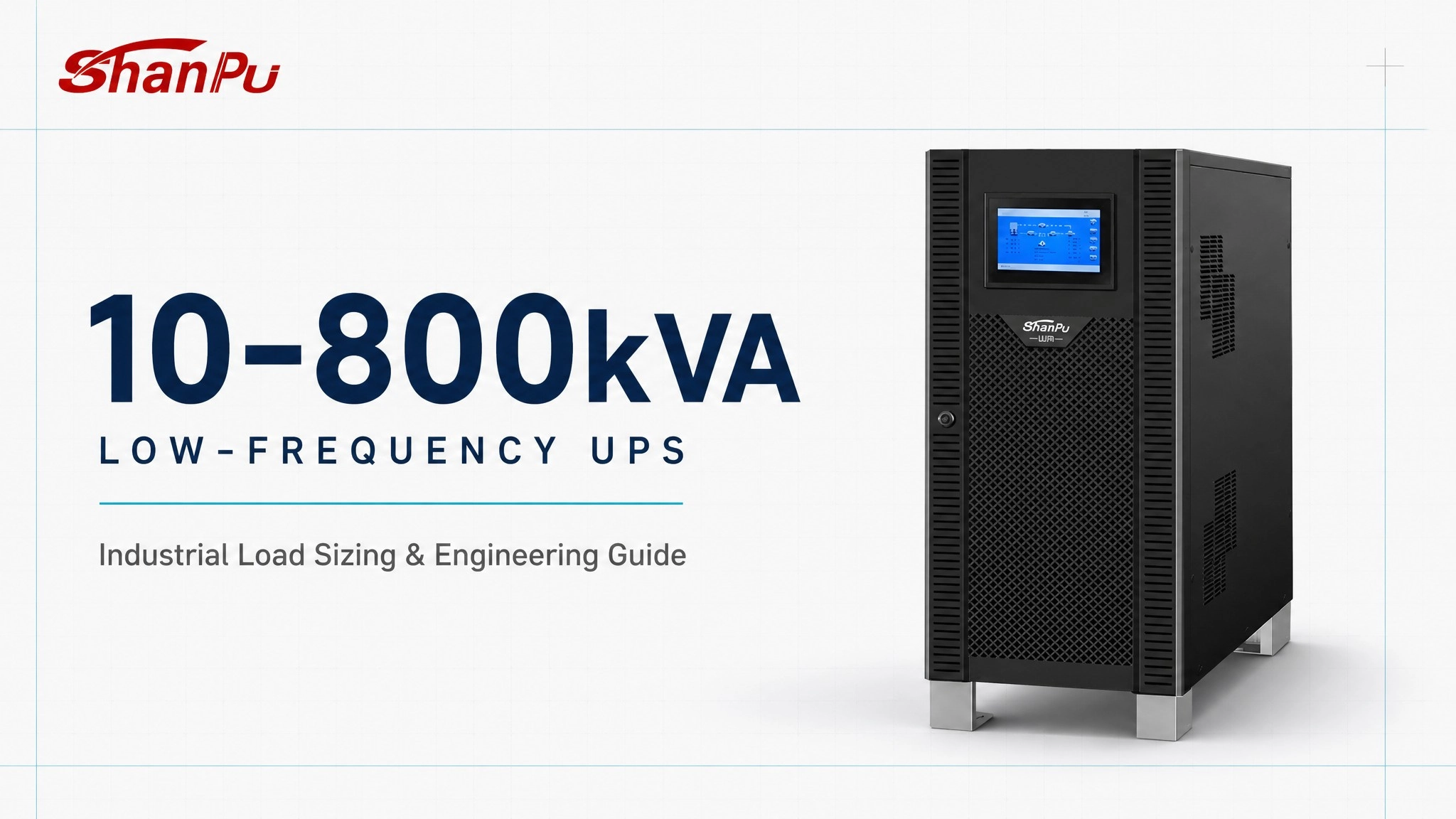
ShanPu 10-800kVA low-frequency industrial online UPS cabinet with touch display for plant load sizing and power protection - ShanPu

Low-Frequency UPS Engineering Guide: Sizing 10–800kVA Systems for Industrial Plant Loads
Low-Frequency UPS Engineering Guide: Sizing 10–800kVA Systems for Industrial Plant Loads
How a 1200kVA Modular UPS ProjectWas Rescued by Bus Distribution Box Selection - ShanPu

Voltage Sag Case Study: How a 1200kVA Modular UPS Project Was Rescued by Bus Distribution Box Selection
Voltage Sag Case Study: How a 1200kVA Modular UPS Project Was Rescued by Bus Distribution Box Selection
d5570f2c-08bc-4acd-86db-11a9480d6d58 - ShanPu

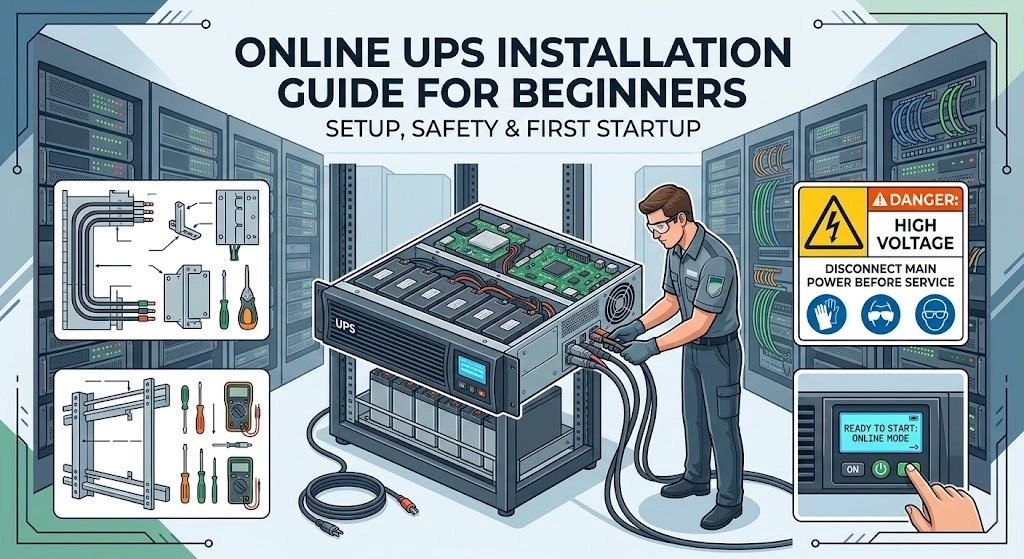
Online UPS Installation Guide for Beginners: Setup, Safety & First Startup
Online UPS Installation Guide for Beginners: Setup, Safety & First Startup
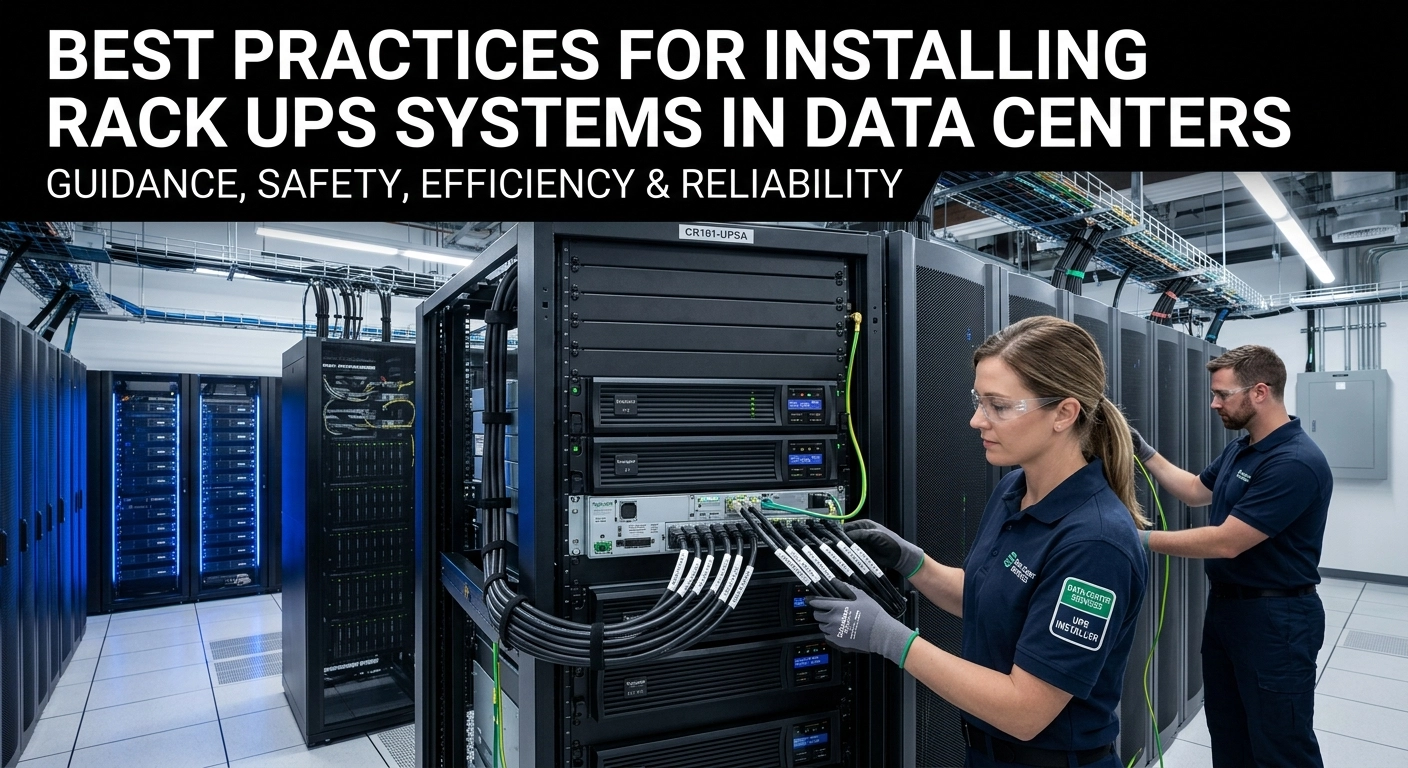
Technicians installing rack UPS systems in a data center. - ShanPu

Best Practices for Installing Rack UPS Systems in Data Centers

Best Practices for Installing Rack UPS Systems in Data Centers

Product Categories
You may also like
ShanPu 3C33 series 10-800kVA low frequency industrial online UPS for manufacturing plants - ShanPu
Three-Phase Low-Frequency Industrial Online UPS 10-800kVA
  1. ShanPu 3C33 10-800kVA three-phase industrial UPS is a low-frequency UPS with transformer-based online double conversion for factories and plants. Equipment, automation and control loads stay online through grid disturbance and outage with 0ms transfer.

  2. Rated 10-800kVA with three-phase input and output at 380/400/415Vac, the 3C33 scales from single machines to full production lines. A low-frequency isolation transformer blocks surge, harmonic and common-mode disturbance before reaching PLCs and drives; microprocessor control keeps output within ±1% across a 304-456Vac input window. External VRLA banks size backup time to the process.
Three-Phase Low-Frequency Industrial Online UPS 10-800kVA
ShanPu all-in-one hybrid inverter for home solar and battery storage - ShanPu
12KW ALL-IN-ONE HYBRID INVERTER

ShanPu SP-12KW/48V is an all-in-one hybrid inverter that integrates dual MPPT solar charging, 48V battery management and dual-output DC-to-AC inversion in one unit for large residential, commercial and light industrial storage systems. Two independent MPPT channels harvest power from separate PV arrays and convert it into regulated 48V DC, charging the battery bank at up to 160A while feeding the inverter stage; the controller automatically selects between solar, utility and battery based on the configured priority mode (SUB / SBU / SUF).The dual AC output design separates critical loads from non-critical circuits, while the 160A MPPT charging current and up to 160A AC charging rapidly recharge 48V battery banks after prolonged cloudy periods or heavy discharge. The 48V architecture reduces line losses and supports higher power delivery, and the Pro model adds parallel expansion plus optional WiFi monitoring for larger projects.

12KW ALL-IN-ONE HYBRID INVERTER
ShanPu all-in-one hybrid inverter for home solar and battery storage - ShanPu
3.6KW ALL-IN-ONE HYBRID INVERTER

ShanPu SP-3.6KW/24V is an all-in-one hybrid inverter that combines a 100A MPPT solar charger, 24V battery management and DC-to-AC inversion in one compact unit. Built for residential and small commercial systems, it delivers reliable power management with efficient energy conversion and straightforward installation.The inverter supports up to 5000W PV array power with a 60-500Vdc MPPT tracking range and up to 96% peak conversion efficiency from PV to AC. It can also run directly from solar PV or utility without a battery connected, and RS485 communication with automatic lithium battery activation makes LiFePO4 integration straightforward.

3.6KW ALL-IN-ONE HYBRID INVERTER
ShanPu all-in-one hybrid inverter for home solar and battery storage - ShanPu
6KW ALL-IN-ONE HYBRID INVERTER

ShanPu SP-6.2KW/48V is an all-in-one hybrid inverter that integrates MPPT solar charging, 48V battery management and DC-to-AC inversion into a single unit for medium residential and small commercial storage systems. Solar PV power is processed by the MPPT charger and converted into regulated 48V DC, which simultaneously charges the battery bank and supplies the inverter stage, while the built-in controller automatically selects the energy source - solar, utility or battery - based on the configured operating mode.

6KW ALL-IN-ONE HYBRID INVERTER

Get in touch with us

If you have any comments or good suggestions, please leave us a message; later our professional staff will contact you as soon as possible.

First Name must not exceed 100 characters.
Last Name must not exceed 100 characters.
Invalid email format or length exceeds 100 characters. Please re-enter.
Please enter a valid phone number!
Company Name must not exceed 150 characters.
Message must not exceed 3000 characters.
Contact customer service
×

Talk to Our Experts Today

Have any questions or need help?

Chat with our experts online now for instant answers.

First Name must not exceed 100 characters.
Last Name must not exceed 100 characters.
Invalid email format or length exceeds 100 characters. Please re-enter.
Please enter a valid phone number!
Company Name must not exceed 150 characters.
Message must not exceed 3000 characters.
×

Customized Solutions

Customize your UPS system according to your needs.

We will provide you with the most suitable solution to meet your specific requirements.

First Name must not exceed 100 characters.
Last Name must not exceed 100 characters.
Invalid email format or length exceeds 100 characters. Please re-enter.
Please enter a valid phone number!
Company Name must not exceed 150 characters.
Message must not exceed 3000 characters.
×

Submit a Request

Fill out your requirements information, and we will provide you with personalized services and solutions as soon as possible.

First Name must not exceed 100 characters.
Last Name must not exceed 100 characters.
Invalid email format or length exceeds 100 characters. Please re-enter.
Please enter a valid phone number!
Company Name must not exceed 150 characters.
Message must not exceed 3000 characters.
×

Get a Free Quote

Get a quote for a UPS power system that suits your needs.

Provide detailed information, and let us tailor the best solution for you.

First Name must not exceed 100 characters.
Last Name must not exceed 100 characters.
Invalid email format or length exceeds 100 characters. Please re-enter.
Please enter a valid phone number!
Company Name must not exceed 150 characters.
Message must not exceed 3000 characters.
×

Get the Product Catalog

Fill in your details to receive our latest UPS product catalog and explore our full range of power solutions.

First Name must not exceed 100 characters.
Last Name must not exceed 100 characters.
Invalid email format or length exceeds 100 characters. Please re-enter.
Please enter a valid phone number!
Company Name must not exceed 150 characters.
Message must not exceed 3000 characters.