


which pv inverters suit residential, c&i, and utility projects? | Insights by ShanPu

Quick Answer
Residential systems commonly use string inverters or microinverters; C&I projects often use three-phase string inverters or central designs; utility plants may use either string or central inverter architectures. The right fit depends on project scale, shading, DC-to-AC design, grid requirements, and service strategy. Confirm model-specific performance and suitability against the site, local rules, and project testing.
How to Assess Supplier Support for PV Inverter Projects
The brand name and company profile were not provided, so product development, OEM/ODM, customization, quality-control processes, certifications, and sample capabilities cannot be verified. Ask the manufacturer or supplier for model-specific datasheets, warranty terms, grid-code documentation, monitoring details, and a written description of support.
Before requesting a quotation, confirm the project type, location, capacity, module electrical data, AC voltage and phase, grid requirements, and storage plans. MOQ, lead time, testing scope, and quotation must be confirmed for each project; no company-specific terms are available in the supplied information.
Share Your PV Inverter Project Requirements
For an initial technical discussion, provide the project type and location, planned DC and AC capacity, module datasheets, array layout and shading conditions, grid voltage and applicable requirements, and whether battery storage is planned. These details help frame suitable inverter architectures, document questions, sample steps, and quotation scope for review. Send project information to SPU@gdshanpu.com.
Project-Specific PV Inverter FAQs
Which inverter topology best fits a typical residential rooftop system?
For many residential rooftops, a string inverter is a practical starting point when modules have similar orientation and limited shading. Microinverters convert DC to AC at individual modules, which can suit roofs with multiple orientations or module-level monitoring needs. Neither topology is automatically more productive: the result depends on layout, shade, equipment compatibility, installation requirements, and lifecycle service considerations. Compare inverter input limits and MPPT arrangements with the module string design, and check whether module-level power electronics are required by the project or local rules. The best choice is the one that fits the roof and electrical design, not simply the most familiar product type.
When should homes choose string versus microinverters for shading?
Shading can make microinverters worth evaluating because each module operates through its own conversion unit, limiting some effects of mismatch between modules. A string inverter can still be suitable when shading is modest, modules are grouped consistently, or the design uses separate MPPT inputs for distinct array sections. The exact energy effect depends on shade timing, affected modules, bypass-diode behavior, string configuration, and inverter control; it cannot be inferred from the word “shaded” alone. Ask for a design comparison using the roof layout and a credible shading assessment. Also compare module-level equipment count, monitoring, replacement access, and warranty terms rather than assuming one topology is always superior.
How do commercial rooftops determine inverter size and configuration?
Commercial designers begin with the PV array’s module count and electrical characteristics, then check inverter DC voltage and current limits, MPPT inputs, AC output, and the project’s intended DC-to-AC ratio. The ratio is a design choice, not a universal fixed value: clipping, irradiance profile, export limits, equipment loading, and financial assumptions affect whether it is appropriate. Roof sections with different orientations or shading may need separate MPPT inputs or inverter groupings. Three-phase connection is common in commercial systems, but the site service and utility interconnection requirements determine the actual configuration. Confirm usable roof area, structural and fire-access constraints, export controls, and maintenance access before finalizing capacity.
Which features matter most for C&I inverter selection?
For a commercial and industrial project, compare power rating and three-phase compatibility alongside MPPT flexibility, DC input limits, operating temperature range, enclosure rating, monitoring, and service access. A modular string-inverter layout can distribute conversion across an array and may simplify isolating a unit for service; a central arrangement can concentrate conversion equipment but changes cabling and maintenance planning. These are architectural trade-offs, not universal performance rankings. Verify grid-support functions and protection settings against the local interconnection requirements, because permitted functions and settings vary by jurisdiction. The selected model must also match the module configuration, site environment, communications plan, and the owner’s operations and maintenance capability.
What distinguishes utility-scale central and string inverter designs?
Central inverters combine the DC output of many array strings at larger conversion units, while utility-scale string designs distribute conversion among multiple smaller units. Central architecture can concentrate equipment and service points; string architecture can provide more distributed MPPT control and may limit the portion of the plant associated with an individual inverter outage. Actual availability and energy yield depend on system design, component reliability, repair logistics, and operating conditions, so topology alone does not establish a result. Compare DC collection, AC collection, transformer and switchgear arrangement, monitoring, spare-parts strategy, and access for replacement. Grid-code compliance and plant-level controls must be assessed for the selected equipment and project location.
How should buyers compare inverter costs beyond purchase price?
Compare the full project and operating implications rather than treating the inverter purchase price as the whole cost. Relevant items include balance-of-system equipment, cabling, protection and switchgear, installation labor, commissioning, monitoring, planned maintenance, spare parts, and the consequences of downtime. Different topologies shift costs among these categories: for example, module-level devices increase the number of units, while centralized equipment can require different DC collection and service arrangements. Request comparable quotations that state model, included accessories, warranty scope, delivery terms, exclusions, and commissioning responsibilities. Evaluate expected energy performance using project-specific assumptions and make sure technical and commercial comparisons use the same system boundaries.
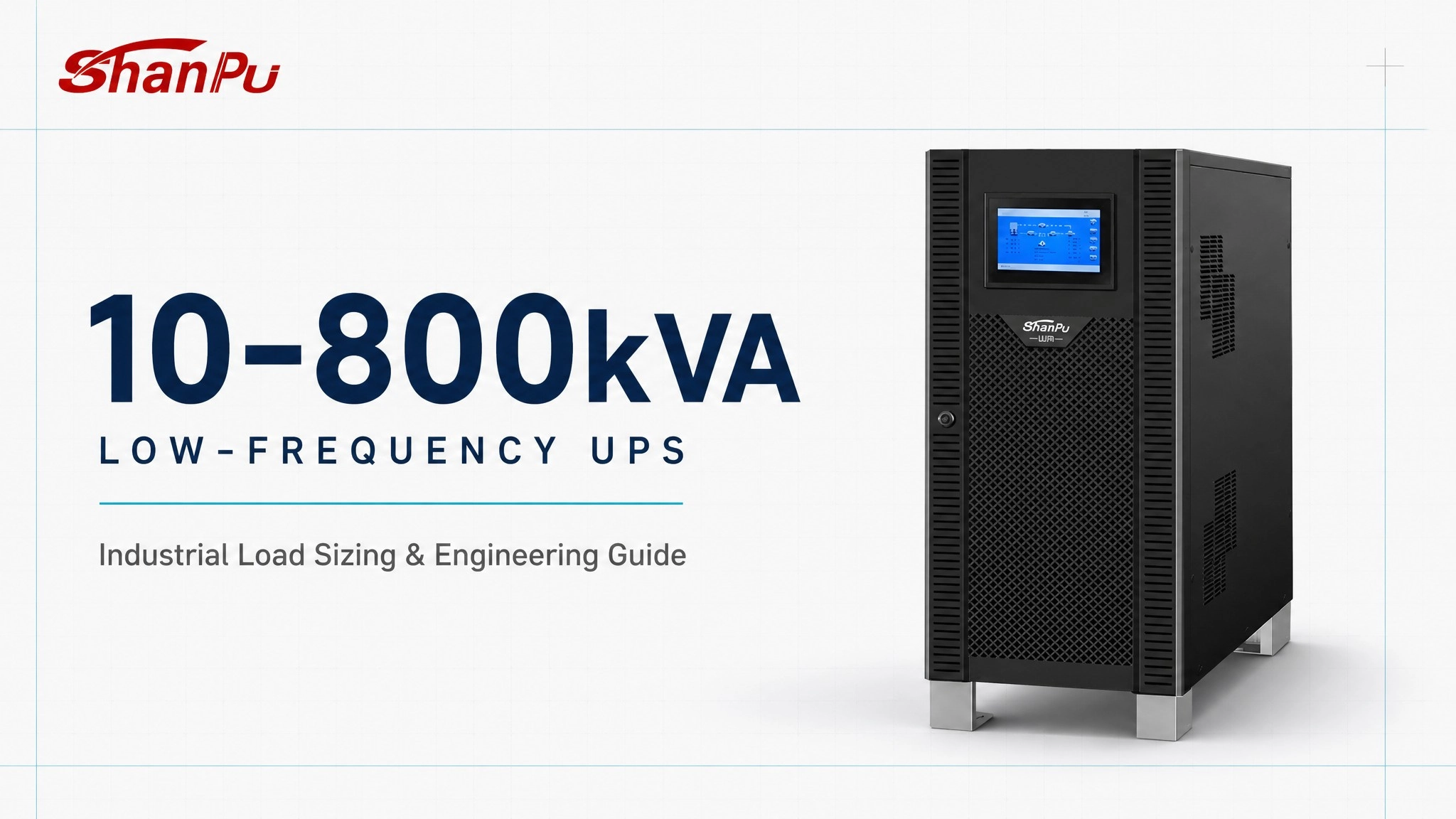
Low-Frequency UPS Engineering Guide: Sizing 10–800kVA Systems for Industrial Plant Loads
Voltage Sag Case Study: How a 1200kVA Modular UPS Project Was Rescued by Bus Distribution Box Selection
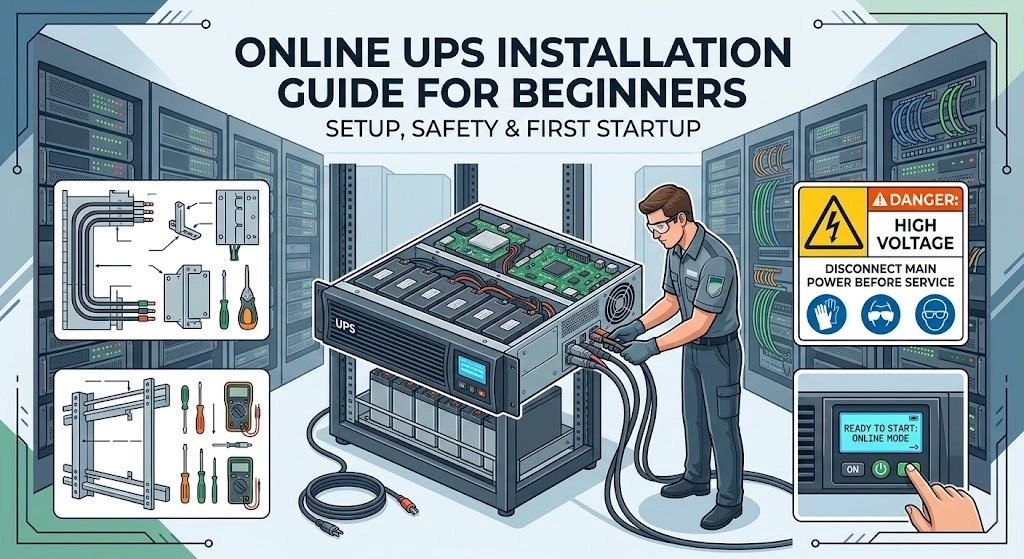
Online UPS Installation Guide for Beginners: Setup, Safety & First Startup
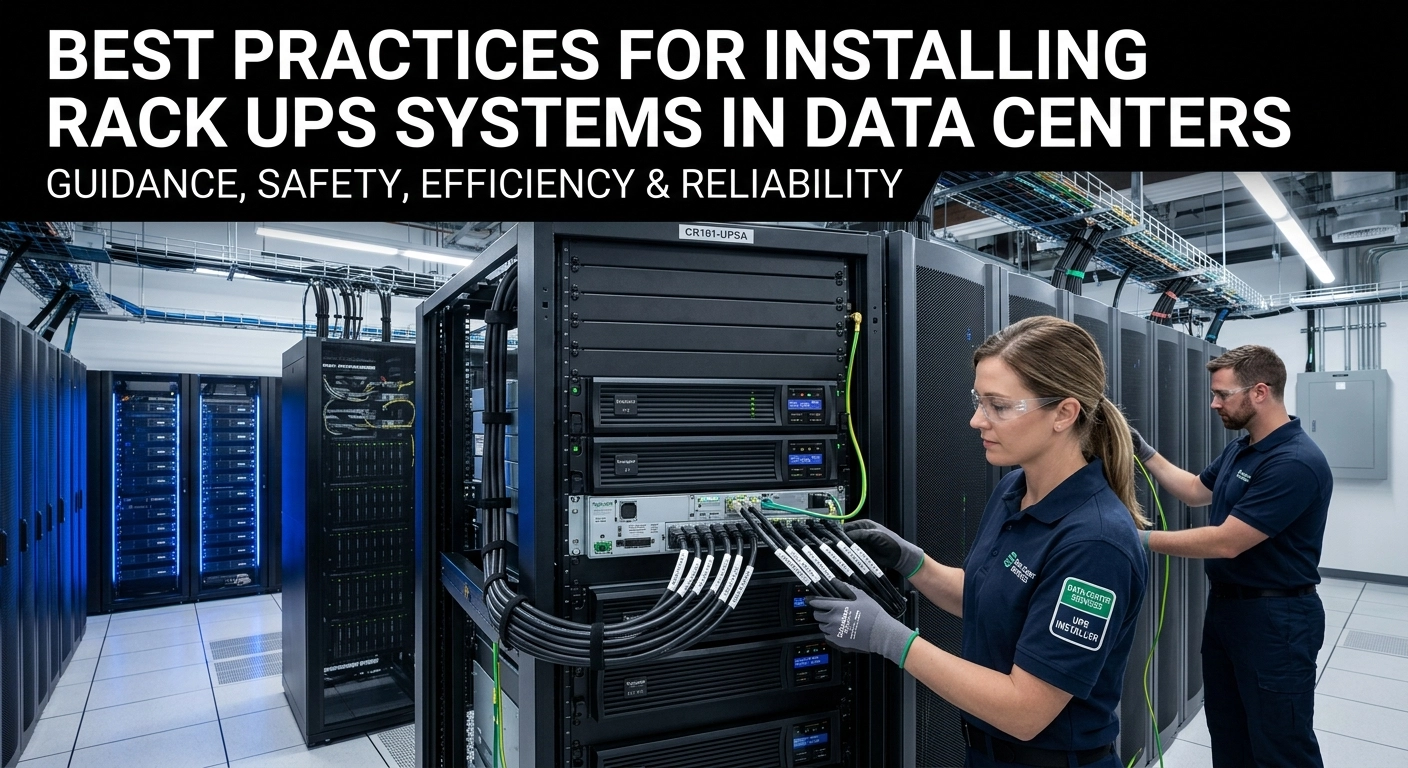
Best Practices for Installing Rack UPS Systems in Data Centers
Get in touch with us
If you have any comments or good suggestions, please leave us a message; later our professional staff will contact you as soon as possible.
© 2026 ShanPu. All Rights Reserved.
YouTube
SHANPU UPS
Shanpu