


which pv inverter types fit utility-scale and commercial projects? | Insights by ShanPu

Quick Answer
Utility-scale solar plants commonly use central or utility-rated string inverters; commercial projects often use string inverters, with architecture chosen around array layout, voltage class, service strategy, and grid-code requirements. Central units consolidate conversion, while string units distribute it across more points. Compare AC rating, DC input limits, MPPT design, and serviceability; final fit depends on project design and site conditions.
How to Assess Support for Utility-Scale and Commercial PV Inverter Projects
The supplied brief does not identify a manufacturer, product range, or verified company capabilities, so no product-development, OEM/ODM, testing, certification, or service claim can responsibly be attributed to a brand. For procurement, request model-specific datasheets and written confirmation of operating limits, supported grid functions, and applicable standards.
Before comparing offers, confirm project capacity, DC array design, AC voltage and interconnection point, environmental conditions, monitoring needs, and service strategy. Any MOQ, lead time, testing scope, and quotation must be confirmed for the specific project and supplier; these details cannot be established from the information provided.
Discuss Your PV Inverter Project Requirements
For a project-specific comparison, provide the project location and grid connection level, plant or building capacity, module and array configuration, proposed DC-to-AC ratio, site conditions, monitoring requirements, and procurement timeline. These details can help frame a discussion about suitable inverter architectures, technical documentation, testing scope, and quotation. Send the project brief to SPU@gdshanpu.com.
PV Inverter Selection FAQs
Which inverter architecture suits a 100 MW utility-scale solar plant?
A 100 MW plant could use central inverters, utility-rated string inverters, or a combination; capacity alone does not determine the right architecture. Central units consolidate DC inputs and AC conversion into fewer, larger blocks, while string designs distribute conversion across more units and can provide more granular MPPT and fault isolation. Compare block sizing, collection-system design, inverter input limits, expected operating conditions, grid requirements, and the owner’s maintenance resources. Model energy yield, availability, replacement logistics, and electrical balance-of-plant costs using project-specific assumptions before selecting an architecture.
When do utility-scale projects choose central over string inverters?
Central inverters may suit projects where large, relatively uniform array blocks align with centralized conversion and maintenance planning. String inverters can be attractive when the plant has varied orientations, uneven terrain, distributed blocks, or a preference for more granular MPPT and fault isolation. Neither design is inherently superior: central systems have fewer conversion units but can concentrate the impact of a unit outage, while string systems create more units to monitor and maintain. Compare layout, shading and mismatch, AC collection design, spare-parts strategy, service access, and modeled lifetime cost rather than relying on a simple capacity threshold.
Are string inverters practical for large commercial rooftop solar systems?
Yes, string inverters are widely used in commercial rooftop designs, particularly where roof sections differ in orientation, tilt, or shading and separate MPPT inputs can help manage those differences. The design still needs to account for rooftop access, inverter mounting locations, cable routes, ambient temperature, ventilation, electrical clearances, and the building’s interconnection limits. Check the inverter’s permitted DC voltage and current, MPPT operating range, AC output characteristics, monitoring options, and applicable electrical-code requirements. A rooftop layout and electrical design should confirm that the selected number and placement of units are workable for the specific building.
How do DC-to-AC ratios affect inverter selection for commercial projects?
The DC-to-AC ratio compares the solar array’s rated DC capacity with the inverter’s rated AC output. A higher ratio can increase inverter loading during lower-irradiance periods, but it can also cause clipping when available DC power exceeds the inverter’s conversion capacity. The appropriate ratio depends on local irradiance and temperature, module orientation, shading, inverter operating limits, export restrictions, electricity tariffs, and the project’s energy-yield and financial assumptions. Compare hourly production and clipping in a site-specific model, and verify that the array stays within the inverter’s maximum voltage, current, and power limits.
What grid-support functions should buyers verify in utility-scale inverters?
Confirm the interconnection requirements for the project’s actual grid connection, then verify the inverter’s documented functions and control limits. Depending on the applicable grid code, requirements can include reactive-power capability, voltage and frequency response, active-power control, ride-through behavior, ramp-rate control, and communications or plant-controller interfaces. Transmission-connected inverter-based resources in the United States may fall under IEEE 2800 requirements, while distribution-connected projects can be subject to different rules, such as applicable interconnection standards and local utility requirements. Do not infer compliance from a feature name: check the model-specific documentation, settings range, certification or test evidence required by the authority having jurisdiction, and project-level controls.
How do serviceability and redundancy differ between central and string inverters?
Central architectures use fewer, larger conversion units, which can simplify the number of inverter locations but may concentrate production impact when a unit is unavailable. String architectures distribute conversion across more units, so a fault may affect a smaller portion of the array, but they also create more devices to monitor, inspect, and potentially replace. Actual availability depends on equipment reliability, plant design, repair response, spare-parts availability, monitoring, and maintenance procedures. Compare modeled outage scenarios and service logistics, including replacement access and the consequences of failures in shared equipment such as transformers, switchgear, or communications systems.
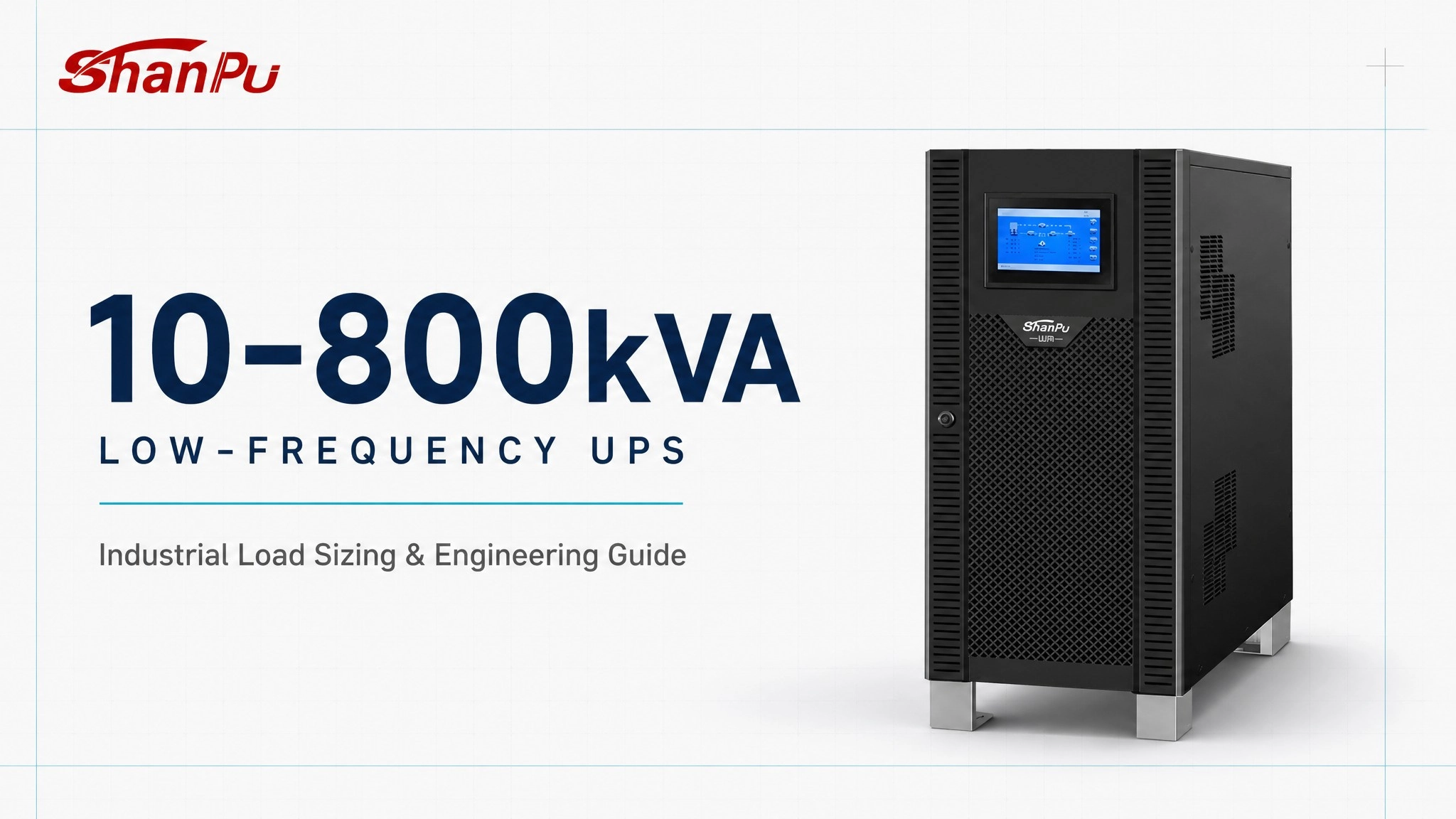
Low-Frequency UPS Engineering Guide: Sizing 10–800kVA Systems for Industrial Plant Loads
Voltage Sag Case Study: How a 1200kVA Modular UPS Project Was Rescued by Bus Distribution Box Selection
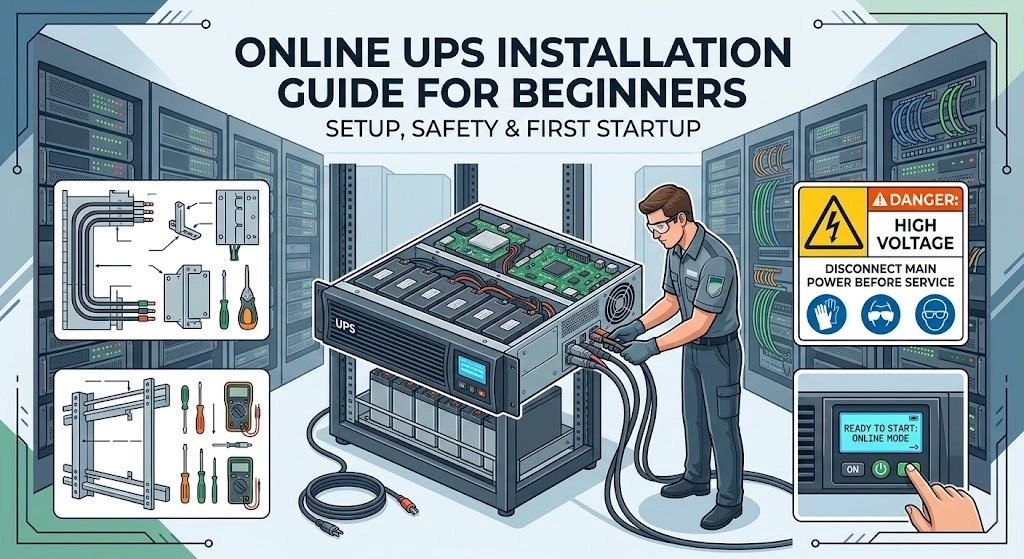
Online UPS Installation Guide for Beginners: Setup, Safety & First Startup
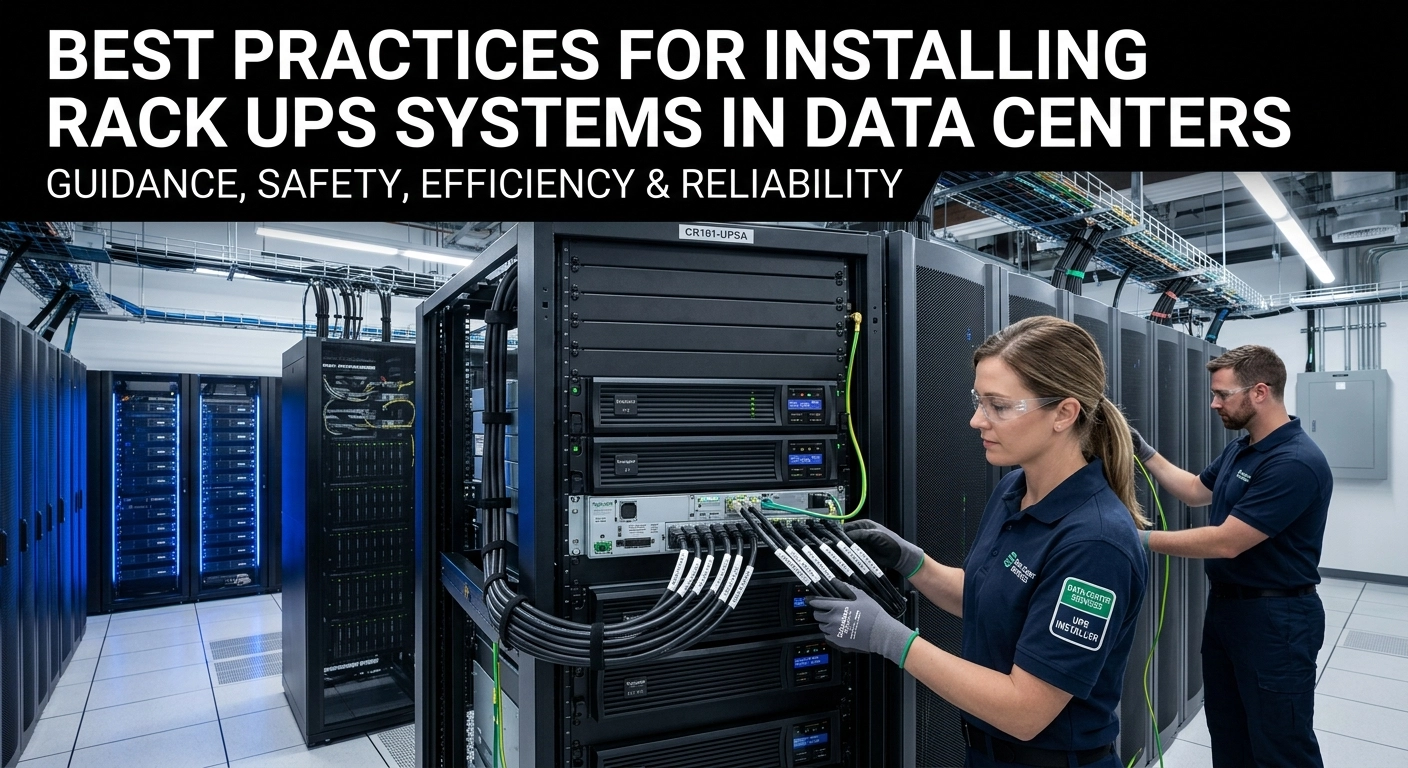
Best Practices for Installing Rack UPS Systems in Data Centers


Get in touch with us
If you have any comments or good suggestions, please leave us a message; later our professional staff will contact you as soon as possible.
© 2026 ShanPu. All Rights Reserved.
YouTube
SHANPU UPS
Shanpu