


how can buyers prevent delays in industrial ups deliveries? | Insights by ShanPu

Quick Answer
Buyers can prevent delays in industrial UPS deliveries by freezing the specification early, preparing complete export and customs documents, confirming battery shipping classification, and verifying site access before dispatch. The most important factors are: rated power and voltage, battery type, Incoterms, documentation completeness, and site unloading conditions. Final solutions depend on the specific project.
How Our Team Supports Industrial UPS Projects
Our team supports industrial UPS projects by working from the buyer's technical requirements rather than a generic catalog item. Typical review points include rated capacity in kVA and kW, input and output voltage, phase configuration, battery type and autonomy time, and cabinet dimensions. Where a project requires a customized configuration, these parameters are documented before production planning begins.
We also help align packing details, documentation lists, and shipment milestones with the confirmed specification, so fewer changes occur after the order is released. MOQ, lead time, and quotation must be confirmed for each project, because they depend on configuration, battery selection, destination, and order volume.
Share Your Industrial UPS Delivery Requirements
Please send the rated power and voltage, battery type and backup time, quantity, destination country and port, preferred Incoterm, site access conditions, and target delivery date. We can then discuss specification freezing, documentation, packing, and a realistic shipment schedule. Contact our team at SPU@gdshanpu.com with your project details for review.
FAQ
Which technical documents delay industrial UPS shipments most often at customs?
The most common cause is inconsistency between documents rather than a missing certificate. The commercial invoice, packing list, and transport document (bill of lading or air waybill) should describe the same model, kVA rating, quantity, weight, and package count. A UPS system is normally classified under HS heading 8504.40 (static converters), while separately shipped batteries fall under heading 8507. If the invoice and packing list use different descriptions or codes, customs officers often hold the cargo for inspection or request clarification.
Beyond the core set, prepare a certificate of origin where preferential duty is claimed, the datasheet, and conformity documents requested by the destination market, such as test reports referencing IEC 62040-1 for safety and IEC 62040-3 for performance. If batteries are included, add the dangerous goods paperwork described below. Ask the customs broker in the destination country to review the draft document set before dispatch, since requirements differ between jurisdictions and a correction after arrival usually costs more time than a correction before shipment.
How does battery shipping classification affect industrial UPS lead time?
Battery chemistry determines whether a shipment is treated as ordinary cargo or as dangerous goods. Lithium-ion batteries are regulated as Class 9 under UN3480 when shipped alone and UN3481 when packed with or contained in equipment. The cells must be supported by a UN 38.3 test summary, as set out in the UN Manual of Tests and Criteria. Sealed lead-acid (VRLA) batteries are generally shipped under UN2800 as non-spillable batteries, and they may qualify for reduced requirements under IATA and IMDG special provisions if they pass the specified vibration and pressure differential tests.
The effect on lead time is practical. Dangerous goods cargo needs a forwarder and carrier that accept it, earlier booking cut-offs, and correct packaging marks and declarations. Air capacity for lithium batteries is more restricted than for general cargo. Buyers can confirm the battery type and its shipping classification at the quotation stage, and decide whether battery modules should travel with the cabinet, ship separately, or be sourced locally. Each option changes the schedule and cost differently.
What site readiness checks prevent industrial UPS delivery rejection at receiving?
Rejection at receiving usually comes from access and handling problems. A UPS cabinet with an internal battery string can be heavy and dense, so confirm door widths and heights, corridor turning space, elevator capacity, ramp gradients, and floor load rating against the cabinet dimensions and gross weight in the packing list. Decide in advance whether unloading will use a forklift, pallet jack, or crane, and whether the carrier's vehicle can reach the dock. Many carriers do not provide unloading equipment under standard delivery terms.
Name a consignee contact with authority to receive the goods, and schedule a delivery appointment. The installation room should be ready, with adequate ventilation and temperature control, since VRLA batteries are commonly rated against a 25°C reference temperature. On arrival, check tilt and shock indicators, photograph the packaging, and record visible damage on the delivery receipt before signing. This record supports any insurance claim and avoids disputes about when the damage occurred.
How should buyers define UPS specifications to avoid mid-order change delays?
Changes after production release are a frequent source of delay, because they can affect component purchasing, wiring, and test plans. Define the specification in a signed technical datasheet with a revision number. It should include the topology (for example, online double-conversion as defined in IEC 62040-3), kVA and kW rating, power factor, input and output voltage, frequency, phase configuration, bypass arrangement, parallel or redundancy requirements such as N+1, and communication interfaces such as SNMP or Modbus.
Pay attention to kVA versus kW. Older designs often used a 0.8 output power factor, while many modern units are rated at or near unity, so the same kVA figure can represent different real power. Also fix battery type, autonomy time, cabinet dimensions, cable entry direction, labeling language, and environmental conditions. Agree a change control rule in writing so that any request after approval is assessed for its effect on cost and lead time before it is accepted.
Which Incoterms reduce delay risk for heavy UPS cabinet shipments?
No single Incoterm suits every project, but the risk allocation should be clear. Under Incoterms 2020, EXW leaves export clearance to the buyer, which is often difficult for a foreign buyer, so FCA is commonly the more workable choice for export-cleared pickup. For containerized cargo, the ICC guidance favors FCA, CPT, or CIP over the sea-only terms FOB, CFR, and CIF, because risk transfers at the point of handover to the carrier rather than on board the vessel.
For heavy cabinets, check what each term leaves out. DAP delivers to a named place but does not include import clearance or unloading, so those must be arranged by the buyer. DDP places import clearance on the seller, which requires local registration and a clear duty arrangement. Insurance also differs: CIP requires broader cover (Institute Cargo Clauses A) than CIF (Clauses C). Name the exact place of delivery, state who handles unloading, and confirm cargo insurance for equipment that is sensitive to impact.
How can buyers verify factory production milestones before UPS shipment?
Request a written milestone plan at order confirmation, covering drawing approval, order placement for long-lead components, assembly, burn-in, factory acceptance testing (FAT), packing, and shipment booking. Long-lead items in industrial UPS systems typically include power semiconductors, transformers, capacitors, and batteries, so ask which of these are in stock and which must be purchased. A delay in any one of them can affect the shipping date, so ask for updates tied to each milestone, supported by photographs or short videos.
The FAT is the most important checkpoint. Agree its test items and acceptance criteria in advance, for example load tests, transfer to bypass and battery mode, alarm functions, and output voltage regulation, referenced to the performance classifications in IEC 62040-3. Buyers can witness the test on site, by live video, or through a third-party inspector. Leave time between FAT completion and cargo cut-off so that any rework can be done without missing the booked vessel or flight.
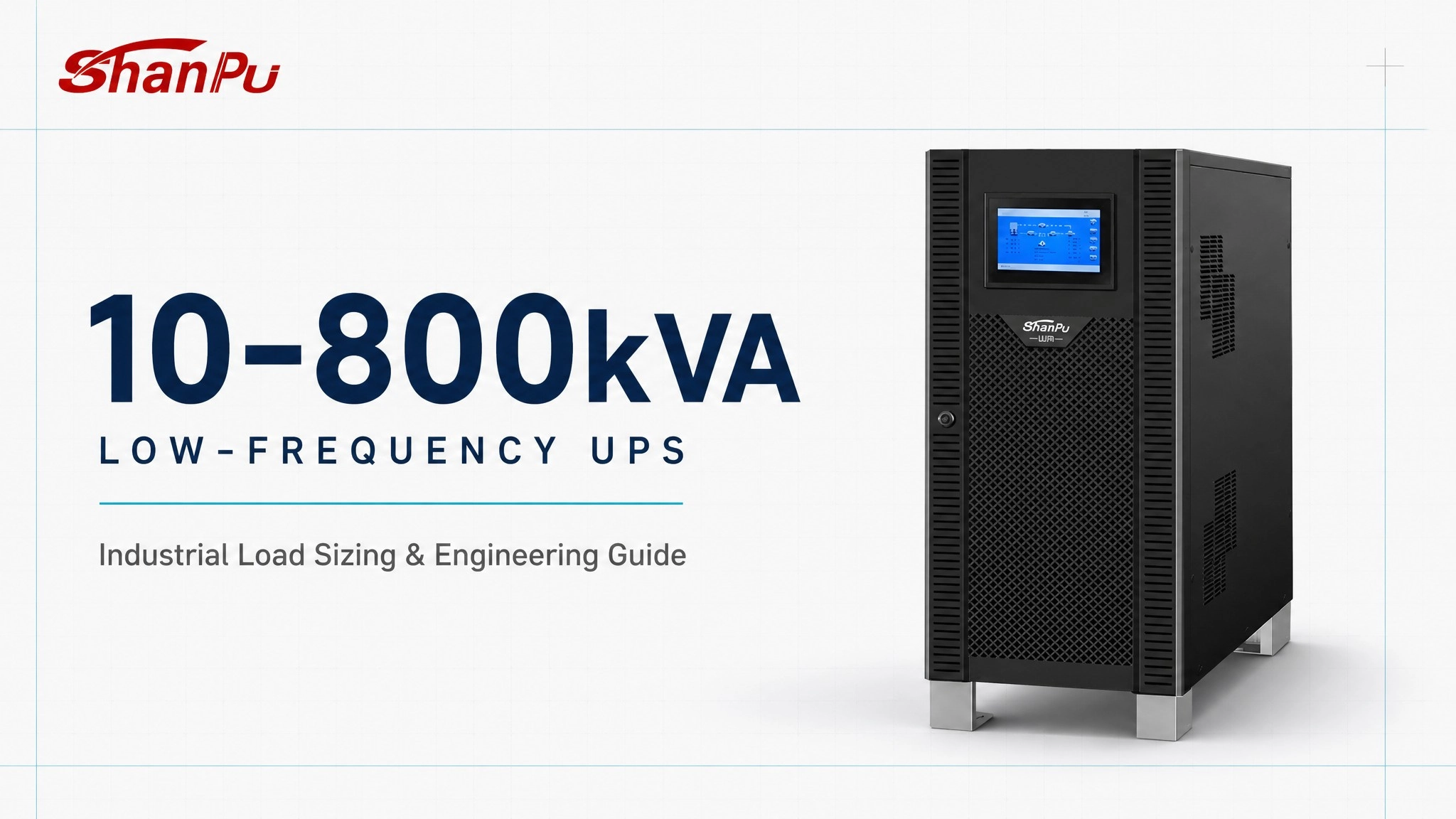
Low-Frequency UPS Engineering Guide: Sizing 10–800kVA Systems for Industrial Plant Loads
Voltage Sag Case Study: How a 1200kVA Modular UPS Project Was Rescued by Bus Distribution Box Selection
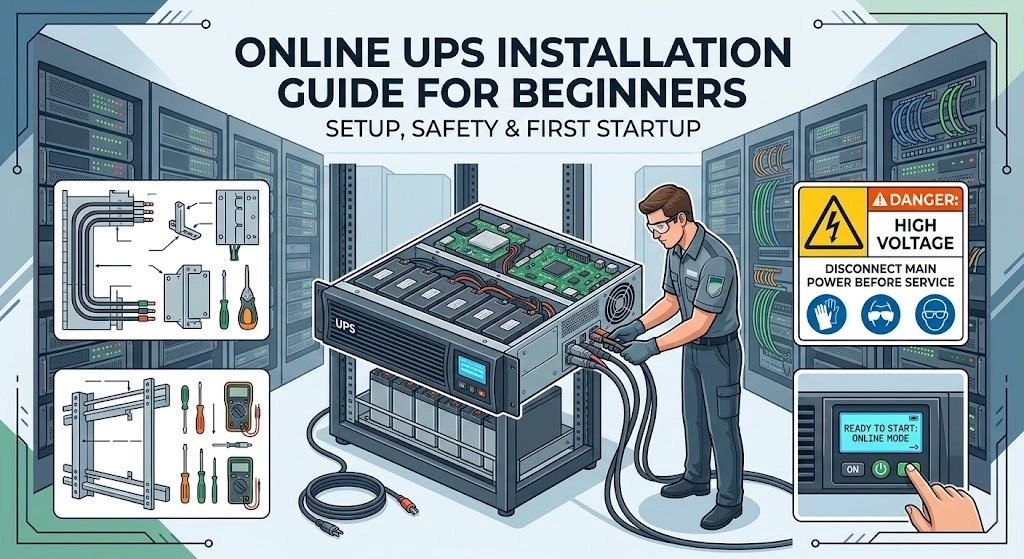
Online UPS Installation Guide for Beginners: Setup, Safety & First Startup
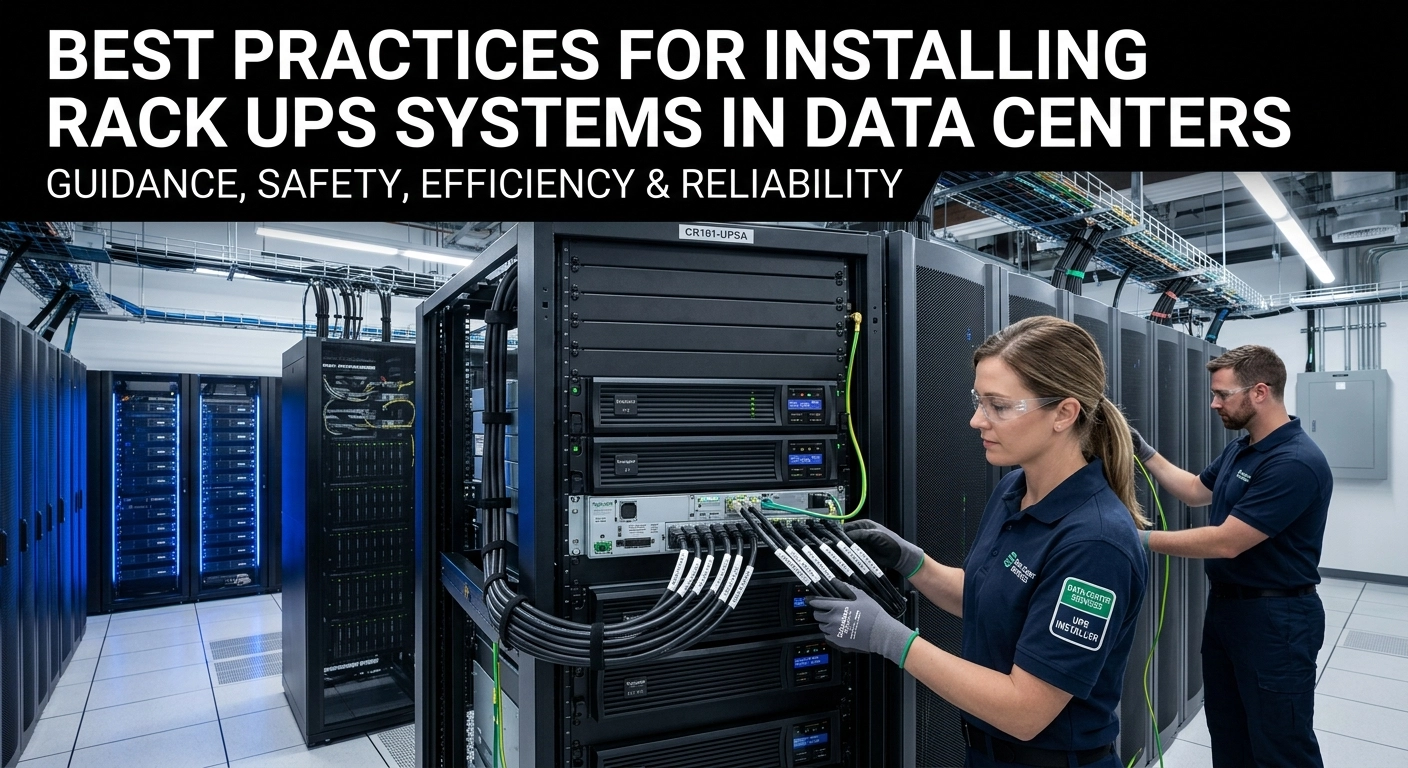
Best Practices for Installing Rack UPS Systems in Data Centers


Get in touch with us
If you have any comments or good suggestions, please leave us a message; later our professional staff will contact you as soon as possible.
© 2026 ShanPu. All Rights Reserved.
YouTube
SHANPU UPS
Shanpu