


which offline ups specifications matter for commercial buyers? | Insights by ShanPu

Quick Answer
Commercial buyers should prioritize load capacity in both VA and watts, transfer time, output waveform, input voltage window, and battery runtime when evaluating an offline UPS. These parameters determine whether connected POS terminals, network devices, or security systems stay powered during outages. Final selection depends on the specific project, load profile, and site conditions.
How We Support Your UPS Projects
Our team supports UPS projects through specification review, load and runtime matching, and documentation of the parameters a buyer needs to compare quotes. Where a project requires OEM labeling or configuration adjustments, feasibility is assessed against the requested application rather than assumed in advance.
Core buyer parameters we review include rated capacity in VA and W, transfer time, output waveform, input voltage range, battery type and capacity, and applicable safety documentation. MOQ, lead time, and quotation must be confirmed per project, since they vary with configuration, battery selection, and order volume.
Discuss Your Standby Power Specification Requirements
Please send the connected load list with wattage and VA, required runtime, local voltage and frequency, preferred output waveform, installation environment, target quantity, and any certification requirements. We can discuss configuration options, battery sizing, OEM possibilities, and project timing. Contact us at SPU@gdshanpu.com with your details.
FAQ
How do I calculate the real wattage an offline UPS needs?
Start with the watt rating of each connected device, not the VA figure printed on a UPS label. Watts equal VA multiplied by power factor, and compact standby units are often rated at a power factor between 0.6 and 0.7, while newer designs may reach 0.9 or higher. A unit labeled 1000 VA may therefore support only 600 to 900 W.
Add up the continuous load, then check inrush current for devices with motors, compressors, or laser print engines, because startup draw can exceed running draw several times over. A common engineering practice is to keep the continuous load at roughly 70 to 80 percent of the rated watt capacity and to leave 20 to 25 percent headroom for expansion. Under IEC 62040-3, offline designs fall into the voltage and frequency dependent (VFD) class, so confirm the rating applies on battery mode and not only on mains.
What does transfer time mean on a standby UPS datasheet?
Transfer time is the interval between the UPS detecting a mains failure or out-of-tolerance condition and the inverter taking over the load. In offline topologies, the load is fed directly from mains through a relay, so a short break is inherent. Datasheets commonly list figures in the range of 2 to 10 ms, though the test conditions behind the number vary.
The figure matters because connected equipment must ride through the gap. The ITIC (CBEMA) curve, widely used as a reference for information technology equipment, describes tolerance of an interruption up to about 20 ms, and typical switch-mode power supplies hold energy for a similar period. Desktop PCs, routers, and POS terminals usually fit within that envelope. Equipment with tight tolerances, such as some industrial controllers or medical devices, may not, and should be evaluated against a line-interactive or double-conversion design instead. Ask whether the stated transfer time is typical or maximum.
Is a modified sine wave output safe for commercial equipment?
Many offline units produce a stepped or simulated sine wave only while running on battery, and the effect depends on the load. Resistive loads and most standard switch-mode power supplies in PCs, network switches, and card readers generally tolerate it. Problems appear with inductive loads such as compressors and fans, which can run hotter and louder, and with power supplies using active power factor correction, which may reject the waveform or shut down.
Before specifying, read the equipment manufacturer's input requirements and test a sample unit with the actual load on battery. Where the load list includes refrigeration, medical or laboratory devices, or high-end servers with active PFC supplies, a pure sine wave output is the more conservative choice. Since the waveform applies only during outages, also consider how long the unit will be on battery in your environment, because brief events carry less exposure than long ones.
Which input voltage window reduces unnecessary battery switching in unstable grids?
An offline UPS transfers to battery whenever mains moves outside its accepted window, so a narrow window on a weak grid causes frequent switching and extra battery cycling. For reference, EN 50160 describes public low-voltage supply as staying within plus or minus 10 percent of nominal for 95 percent of a week, with the remainder allowed to deviate more. A unit that transfers at only plus or minus 8 percent will therefore switch more often than one set to 15 percent.
Look for a datasheet that states both the transfer thresholds and the wider operating range, and check whether the sensitivity is adjustable, because widening the window trades battery wear against load protection. Some units include limited boost and buck correction, which helps with sustained sags. If the site is fed by a generator, verify frequency tolerance as well, since unstable generator frequency can force repeated transfers. Confirm nominal voltage and frequency (for example 110, 120, 220, 230, or 240 V at 50 or 60 Hz) match the destination market.
How long will the battery really run at partial load?
Runtime is not linear with load. A first estimate is battery energy in watt-hours (voltage multiplied by amp-hours) multiplied by inverter efficiency and the usable fraction of capacity, then divided by load in watts. A 12 V, 9 Ah battery stores about 108 Wh; at roughly 85 percent inverter efficiency and 80 percent usable capacity, that is about 73 Wh, or around 40 minutes at a 100 W load, as a rough figure only.
Real results differ because lead-acid cells deliver less capacity at higher discharge rates (the Peukert effect), and aging and temperature reduce it further. Valve-regulated lead-acid battery life is commonly classed by Eurobat in bands such as 3 to 5 or 6 to 9 years at about 20 to 25 degrees Celsius, and a widely cited rule of thumb is that life roughly halves for every 10 degrees above that. Request the manufacturer's runtime table at your specific load, and confirm whether an external battery option exists if longer autonomy is needed.
What certifications and safety ratings should I request from suppliers?
Request documents that match the destination market and the exact model number. The IEC and EN 62040 series is the main reference for UPS: part 1 covers general and safety requirements, part 2 covers electromagnetic compatibility, and part 3 defines performance and test methods, including the VFD, VI, and VFI classification. In Europe, CE marking under the Low Voltage and EMC directives is expected, and the UK requires UKCA marking. In North America, look for UL 62040-1 or the earlier UL 1778 listing, depending on the product's age.
Ask for test reports and certificates issued by recognized laboratories, then check that the certificate scope names your model and that the issue date and validity are current. If a lithium battery is used, request UN 38.3 transport test documentation. For manufacturing quality, an ISO 9001 certificate can be verified with the issuing body. Treat any claim you cannot trace to a document as unverified, and write required standards into the purchase specification.
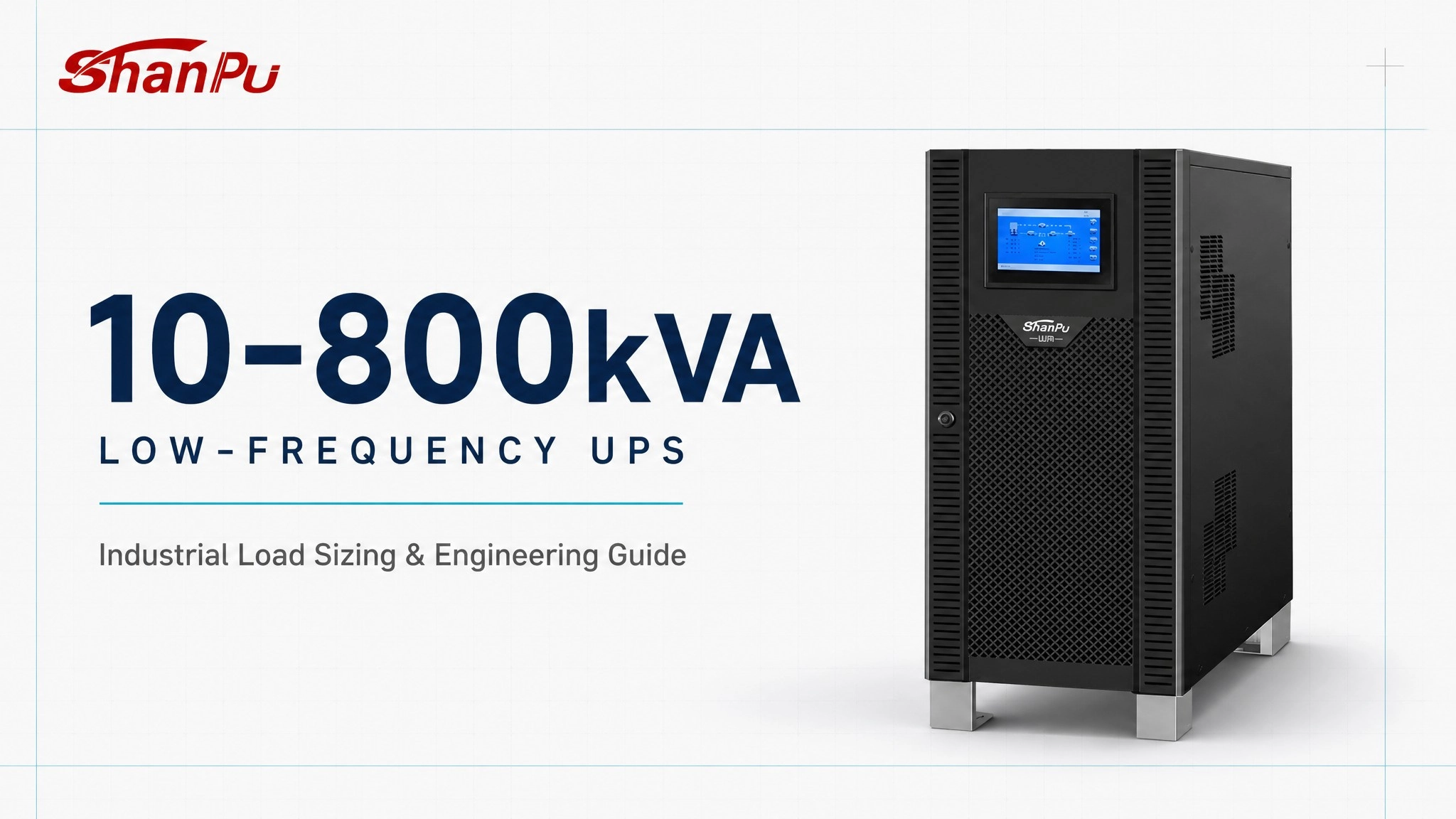
Low-Frequency UPS Engineering Guide: Sizing 10–800kVA Systems for Industrial Plant Loads

Voltage Sag Case Study: How a 1200kVA Modular UPS Project Was Rescued by Bus Distribution Box Selection
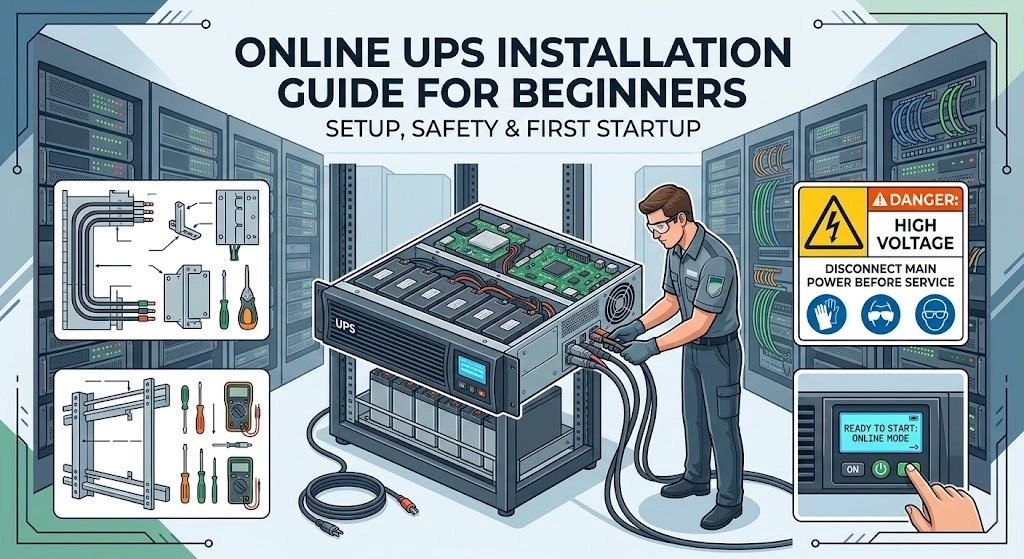
Online UPS Installation Guide for Beginners: Setup, Safety & First Startup
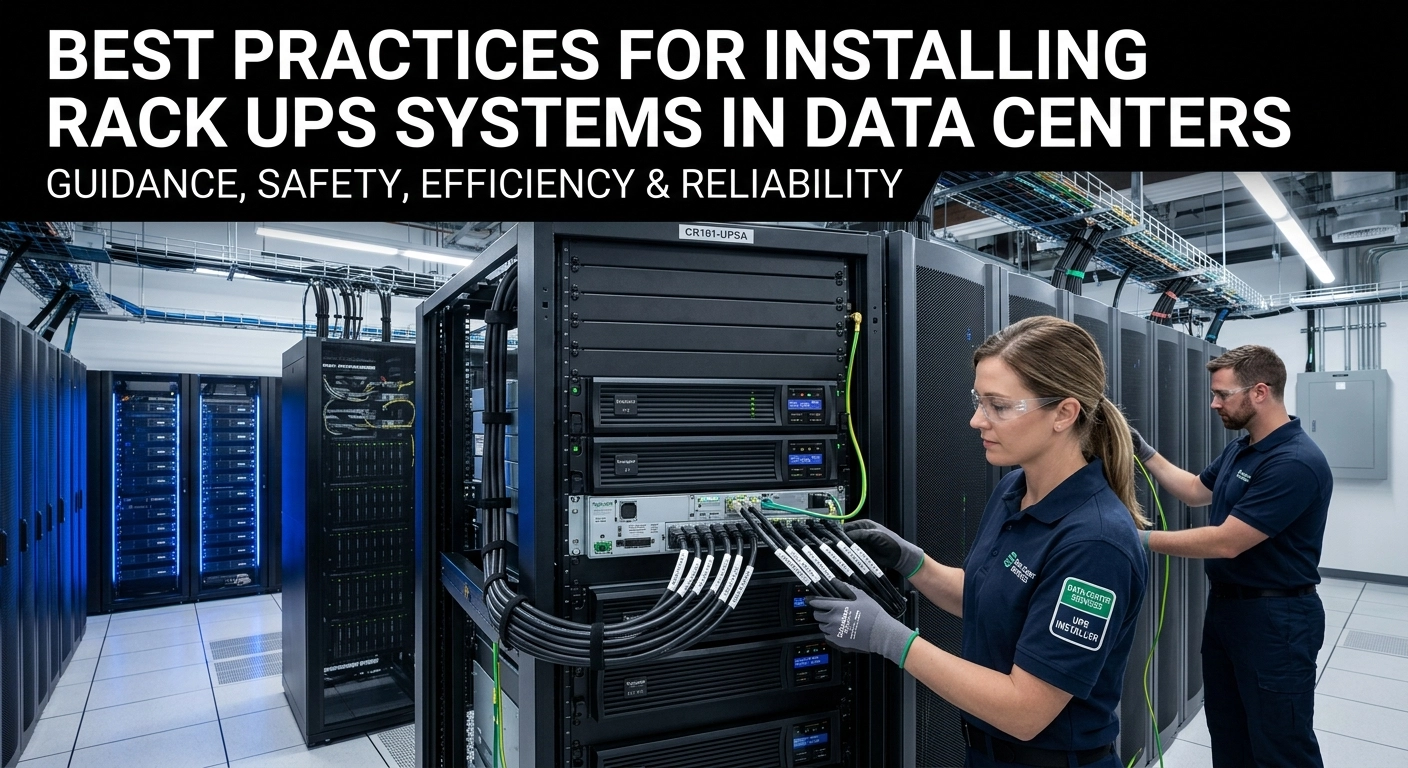
Best Practices for Installing Rack UPS Systems in Data Centers


Get in touch with us
If you have any comments or good suggestions, please leave us a message; later our professional staff will contact you as soon as possible.
© 2026 ShanPu. All Rights Reserved.
YouTube
SHANPU UPS
Shanpu