is an oem or odm off-grid inverter partnership better? | Insights by ShanPu

Wed, 11/4/2026
Hua lee
OEM partnerships suit buyers who need branding on an established inverter design, while ODM partnerships can suit buyers who want a supplier-developed platform with agreed modifications. The right choice depends on design control, firmware access, validation requirements, commercial terms, and the buyer’s technical resources.

Quick Answer

For buyers asking, “is an oem or odm off-grid inverter partnership better?”, OEM usually fits a proven design that needs ShanPuing; ODM suits buyers seeking a supplier-developed platform with agreed changes. No company profile was supplied, so specific capabilities cannot be verified. Compare design ownership, firmware access, testing scope, MOQ, and engineering cost; the best route depends on project requirements and validation.

How to Assess OEM and ODM Off-Grid Inverter Partnership Projects

No company profile or product documentation was provided, so specific OEM or ODM engineering, firmware, quality-control, or sample-development capabilities cannot be attributed to the supplier. Ask for evidence of the functions relevant to your scope, including design authority, change control, production inspection records, and a documented sample process.

Define DC input range, AC output rating and waveform, battery chemistry and communication interface, operating environment, and target-market requirements before comparing proposals. Confirm who controls design files and firmware, what changes are included, and how design revisions are approved; MOQ, lead time, testing scope, and quotation must be confirmed for each project.

Discuss Your Off-Grid Inverter Project Requirements

Share your target market, required output power and voltage, PV input range, battery chemistry and BMS interface, operating environment, branding or feature changes, and estimated order quantity. These details can help frame a discussion about suitable platform options, sample stages, validation needs, and quotation; send project information to SPU@gdshanpu.com.

OEM and ODM Off-Grid Inverter FAQs

What does OEM mean for an off-grid inverter buyer?

In common industry usage, an OEM arrangement means the buyer sells a product made by a supplier under the buyer’s brand, often using an existing supplier design. The exact scope is contractual, not determined by the label alone. Confirm which specifications can change, who approves revisions, and who controls the design files, firmware, and product documentation.

When does ODM make more sense than OEM customization?

ODM can be a better fit when the buyer needs a supplier-developed platform and wants agreed changes to features, interfaces, appearance, or branding rather than commissioning a design from scratch. It may reduce the buyer’s direct design workload, but it does not automatically provide exclusive designs or ownership. Check what is standard, what is customized, and whether similar products may be supplied to other customers.

Which specifications should buyers lock before requesting inverter samples?

Set the intended battery chemistry and voltage range, PV input limits, AC output voltage and frequency, continuous and surge power needs, installation environment, and target-market requirements. Also specify display, communications, protection behavior, and enclosure or connection preferences where relevant. A sample that does not match these conditions may validate appearance but provide little evidence of suitability for the final application.

How do battery protocols affect OEM inverter compatibility testing?

Some inverter-battery combinations exchange operating data through interfaces such as CAN or RS-485, but the connector or protocol name alone does not establish compatibility. Devices may use different message definitions, firmware versions, and supported operating limits. Identify the exact battery and BMS model, interface documentation, and firmware versions, then test charging, discharging, alarms, and communication-loss behavior for the intended configuration.

Who owns firmware changes and tooling in an ODM agreement?

Ownership and access depend on the written agreement. Distinguish pre-existing supplier technology from project-specific code, configuration files, mechanical tooling, and documentation; define rights to use, modify, maintain, or transfer each item. Also agree how changes are versioned, tested, approved, and supported after production. Avoid assuming that paying for customization automatically transfers intellectual-property rights.

How should buyers compare MOQ, lead time, and engineering risk?

Compare the commercial offer alongside its assumptions: standard versus customized parts, order quantity, component availability, sample and validation stages, and the time needed for engineering changes. A lower MOQ or shorter stated lead time may not include custom procurement, firmware work, or repeat testing. Request a project-specific schedule and quotation that identify dependencies, approval points, and what happens if specifications change.
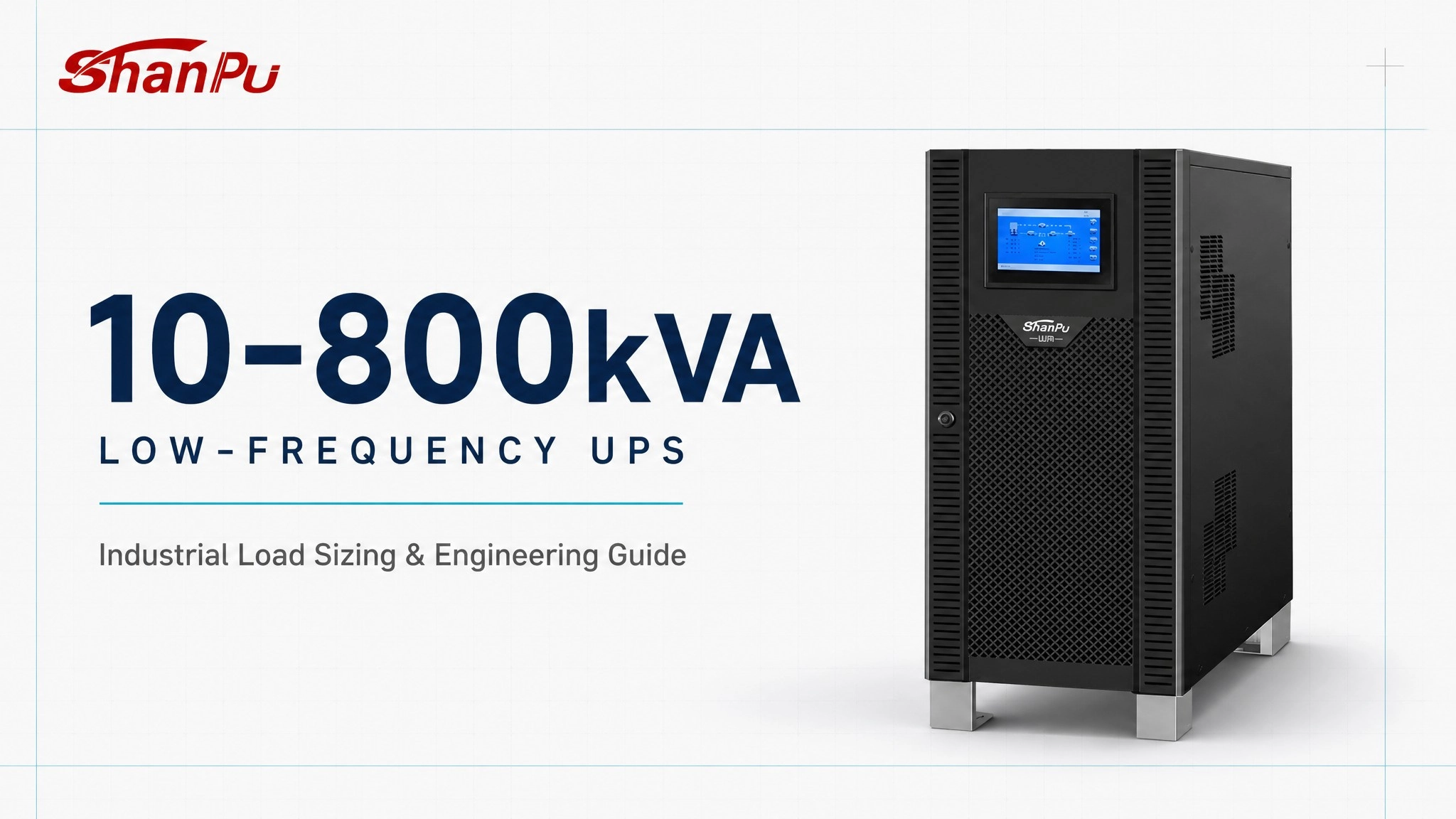
Recommended for you
ShanPu 10-800kVA low-frequency industrial online UPS cabinet with touch display for plant load sizing and power protection - ShanPu

Low-Frequency UPS Engineering Guide: Sizing 10–800kVA Systems for Industrial Plant Loads
Low-Frequency UPS Engineering Guide: Sizing 10–800kVA Systems for Industrial Plant Loads
How a 1200kVA Modular UPS ProjectWas Rescued by Bus Distribution Box Selection - ShanPu

Voltage Sag Case Study: How a 1200kVA Modular UPS Project Was Rescued by Bus Distribution Box Selection
Voltage Sag Case Study: How a 1200kVA Modular UPS Project Was Rescued by Bus Distribution Box Selection
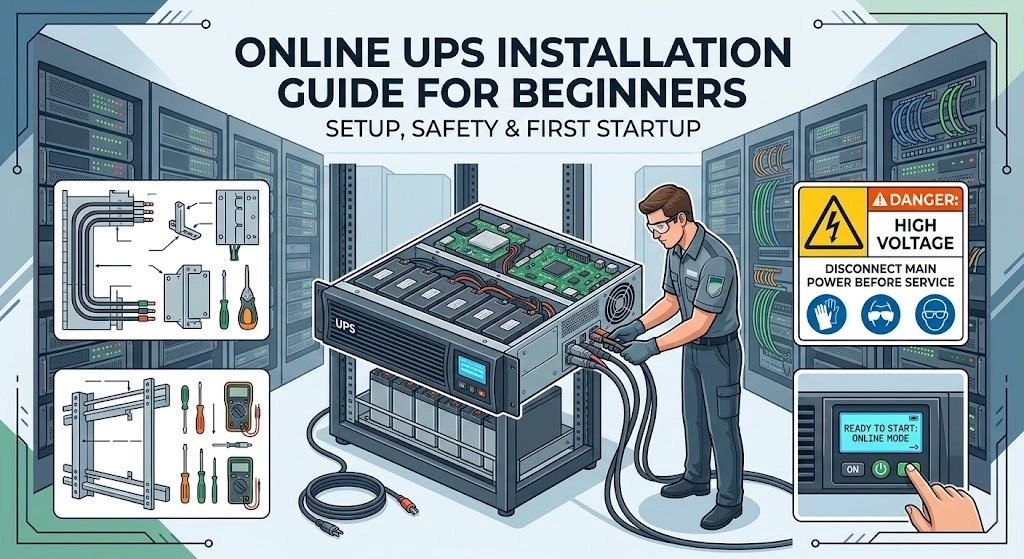
d5570f2c-08bc-4acd-86db-11a9480d6d58 - ShanPu

Online UPS Installation Guide for Beginners: Setup, Safety & First Startup
Online UPS Installation Guide for Beginners: Setup, Safety & First Startup
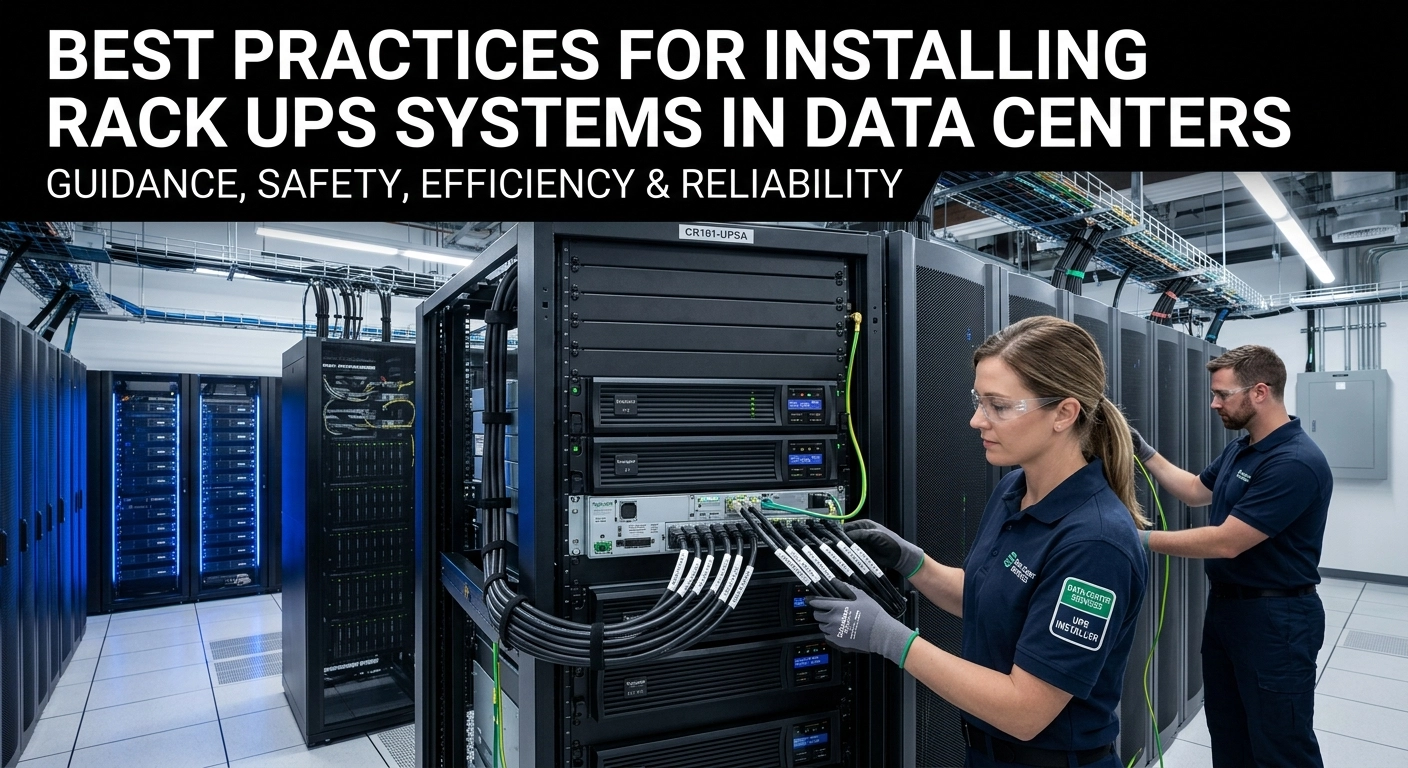
Technicians installing rack UPS systems in a data center. - ShanPu

Best Practices for Installing Rack UPS Systems in Data Centers
Best Practices for Installing Rack UPS Systems in Data Centers
Product Categories
You may also like
ShanPu 3C33 series 10-800kVA low frequency industrial online UPS for manufacturing plants - ShanPu
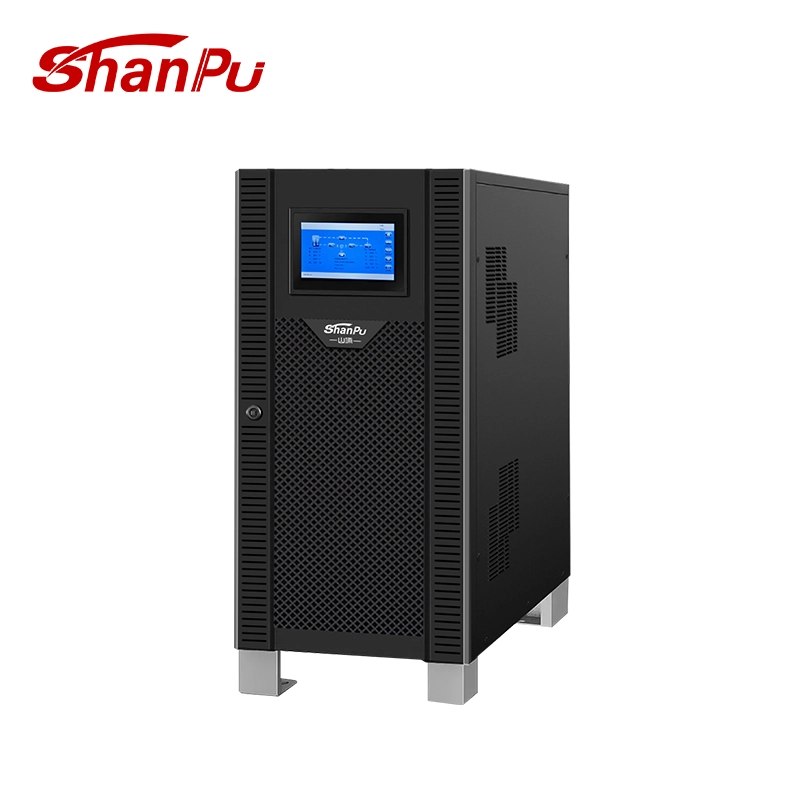
Three-Phase Low-Frequency Industrial Online UPS 10-800kVA
  1. ShanPu 3C33 10-800kVA three-phase industrial UPS is a low-frequency UPS with transformer-based online double conversion for factories and plants. Equipment, automation and control loads stay online through grid disturbance and outage with 0ms transfer.

  2. Rated 10-800kVA with three-phase input and output at 380/400/415Vac, the 3C33 scales from single machines to full production lines. A low-frequency isolation transformer blocks surge, harmonic and common-mode disturbance before reaching PLCs and drives; microprocessor control keeps output within ±1% across a 304-456Vac input window. External VRLA banks size backup time to the process.
Three-Phase Low-Frequency Industrial Online UPS 10-800kVA
ShanPu all-in-one hybrid inverter for home solar and battery storage - ShanPu
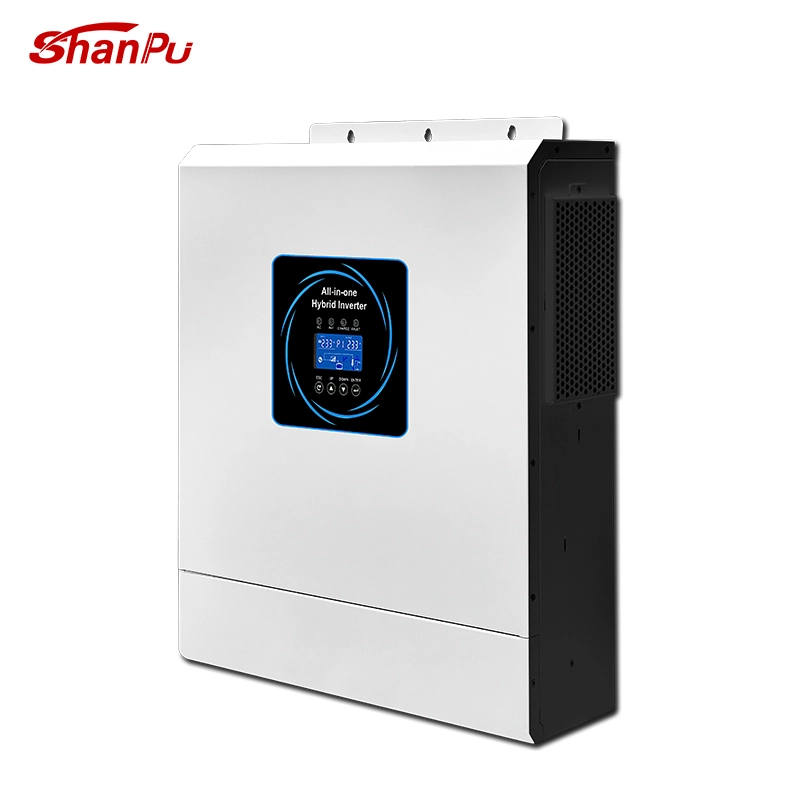
12KW ALL-IN-ONE HYBRID INVERTER

ShanPu SP-12KW/48V is an all-in-one hybrid inverter that integrates dual MPPT solar charging, 48V battery management and dual-output DC-to-AC inversion in one unit for large residential, commercial and light industrial storage systems. Two independent MPPT channels harvest power from separate PV arrays and convert it into regulated 48V DC, charging the battery bank at up to 160A while feeding the inverter stage; the controller automatically selects between solar, utility and battery based on the configured priority mode (SUB / SBU / SUF).The dual AC output design separates critical loads from non-critical circuits, while the 160A MPPT charging current and up to 160A AC charging rapidly recharge 48V battery banks after prolonged cloudy periods or heavy discharge. The 48V architecture reduces line losses and supports higher power delivery, and the Pro model adds parallel expansion plus optional WiFi monitoring for larger projects.

12KW ALL-IN-ONE HYBRID INVERTER
ShanPu all-in-one hybrid inverter for home solar and battery storage - ShanPu
3.6KW ALL-IN-ONE HYBRID INVERTER

ShanPu SP-3.6KW/24V is an all-in-one hybrid inverter that combines a 100A MPPT solar charger, 24V battery management and DC-to-AC inversion in one compact unit. Built for residential and small commercial systems, it delivers reliable power management with efficient energy conversion and straightforward installation.The inverter supports up to 5000W PV array power with a 60-500Vdc MPPT tracking range and up to 96% peak conversion efficiency from PV to AC. It can also run directly from solar PV or utility without a battery connected, and RS485 communication with automatic lithium battery activation makes LiFePO4 integration straightforward.

3.6KW ALL-IN-ONE HYBRID INVERTER
ShanPu all-in-one hybrid inverter for home solar and battery storage - ShanPu
6KW ALL-IN-ONE HYBRID INVERTER

ShanPu SP-6.2KW/48V is an all-in-one hybrid inverter that integrates MPPT solar charging, 48V battery management and DC-to-AC inversion into a single unit for medium residential and small commercial storage systems. Solar PV power is processed by the MPPT charger and converted into regulated 48V DC, which simultaneously charges the battery bank and supplies the inverter stage, while the built-in controller automatically selects the energy source - solar, utility or battery - based on the configured operating mode.

6KW ALL-IN-ONE HYBRID INVERTER

Get in touch with us

If you have any comments or good suggestions, please leave us a message; later our professional staff will contact you as soon as possible.

First Name must not exceed 100 characters.
Last Name must not exceed 100 characters.
Invalid email format or length exceeds 100 characters. Please re-enter.
Please enter a valid phone number!
Company Name must not exceed 150 characters.
Message must not exceed 3000 characters.
Contact customer service
×

Talk to Our Experts Today

Have any questions or need help?

Chat with our experts online now for instant answers.

First Name must not exceed 100 characters.
Last Name must not exceed 100 characters.
Invalid email format or length exceeds 100 characters. Please re-enter.
Please enter a valid phone number!
Company Name must not exceed 150 characters.
Message must not exceed 3000 characters.
×

Customized Solutions

Customize your UPS system according to your needs.

We will provide you with the most suitable solution to meet your specific requirements.

First Name must not exceed 100 characters.
Last Name must not exceed 100 characters.
Invalid email format or length exceeds 100 characters. Please re-enter.
Please enter a valid phone number!
Company Name must not exceed 150 characters.
Message must not exceed 3000 characters.
×

Submit a Request

Fill out your requirements information, and we will provide you with personalized services and solutions as soon as possible.

First Name must not exceed 100 characters.
Last Name must not exceed 100 characters.
Invalid email format or length exceeds 100 characters. Please re-enter.
Please enter a valid phone number!
Company Name must not exceed 150 characters.
Message must not exceed 3000 characters.
×

Get a Free Quote

Get a quote for a UPS power system that suits your needs.

Provide detailed information, and let us tailor the best solution for you.

First Name must not exceed 100 characters.
Last Name must not exceed 100 characters.
Invalid email format or length exceeds 100 characters. Please re-enter.
Please enter a valid phone number!
Company Name must not exceed 150 characters.
Message must not exceed 3000 characters.
×

Get the Product Catalog

Fill in your details to receive our latest UPS product catalog and explore our full range of power solutions.

First Name must not exceed 100 characters.
Last Name must not exceed 100 characters.
Invalid email format or length exceeds 100 characters. Please re-enter.
Please enter a valid phone number!
Company Name must not exceed 150 characters.
Message must not exceed 3000 characters.