


what should project buyers include in an industrial ups rfq? | Insights by ShanPu

Quick Answer
Project buyers should include the load profile, input and output electrical requirements, battery autonomy, site environment, and compliance documents in an industrial UPS RFQ so suppliers can quote comparable solutions. The key factors are load in kW and kVA with power factor, runtime and battery type, voltage and frequency tolerances, and ambient conditions. Final solutions depend on each specific project.
How Our Team Supports Industrial UPS Projects
Our team supports industrial UPS projects by reviewing RFQ data against the intended application, flagging missing parameters, and discussing configuration options such as capacity, redundancy, battery arrangement, and enclosure requirements. Buyers should ask for written confirmation of any OEM or customization scope, quality-control procedures, and factory test records before comparing offers.
Core buyer parameters to define are rated power in kVA and kW, input and output voltage, frequency, autonomy time, battery type, and site conditions. MOQ, lead time, and quotation must be confirmed per project after technical review of the submitted data.
Send Your Industrial UPS RFQ Details for Technical Review
Please share your load type and total kW or kVA, input and output voltage and frequency, required autonomy time, preferred battery chemistry, site conditions (temperature, altitude, dust), required standards or test documents, and the planned quantity and delivery schedule. We can discuss topology, redundancy, documentation scope, and quotation structure. Send your project data to SPU@gdshanpu.com.
FAQ
How detailed should load profile data be in an industrial UPS RFQ?
Detailed enough that a supplier can size the system without guessing. List each critical load separately with its rating in kW and kVA, power factor, phase configuration, and whether it is linear or nonlinear. Switch-mode power supplies, variable frequency drives, and motors behave very differently on a UPS output. State inrush current and crest factor for loads such as transformers and motor starters, since many double-conversion units are specified for a 3:1 crest factor and inrush can exceed that.
Add the expected growth, commonly 20 to 30 percent over the project horizon, and say whether the UPS is to be sized for today's load or for future expansion. Oversizing has a cost, because double-conversion efficiency falls at very low load percentages. Also state phase balance on three-phase systems, because uneven distribution can cause one phase to hit its limit before total capacity is reached.
Which input voltage and frequency tolerances belong in a UPS RFQ?
State the nominal input voltage, number of phases, neutral and grounding arrangement (for example TN-S or IT), and the frequency of 50 Hz or 60 Hz. Then give the real tolerance window of the site supply, not only the nameplate values. Weak grids and generator-backed sites often show wider voltage and frequency swings, and these determine how often the UPS transfers to battery and whether the rectifier can operate within its input window.
Specify the output requirements as well: regulated voltage, acceptable voltage distortion, and overload capability. IEC 62040-3 classifies UPS output behavior (VFI, VFD, VI) and defines how performance is declared and tested. If a generator will feed the UPS, ask for input power factor, input current distortion (THDi), and rectifier soft-start behavior, and reference IEEE 519 limits if your utility requires them.
How do I specify battery autonomy and chemistry in an RFQ?
Define autonomy as a clear statement: minutes at a stated load percentage, at a stated ambient temperature, and at battery end of life. Without these conditions, two suppliers can quote the same number of minutes from very different battery capacities. IEEE 485, the recommended practice for sizing lead-acid batteries in stationary applications, applies an aging factor of 1.25 so the battery still meets the load when it falls to 80 percent of rated capacity. Ask bidders to state whether they applied similar margins.
Next, specify chemistry and design life. Valve-regulated lead-acid, vented lead-acid, and lithium iron phosphate differ in footprint, weight, cycle life, and temperature sensitivity. As a widely used rule of thumb, lead-acid service life roughly halves for each 10 °C above 25 °C. Also state the required recharge time, DC bus voltage limits, battery cabinet or rack preference, monitoring needs, and local fire or ventilation rules.
What environmental and enclosure conditions must an industrial UPS RFQ state?
Provide the ambient temperature range, relative humidity, altitude, and the presence of dust, oil mist, or corrosive gases. Altitude matters because air density falls with height, and manufacturers typically apply derating above about 1,000 m. Contaminant severity can be described using classes in ISA 71.04, and ingress protection requirements should be expressed using IEC 60529 IP ratings, for example IP20 for a clean electrical room or a higher rating for a dusty plant floor.
Include installation constraints: available floor area, floor loading, door and corridor dimensions, cable entry direction, front or rear access, and maximum acceptable noise in dB(A). Ask suppliers to state heat dissipation in kW so the HVAC load can be calculated. If the site has seismic requirements, name the applicable code or test standard rather than only writing seismic rated.
Which standards and factory test documents should an RFQ require?
Name the standards explicitly. For UPS equipment, the IEC 62040 series is the common reference: Part 1 for safety, Part 2 for electromagnetic compatibility, and Part 3 for performance and test requirements. Buyers in other regions may require local equivalents or national approvals, and the RFQ should say which apply to the destination site. Ask bidders to list compliance status and attach valid certificates, and treat any unsupported claim with caution.
Specify the documents required with the offer and at delivery: datasheets, single-line and layout drawings, battery calculations, routine test reports, factory acceptance test procedure, operation manuals, and a recommended spare parts list. If you want to witness testing, state it, including whether a load bank test and a battery discharge test are expected. Request a deviation list so every departure from your specification is visible during evaluation.
How should buyers request commercial terms, MOQ, lead time, and service scope?
Ask for a price breakdown that separates the UPS cabinet, batteries, battery cabinets or racks, accessories, packing, and freight. This makes bids comparable and shows where cost differences come from. State the target quantity, delivery site, and Incoterms rule (for example Incoterms 2020) so freight and risk transfer are defined. Ask the supplier to state MOQ, quotation validity, and payment terms in writing, and note whether the order is a single project or a repeat bulk order.
Lead time should be quoted from a defined trigger, such as drawing approval or down payment, and should state whether batteries are included, because battery sourcing and customization often drive the schedule. Define service scope: commissioning, training, warranty period for the UPS and for batteries separately, remote support, response time, and spare parts availability. Include your evaluation criteria in the RFQ so bidders know how technical and commercial factors will be weighed.
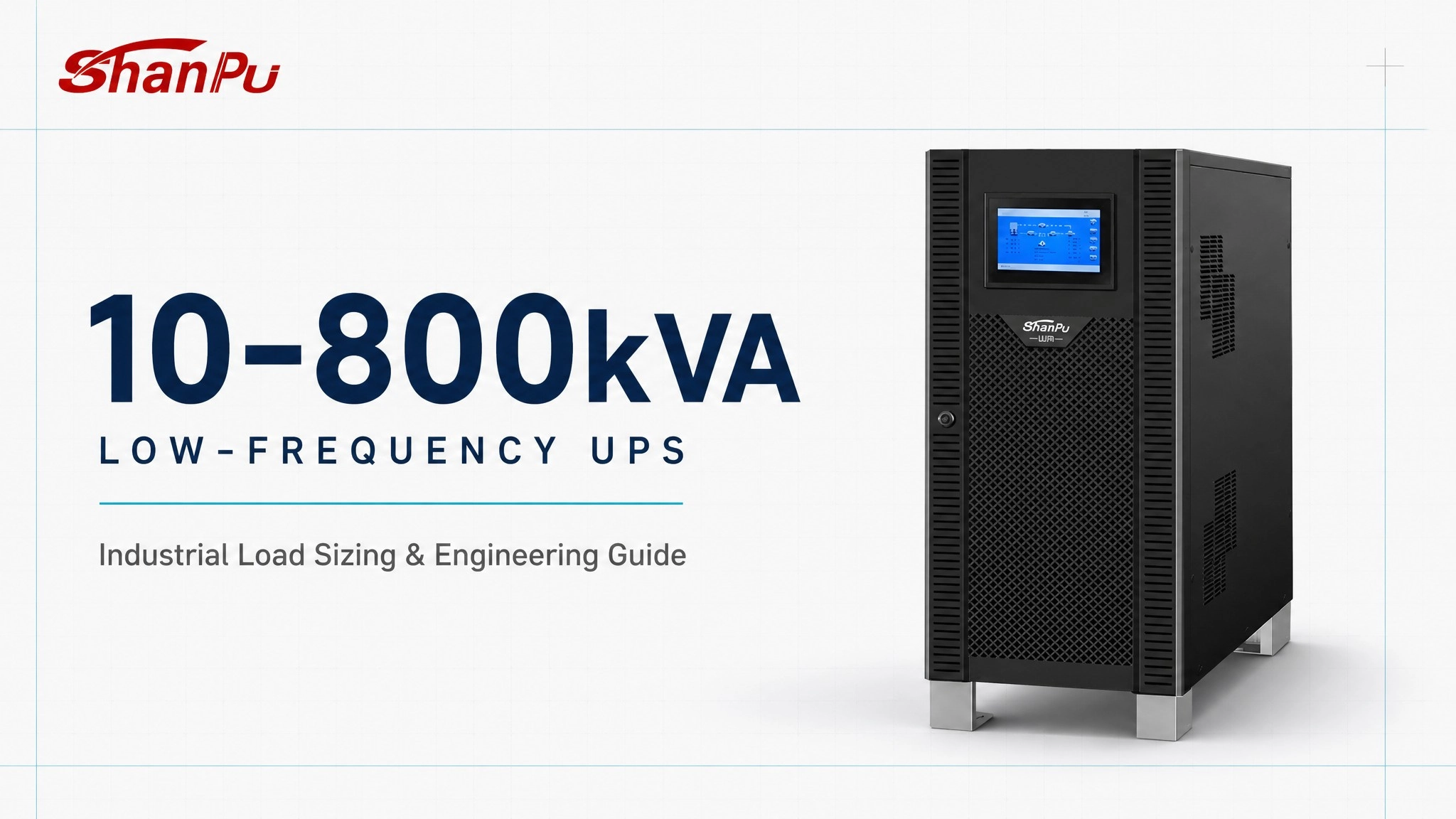
Low-Frequency UPS Engineering Guide: Sizing 10–800kVA Systems for Industrial Plant Loads
Voltage Sag Case Study: How a 1200kVA Modular UPS Project Was Rescued by Bus Distribution Box Selection
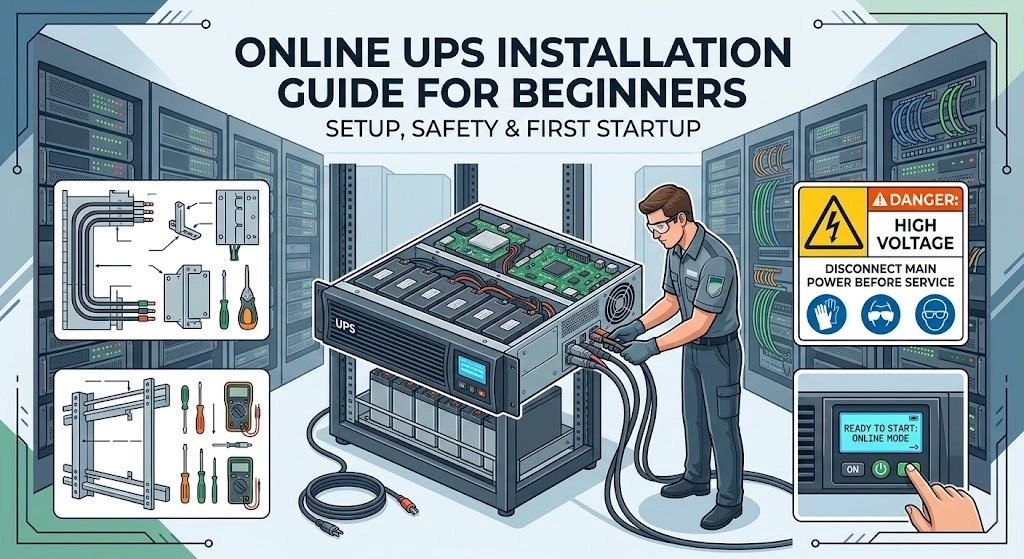
Online UPS Installation Guide for Beginners: Setup, Safety & First Startup
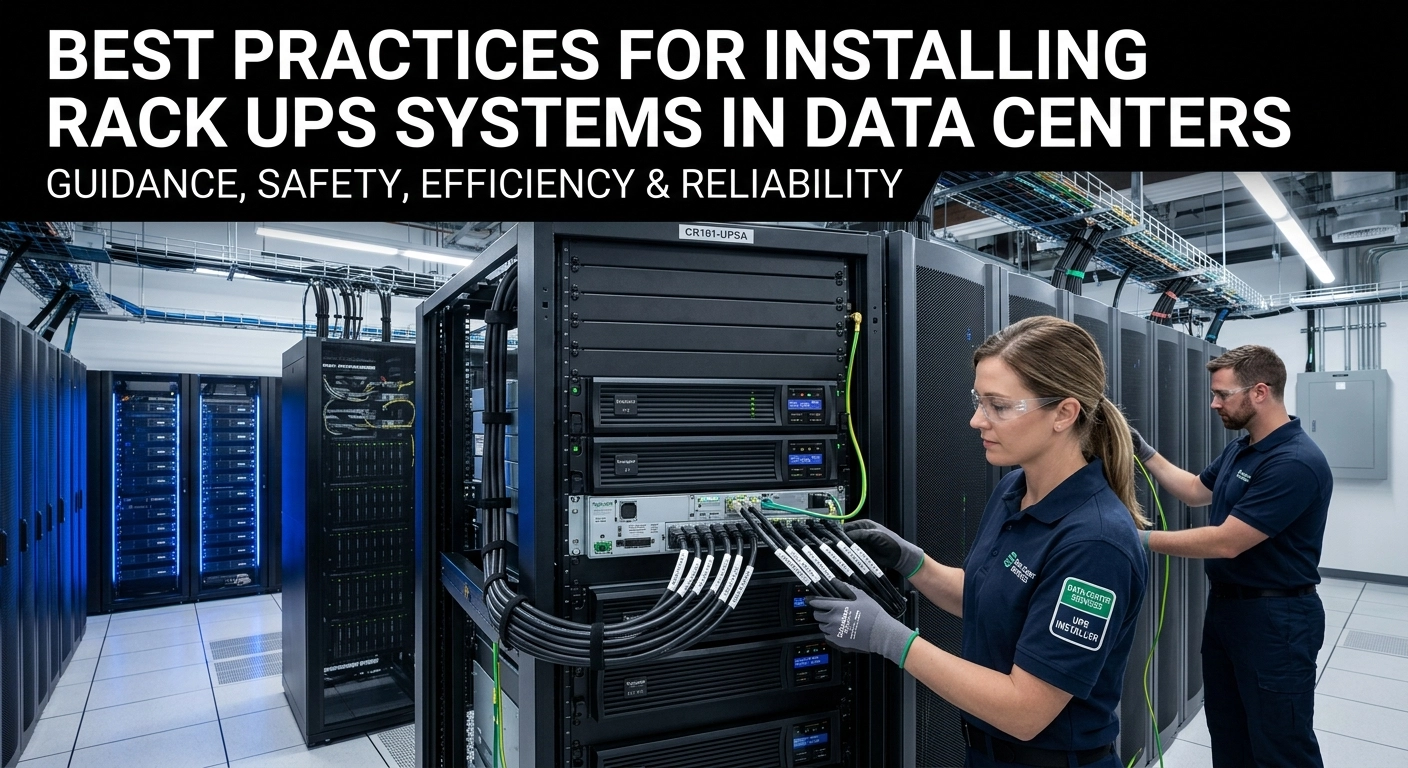
Best Practices for Installing Rack UPS Systems in Data Centers


Get in touch with us
If you have any comments or good suggestions, please leave us a message; later our professional staff will contact you as soon as possible.
© 2026 ShanPu. All Rights Reserved.
YouTube
SHANPU UPS
Shanpu