


what can be customized in an industrial ups private-label order? | Insights by ShanPu

Quick Answer
An industrial UPS private-label order can typically customize branding, front-panel and enclosure appearance, labeling, packaging, documentation, and selected electrical or communication settings. The key factors are power rating and topology, input/output voltage and frequency, battery configuration and runtime, and environmental protection level. Final solutions depend on the specific project and must be confirmed technically.
How Our Team Supports Private-Label UPS Projects
Our team supports private-label buyers through OEM-style project review, where branding requirements, technical specifications, and documentation needs are mapped before any sample or production plan is discussed. Typical support areas include custom logo and labeling, packaging and manual content, parameter configuration within the platform's design limits, and quality inspection against the agreed specification.
Core buyer parameters include rated power (kVA/kW), power factor, input and output voltage, frequency, battery type and backup time, ambient temperature, IP rating, and required certificates. MOQ, lead time, and quotation must be confirmed per project, as they depend on customization depth and certification scope.
Send Your Private-Label UPS Requirements for Review
Please send your target power rating and topology, input/output voltage and frequency, battery type and required backup time, installation environment, branding and labeling needs, target certificates and destination market, and estimated order quantity. We can then discuss feasible customization scope, sample approach, documentation, MOQ, and lead time. Contact us at SPU@gdshanpu.com.
FAQ
Can I put my own logo on an industrial UPS?
Yes, in most private-label programs. Common methods include a printed or laser-etched front panel, a custom nameplate, a branded LCD start-up screen, and re-designed carton artwork. The limit is regulatory marking. IEC 62040-1 requires rating and identification markings on the unit, and CE-marked products must carry the name and address of the responsible manufacturer. When you sell under your own brand, you usually take on that responsibility, so confirm early how the existing test reports and certificates will be linked to your brand name and model numbers. Certification bodies often need a document update or a new listing for a changed model name, which can affect lead time.
Which electrical parameters can be changed without redesigning the UPS?
Parameters that are set in firmware or through configuration are usually the easiest to adjust. Examples include output voltage setpoint, 50/60 Hz output frequency, bypass voltage and frequency windows, battery low-voltage alarm thresholds, charger current limits, and alarm behavior. Changes to the power stage are different. Rated power, topology, input voltage range, and overload capability depend on the power semiconductors, magnetics, and cooling design, so they normally require engineering re-evaluation. IEC 62040-3 classifies output performance as VFI, VI, or VFD, and switching between these classes is not a label change. Ask the manufacturer to separate settings-level changes from hardware-level changes in writing.
How does battery customization affect runtime and certification of industrial UPS?
Battery choice drives runtime, footprint, service life, and shipping rules. VRLA, lead-carbon, and lithium iron phosphate options differ in energy density, cycle life, and temperature tolerance. Runtime is not linear with battery capacity, because discharge rate and end-of-discharge voltage change the usable energy, which is the effect described by Peukert's relationship for lead-acid cells. Ambient temperature also matters, and a widely used rule of thumb says that VRLA service life drops sharply when sustained temperatures rise above roughly 25 °C. Lithium packs add requirements such as UN 38.3 transport testing and a battery management system that communicates with the UPS. Any change to battery type or string voltage should be re-verified for charger compatibility and safety.
What communication and monitoring options can be customized on industrial UPS?
Typical options include RS-232, RS-485, USB, dry-contact relays, and network cards supporting SNMP, Modbus RTU, or Modbus TCP. Private-label buyers often ask for custom register maps, renamed status messages, or a branded web interface. These are firmware and software tasks that need development time, testing, and version control, and they may carry a one-time engineering charge. For industrial sites, confirm the protocol your SCADA, BMS, or PLC expects, the number of relay outputs, and whether remote shutdown or emergency power-off inputs are needed. Define alarm logic with your integrator before sample approval, since it is costly to change after production starts.
How should I plan packaging, manuals, and labeling for private-label UPS?
Treat these as compliance items, not only marketing assets. Manuals should include the safety warnings required by IEC 62040-1, the correct language for each destination market, and installation and battery-handling instructions that match the exact model. Packaging must suit the unit weight, since UPS systems with batteries are heavy, and transport testing methods such as those published by ISTA can be used for validation. Battery shipping labels depend on chemistry. Non-spillable VRLA batteries are commonly handled under UN 2800 with Special Provision 238, while lithium-ion batteries fall under UN 3480 or UN 3481 and have stricter rules. Also check regional marks such as CE, WEEE, and RoHS statements before artwork is finalized.
What MOQ and lead time affect customized industrial UPS orders?
MOQ and lead time follow the depth of customization rather than a fixed rule. A label-and-packaging change is usually less demanding than a firmware change, and a hardware change such as a new enclosure, battery cabinet, or input configuration is the most demanding. Factors that extend schedules include sample approval rounds, component sourcing for batteries and power modules, retesting for safety or EMC (IEC 62040-2), and certificate updates for a new brand or model name. For a reliable quotation, define the customization level, annual volume, target certificates, and acceptance tests up front. Both MOQ and lead time should be confirmed per project in the formal quotation, not assumed from a generic product page.
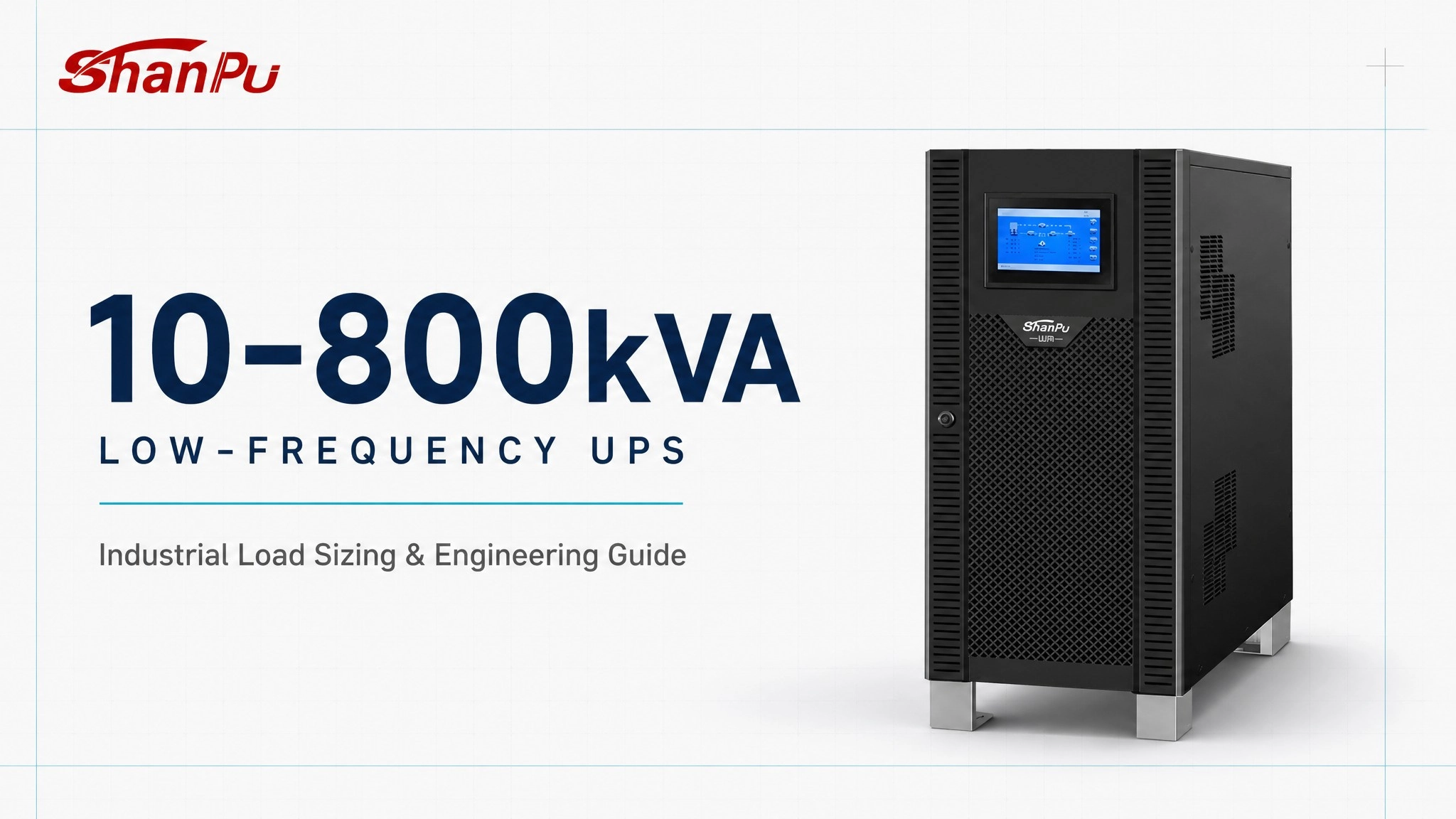
Low-Frequency UPS Engineering Guide: Sizing 10–800kVA Systems for Industrial Plant Loads
Voltage Sag Case Study: How a 1200kVA Modular UPS Project Was Rescued by Bus Distribution Box Selection
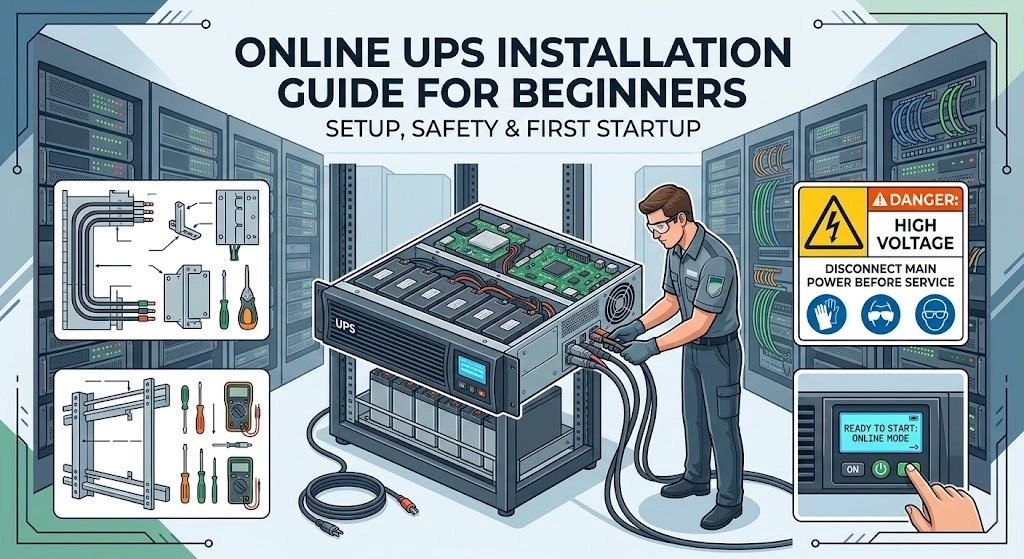
Online UPS Installation Guide for Beginners: Setup, Safety & First Startup
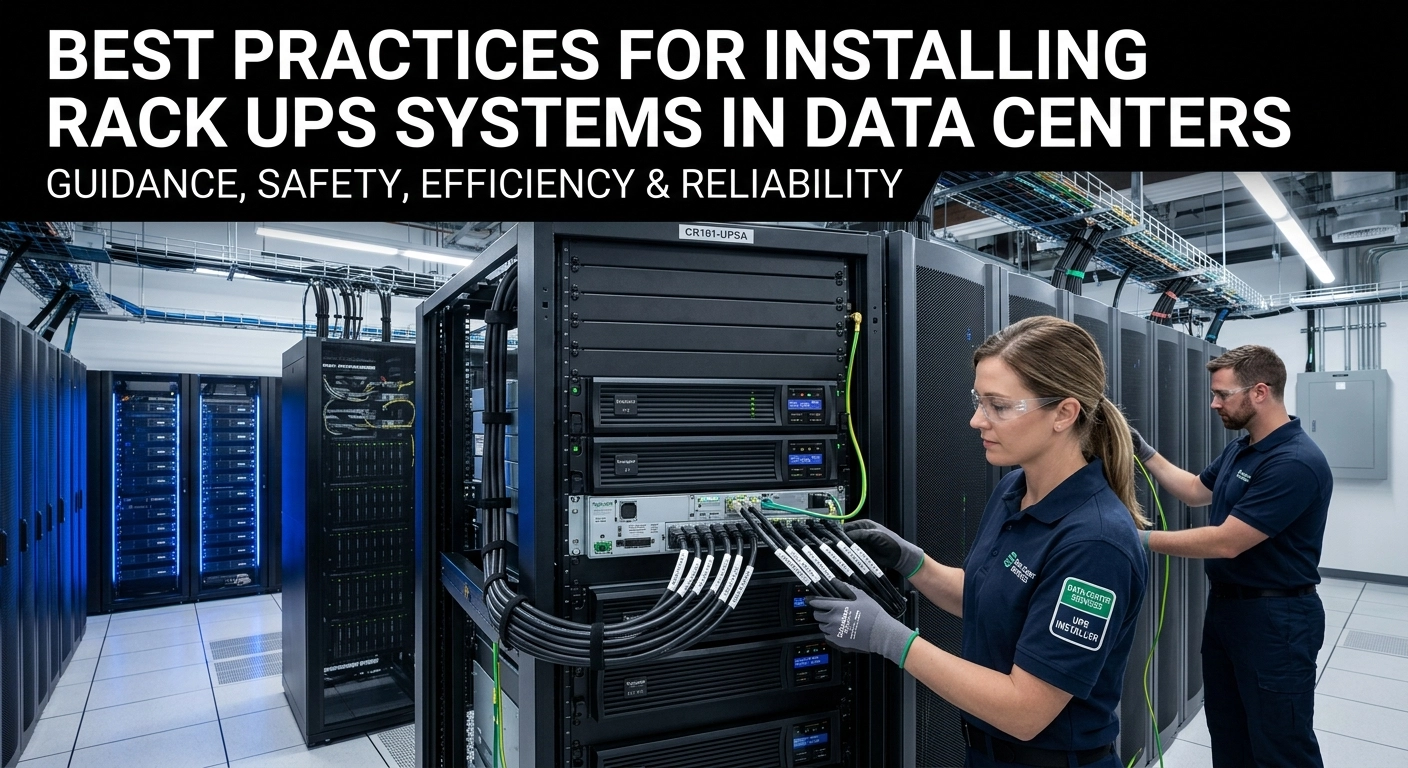
Best Practices for Installing Rack UPS Systems in Data Centers


Get in touch with us
If you have any comments or good suggestions, please leave us a message; later our professional staff will contact you as soon as possible.
© 2026 ShanPu. All Rights Reserved.
YouTube
SHANPU UPS
Shanpu