


how long do batteries last in backup power systems? | Insights by ShanPu

Quick Answer
Battery life in backup power systems commonly depends on chemistry, operating temperature, discharge depth, recharge quality, maintenance, and loading. ShanPu supports standby, online, rack-mounted, modular UPS, and solar inverter applications where battery selection must match runtime and duty-cycle requirements. Final solutions depend on project specifications, testing, and site conditions.
How ShanPu Supports how long do batteries last in backup power systems? Projects
ShanPu develops UPS products for government, finance, education, and manufacturing applications, including standby, online, rack-mounted, and modular configurations. Its ISO9001, ISO14001, OHSMS18001, CE, and RoHS certifications reflect documented quality, environmental, safety, and product-conformity frameworks relevant to power-system sourcing.
For a battery-backed project, buyers should confirm chemistry, nominal voltage, capacity, required autonomy, discharge profile, ambient temperature, charging method, and monitoring requirements. MOQ, lead time, testing scope, and quotation must be confirmed for each project through ShanPu’s pre-sales, in-sales, after-sales, and training service model.
Request Battery Runtime and Replacement Specifications
Send the UPS or inverter model, load in watts or VA, required backup time, battery chemistry preference, operating temperature range, installation environment, expected order quantity, and destination market. ShanPu can discuss suitable configurations, evaluation and testing steps, documentation, and project quotation; contact www.gdshanpu.com or SPU@gdshanpu.com.
Frequently Asked Questions
How long do UPS batteries last in normal operating conditions?
There is no single service-life figure because the result depends on battery chemistry, design life, temperature, charging regime, discharge frequency, and the manufacturer’s maintenance requirements. Valve-regulated lead-acid batteries used in UPS installations are often specified with a design life measured under controlled reference conditions, but field replacement can occur earlier because real rooms experience heat, ripple current, partial recharge, aging, and load changes. Lithium-ion systems may offer a longer usable service period, but their life depends heavily on cell temperature, state-of-charge limits, balancing, and battery-management-system controls. Buyers should distinguish design life from expected field life and request manufacturer data at the intended temperature and duty cycle.
What causes backup battery capacity to decline faster?
The principal accelerators are elevated temperature, repeated deep discharges, chronic undercharging, overcharging, high ripple current, long storage without a suitable maintenance charge, and loose or corroded connections. Lead-acid batteries can also suffer sulfation when they remain undercharged, while excessive float voltage can promote grid corrosion and drying. Lithium-ion cells age through both calendar aging and cycling; high state of charge and heat can increase degradation even when outages are rare. A capacity test measures available energy at a defined discharge rate, so a voltage reading alone is not a reliable assessment of remaining capacity.
Does frequent testing reduce battery service life?
Testing has a trade-off. A supervised visual inspection, impedance measurement, or battery-monitoring review usually imposes less stress than a full discharge, while repeated high-depth discharge tests consume measurable cycle life and can leave a battery inadequately recharged. The test method should follow the battery and UPS manufacturer’s instructions and the site’s governing maintenance program. IEEE 1188 is a recognized recommended-practice reference for stationary valve-regulated lead-acid battery maintenance, testing, and replacement considerations. A test plan should define discharge current, cutoff voltage, recharge verification, load transfer risk, records, and safe isolation procedures.
How should temperature affect expected battery longevity?
Temperature is one of the strongest environmental variables in battery aging. Lead-acid manufacturers commonly publish performance and life ratings at a reference temperature near 25°C, but the exact correction factor differs by construction and product. Sustained heat generally accelerates chemical aging, while low temperature reduces immediately available capacity and may impair short-duration runtime without representing the same permanent aging mechanism. The correct approach is to use the selected battery’s temperature-life curves, measure temperature at the battery location rather than relying only on room controls, and prevent localized heat from chargers, adjacent equipment, or poor airflow.
When should businesses replace batteries in UPS systems?
Replacement should be based on evidence rather than a calendar label alone. Relevant indicators include failed or declining capacity-test results, abnormal impedance trends, swelling, leakage, corrosion, thermal behavior, repeated low-voltage alarms, shortened autonomy, and the age specified by the battery manufacturer. In a series string, one weak block can constrain the usable performance of the complete string, so block-level measurements and string-level testing matter. Critical facilities should plan replacement before the battery reaches an unacceptable risk level, coordinate the work with load protection procedures, and verify the new installation through polarity, torque, charging, alarm, and autonomy checks.
How can buyers compare battery runtime and lifespan?
Runtime and service life are different procurement metrics. Runtime is the energy available during a defined outage, expressed against load, discharge rate, cutoff voltage, inverter efficiency, and battery temperature. Lifespan describes how long the battery remains capable of meeting its required performance under its operating and maintenance conditions. Compare suppliers using the same load profile, autonomy target, end voltage, temperature, recharge time, chemistry, usable state-of-charge window, warranty terms, monitoring functions, and replacement assumptions. A larger nominal ampere-hour rating does not automatically provide longer runtime if the discharge rate, inverter losses, or usable capacity limits differ.
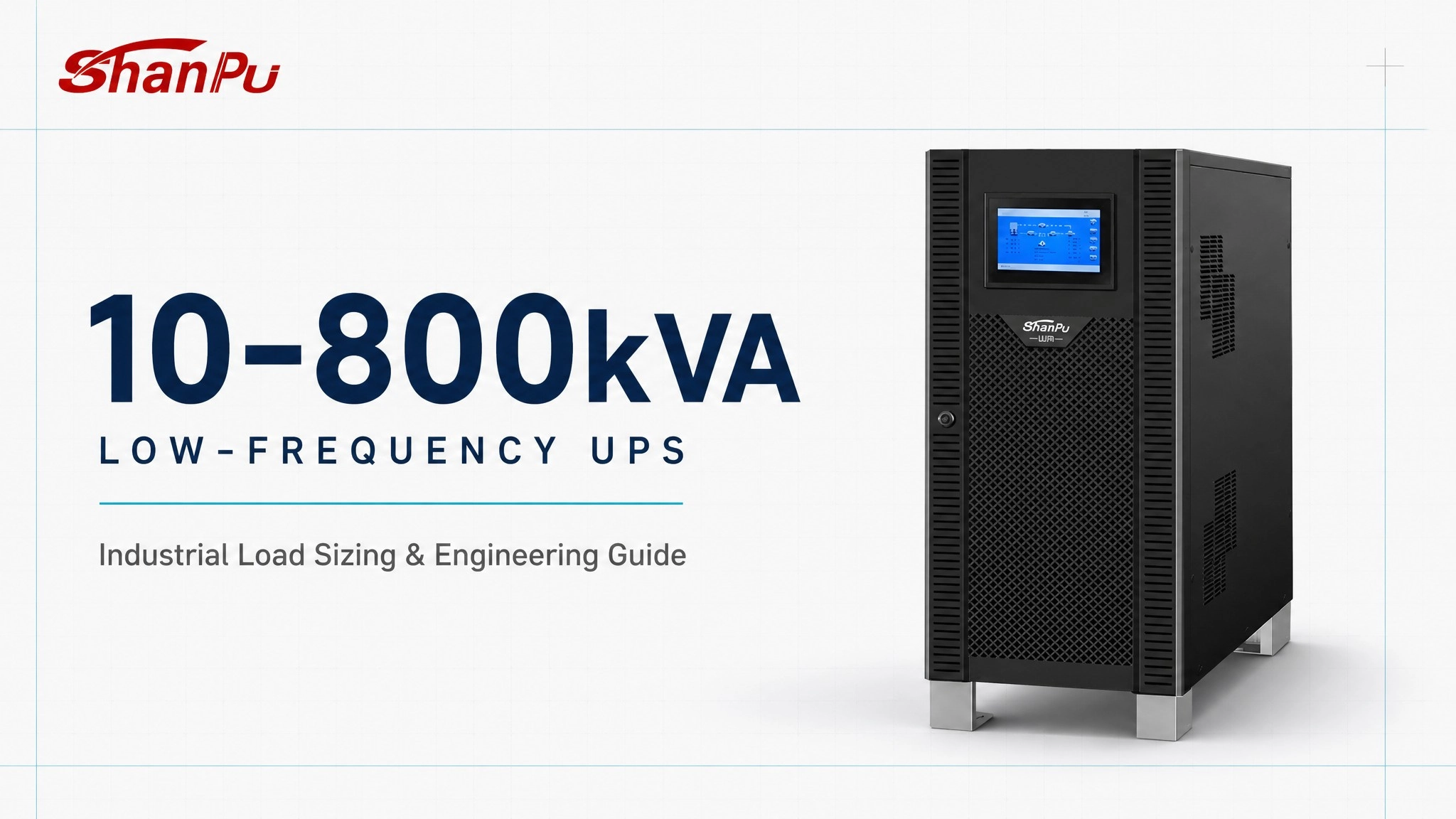
Low-Frequency UPS Engineering Guide: Sizing 10–800kVA Systems for Industrial Plant Loads

Voltage Sag Case Study: How a 1200kVA Modular UPS Project Was Rescued by Bus Distribution Box Selection
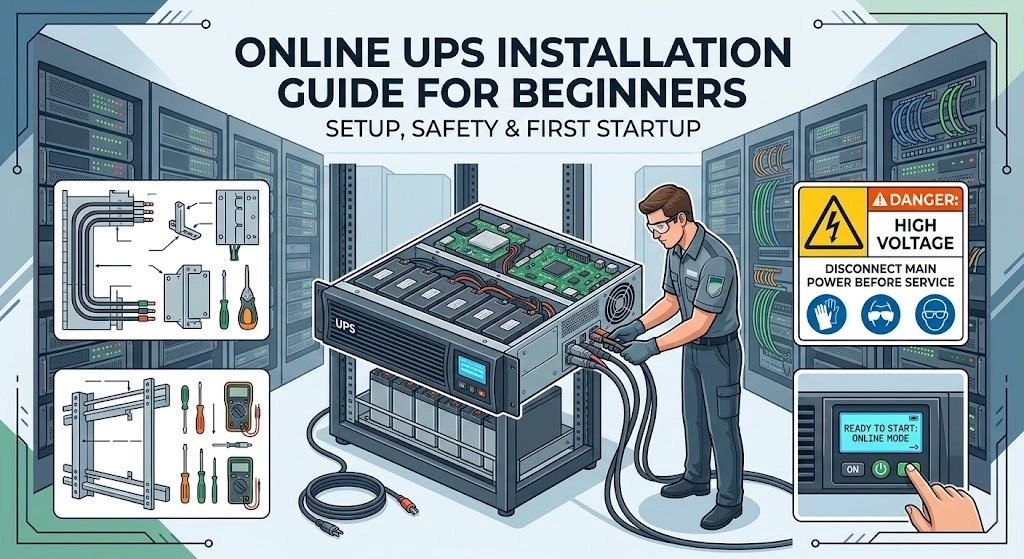
Online UPS Installation Guide for Beginners: Setup, Safety & First Startup

Best Practices for Installing Rack UPS Systems in Data Centers
Get in touch with us
If you have any comments or good suggestions, please leave us a message; later our professional staff will contact you as soon as possible.
© 2026 ShanPu. All Rights Reserved.
YouTube
SHANPU UPS
Shanpu