
how can distributors evaluate a pv inverter manufacturer? | Insights by ShanPu

Tue, 10/27/2026
Senior technical engineer specializing in UPS power supply industry - ShanPu
Jane Zhong
A practical due-diligence framework for distributors assessing PV inverter manufacturers, covering market-specific certifications, performance claims, grid testing, warranty terms, factory capability, and total commercial cost.

Quick Answer

Distributors should evaluate a PV inverter manufacturer by checking market-relevant compliance evidence, model-specific performance data, grid-test documentation, warranty and service terms, and the supplier’s ability to meet forecast demand. Compare documents against the exact inverter model and destination market, not just a company brochure. The right choice depends on project specifications, verification testing, and site conditions.

How to Verify Manufacturer Support for PV Inverter Projects

No company profile or product documentation was supplied for this assessment, so manufacturer-specific capabilities cannot be verified. Before qualifying a supplier, ask for current product datasheets, model-specific certificates or test reports, warranty terms, and written details of technical support and spare-parts arrangements.

For a distributor review, confirm the inverter family, power rating, DC voltage and current limits, grid requirements, communication interfaces, and destination markets. Request evidence that matches the proposed model and configuration; clarify whether documents cover the exact variant. MOQ, lead time, testing scope, and quotation must be confirmed for each project.

Discuss PV Inverter Specifications and Supply Requirements

When requesting information, provide the target country, project type, required power range, expected order quantity, grid-code requirements, preferred communication protocols, and anticipated delivery schedule. These details help frame discussions about compatible models, supporting documents, sample or test steps, and a project-specific quotation. Send the requirements to SPU@gdshanpu.com.

Distributor Due-Diligence FAQs

Which inverter certificates should distributors verify for each target market?

Start with the destination market’s applicable electrical-safety, electromagnetic-compatibility, and grid-connection requirements. For product safety, IEC 62109-1 and IEC 62109-2 are widely used standards for power converters in photovoltaic systems, but their applicability does not replace local requirements or market-specific approvals. Ask for the certificate and underlying report, check the issuing body and validity, and confirm the listed model numbers, ratings, firmware or hardware variants, and factory scope match the products being quoted. A certificate for a related model is not automatically evidence for every variant.

How can distributors compare inverter efficiency claims across datasheets?

Compare like with like: confirm whether the figure is maximum efficiency or a weighted efficiency value, and check the stated test standard, operating conditions, input voltage, and measurement boundaries. Maximum efficiency describes performance at a particular operating point; it does not represent energy conversion across all loads and conditions. Review efficiency curves where available, especially across the expected operating range, and distinguish inverter conversion efficiency from whole-system yield. Ask for the test method and report behind a headline figure rather than ranking products using a single number copied from separate datasheets.

What evidence shows a PV inverter model passed grid testing?

Request model-specific grid-interconnection certificates and test reports that identify the applicable requirements, test laboratory, device configuration, and firmware version where relevant. IEC 62116 describes a test procedure for assessing the anti-islanding measures of utility-interconnected photovoltaic inverters; it is not, by itself, proof that an inverter meets every grid code. Grid settings and permitted behavior vary by jurisdiction and may change, so verify the exact destination-market requirements with the relevant authority, utility, or project engineer. Check that the submitted evidence covers the inverter’s rated power and proposed configuration.

How should distributors assess inverter warranty and service commitments?

Read the warranty document rather than relying on a sales summary. Check the warranty period and start date, covered components, remedy options, exclusions, transport responsibilities, claim evidence, response process, and any conditions tied to installation, commissioning, or operating environment. Clarify who handles claims in the destination market, whether replacement stock or repair is available, and how firmware or product revisions affect support. Warranty obligations and consumer or commercial protections can differ by jurisdiction, so legal review may be appropriate for the intended sales territory.

Which factory checks reveal whether a supplier can fulfill bulk orders?

Request documented evidence for production capacity and planning, such as the proposed delivery schedule, output allocation, component sourcing approach, change-control process, and quality records for the relevant product family. If feasible, review a recent production sample and agree on inspection criteria before a bulk order. Ask how incoming components, assembly steps, final tests, serial-number traceability, and nonconforming units are recorded. An ISO 9001 certificate, if presented, concerns a quality-management system within its stated scope; it does not independently certify inverter performance or prove that a specific order will meet schedule.

How do distributors compare inverter pricing beyond the unit quote?

Build a like-for-like landed-cost comparison that records currency, Incoterms, packaging, freight, insurance, duties, taxes, payment terms, and any commissioning or documentation charges. Include potential commercial costs associated with minimum order quantities, spare parts, warranty handling, and lead-time variability, but treat unquoted items as unknowns rather than assuming they are included. Compare equivalent ratings, included accessories, communication options, warranty scope, and destination-market documentation. Ask suppliers to identify quote validity, exclusions, and the assumptions used so that an apparently lower unit price is not mistaken for a lower total procurement cost.
Recommended for you
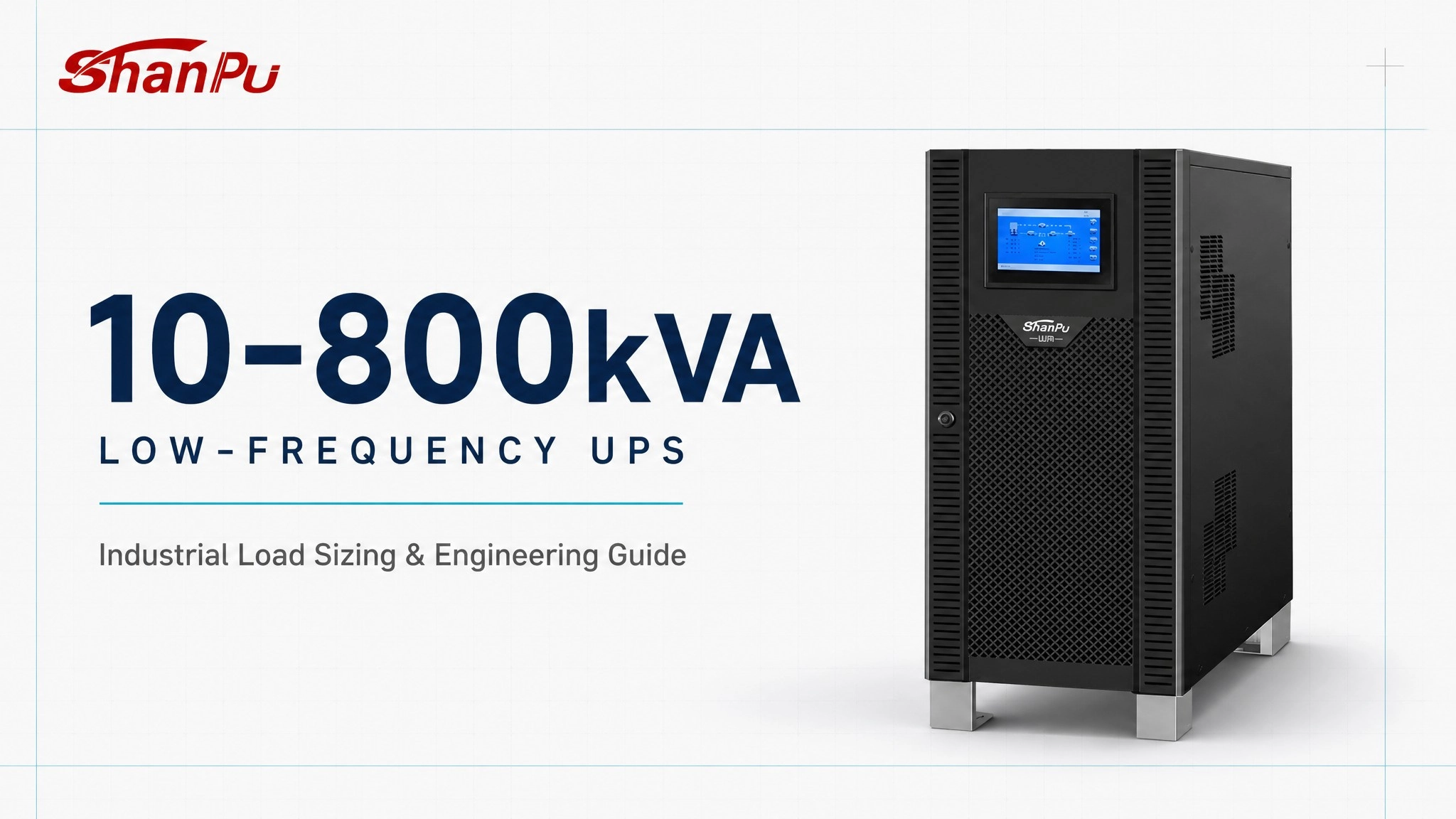
ShanPu 10-800kVA low-frequency industrial online UPS cabinet with touch display for plant load sizing and power protection - ShanPu

Low-Frequency UPS Engineering Guide: Sizing 10–800kVA Systems for Industrial Plant Loads
Low-Frequency UPS Engineering Guide: Sizing 10–800kVA Systems for Industrial Plant Loads
How a 1200kVA Modular UPS ProjectWas Rescued by Bus Distribution Box Selection - ShanPu

Voltage Sag Case Study: How a 1200kVA Modular UPS Project Was Rescued by Bus Distribution Box Selection
Voltage Sag Case Study: How a 1200kVA Modular UPS Project Was Rescued by Bus Distribution Box Selection
d5570f2c-08bc-4acd-86db-11a9480d6d58 - ShanPu

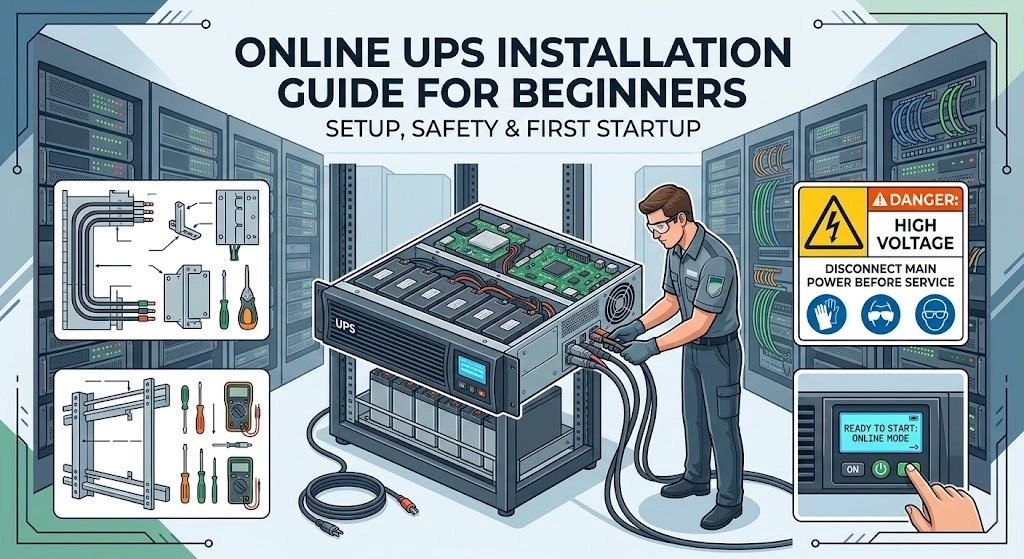
Online UPS Installation Guide for Beginners: Setup, Safety & First Startup
Online UPS Installation Guide for Beginners: Setup, Safety & First Startup
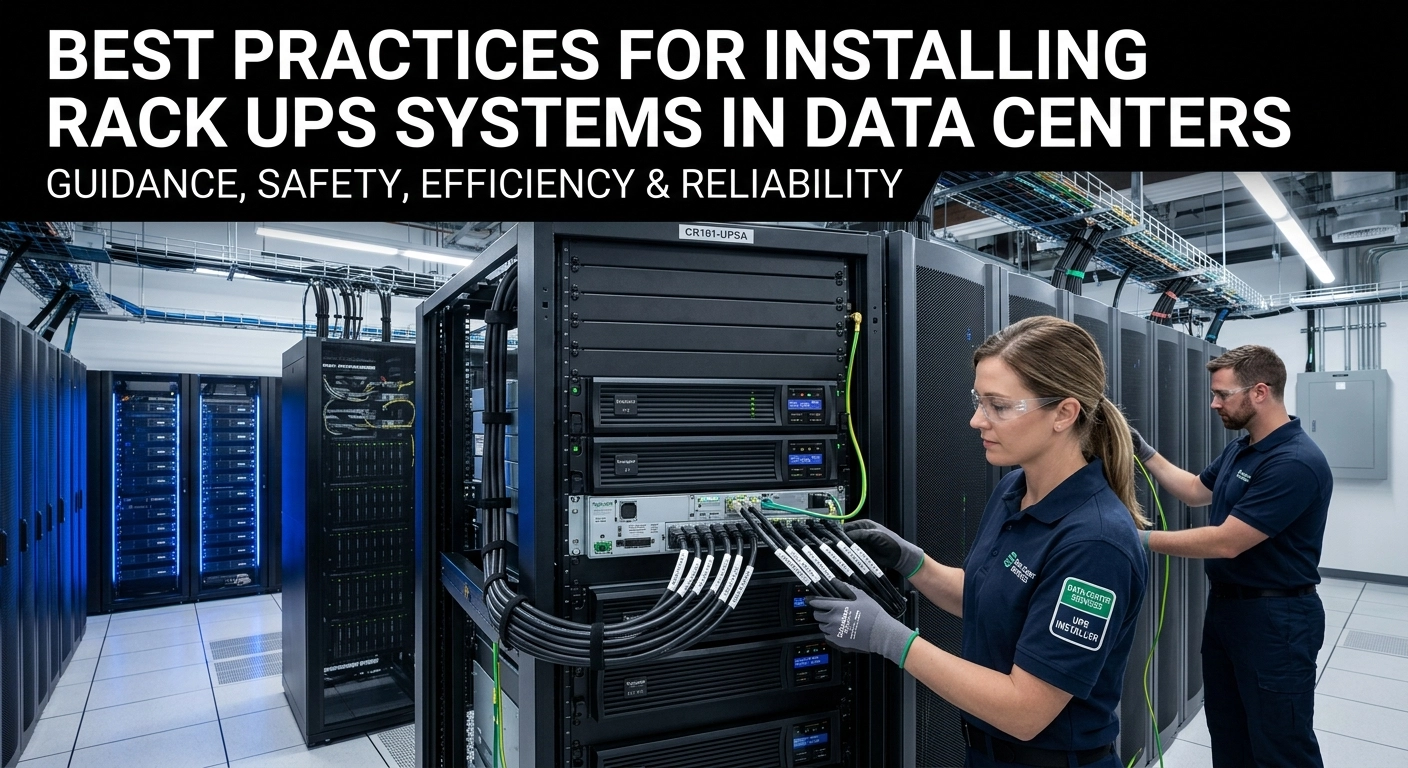
Technicians installing rack UPS systems in a data center. - ShanPu

Best Practices for Installing Rack UPS Systems in Data Centers

Best Practices for Installing Rack UPS Systems in Data Centers

Product Categories
You may also like
ShanPu 3C33 series 10-800kVA low frequency industrial online UPS for manufacturing plants - ShanPu
Three-Phase Low-Frequency Industrial Online UPS 10-800kVA
  1. ShanPu 3C33 10-800kVA three-phase industrial UPS is a low-frequency UPS with transformer-based online double conversion for factories and plants. Equipment, automation and control loads stay online through grid disturbance and outage with 0ms transfer.

  2. Rated 10-800kVA with three-phase input and output at 380/400/415Vac, the 3C33 scales from single machines to full production lines. A low-frequency isolation transformer blocks surge, harmonic and common-mode disturbance before reaching PLCs and drives; microprocessor control keeps output within ±1% across a 304-456Vac input window. External VRLA banks size backup time to the process.
Three-Phase Low-Frequency Industrial Online UPS 10-800kVA
ShanPu all-in-one hybrid inverter for home solar and battery storage - ShanPu
12KW ALL-IN-ONE HYBRID INVERTER

ShanPu SP-12KW/48V is an all-in-one hybrid inverter that integrates dual MPPT solar charging, 48V battery management and dual-output DC-to-AC inversion in one unit for large residential, commercial and light industrial storage systems. Two independent MPPT channels harvest power from separate PV arrays and convert it into regulated 48V DC, charging the battery bank at up to 160A while feeding the inverter stage; the controller automatically selects between solar, utility and battery based on the configured priority mode (SUB / SBU / SUF).The dual AC output design separates critical loads from non-critical circuits, while the 160A MPPT charging current and up to 160A AC charging rapidly recharge 48V battery banks after prolonged cloudy periods or heavy discharge. The 48V architecture reduces line losses and supports higher power delivery, and the Pro model adds parallel expansion plus optional WiFi monitoring for larger projects.

12KW ALL-IN-ONE HYBRID INVERTER
ShanPu all-in-one hybrid inverter for home solar and battery storage - ShanPu
3.6KW ALL-IN-ONE HYBRID INVERTER

ShanPu SP-3.6KW/24V is an all-in-one hybrid inverter that combines a 100A MPPT solar charger, 24V battery management and DC-to-AC inversion in one compact unit. Built for residential and small commercial systems, it delivers reliable power management with efficient energy conversion and straightforward installation.The inverter supports up to 5000W PV array power with a 60-500Vdc MPPT tracking range and up to 96% peak conversion efficiency from PV to AC. It can also run directly from solar PV or utility without a battery connected, and RS485 communication with automatic lithium battery activation makes LiFePO4 integration straightforward.

3.6KW ALL-IN-ONE HYBRID INVERTER
ShanPu all-in-one hybrid inverter for home solar and battery storage - ShanPu
6KW ALL-IN-ONE HYBRID INVERTER

ShanPu SP-6.2KW/48V is an all-in-one hybrid inverter that integrates MPPT solar charging, 48V battery management and DC-to-AC inversion into a single unit for medium residential and small commercial storage systems. Solar PV power is processed by the MPPT charger and converted into regulated 48V DC, which simultaneously charges the battery bank and supplies the inverter stage, while the built-in controller automatically selects the energy source - solar, utility or battery - based on the configured operating mode.

6KW ALL-IN-ONE HYBRID INVERTER

Get in touch with us

If you have any comments or good suggestions, please leave us a message; later our professional staff will contact you as soon as possible.

First Name must not exceed 100 characters.
Last Name must not exceed 100 characters.
Invalid email format or length exceeds 100 characters. Please re-enter.
Please enter a valid phone number!
Company Name must not exceed 150 characters.
Message must not exceed 3000 characters.
Contact customer service
×

Talk to Our Experts Today

Have any questions or need help?

Chat with our experts online now for instant answers.

First Name must not exceed 100 characters.
Last Name must not exceed 100 characters.
Invalid email format or length exceeds 100 characters. Please re-enter.
Please enter a valid phone number!
Company Name must not exceed 150 characters.
Message must not exceed 3000 characters.
×

Customized Solutions

Customize your UPS system according to your needs.

We will provide you with the most suitable solution to meet your specific requirements.

First Name must not exceed 100 characters.
Last Name must not exceed 100 characters.
Invalid email format or length exceeds 100 characters. Please re-enter.
Please enter a valid phone number!
Company Name must not exceed 150 characters.
Message must not exceed 3000 characters.
×

Submit a Request

Fill out your requirements information, and we will provide you with personalized services and solutions as soon as possible.

First Name must not exceed 100 characters.
Last Name must not exceed 100 characters.
Invalid email format or length exceeds 100 characters. Please re-enter.
Please enter a valid phone number!
Company Name must not exceed 150 characters.
Message must not exceed 3000 characters.
×

Get a Free Quote

Get a quote for a UPS power system that suits your needs.

Provide detailed information, and let us tailor the best solution for you.

First Name must not exceed 100 characters.
Last Name must not exceed 100 characters.
Invalid email format or length exceeds 100 characters. Please re-enter.
Please enter a valid phone number!
Company Name must not exceed 150 characters.
Message must not exceed 3000 characters.
×

Get the Product Catalog

Fill in your details to receive our latest UPS product catalog and explore our full range of power solutions.

First Name must not exceed 100 characters.
Last Name must not exceed 100 characters.
Invalid email format or length exceeds 100 characters. Please re-enter.
Please enter a valid phone number!
Company Name must not exceed 150 characters.
Message must not exceed 3000 characters.