


which grid-tied inverter types suit commercial projects? | Insights by ShanPu

Quick Answer
Commercial projects most often use three-phase string inverters or central inverters; the better fit depends on array layout, capacity, and operations strategy. To determine which grid-tied inverter types suit commercial projects, compare topology, DC voltage, grid-code functions, and serviceability. No company profile was supplied, so product-specific support cannot be verified; final selection requires site and utility review.
How to Assess Commercial Inverter Project Support
The supplied brief identifies no manufacturer name, product catalog, engineering scope, or quality-control process. Accordingly, this article does not attribute inverter design, OEM/ODM capability, customization, testing, certifications, or service coverage to a specific supplier; buyers should request evidence for the actual model and sales entity.
Before comparing proposals, confirm the project location, AC capacity, module electrical data, array layout, operating voltage, export limits, and storage plans. MOQ, lead time, testing scope, and quotation must be confirmed per project, and any claimed grid-code or safety compliance should be checked against applicable local requirements.
Discuss Your Commercial Inverter Project Requirements
To assess suitable inverter architectures, provide the project location and utility, target AC capacity, module datasheet, roof or ground-mount layout, shading conditions, DC voltage target, and battery or export-control plans. These details can support a discussion of topology options, required documentation, testing scope, and a project quotation; send them to SPU@gdshanpu.com.
Commercial Grid-Tied Inverter FAQs
Which inverter architecture handles partial shading across large commercial roofs?
The best architecture depends on the shade pattern, roof geometry, and electrical design—not simply on whether the system is commercial. String inverters with multiple maximum power point tracking (MPPT) inputs can separate strings with different orientations or irradiance conditions, but shade within a string can still reduce output. Module-level power electronics, such as microinverters or DC optimizers paired with an inverter, can provide more granular control where obstructions cause uneven module production. They also add rooftop components and potential maintenance points. A central inverter may suit a large, relatively uniform array, but its MPPT arrangement and string design must fit the site. Model the actual shade profile and compare energy estimates, monitoring detail, equipment access, and service strategy before choosing.
When should a business choose string versus central inverters?
String inverters are often a practical fit when a project has multiple roof areas, varied orientations, phased construction, or a preference for distributing conversion capacity across several units. Their modular arrangement can limit the capacity affected by a single inverter fault, although shared communications, switchgear, or grid limitations can still affect the wider plant. Central inverters can suit large, electrically uniform arrays where a consolidated conversion block aligns with the project’s layout and maintenance plan. They may concentrate outage impact in one larger unit and require suitable space and service access. Compare lifecycle cost, MPPT needs, AC collection design, monitoring, replacement logistics, and the commercial effect of lost generation; neither topology is categorically superior.
How do 1000 V and 1500 V systems affect inverter selection?
The inverter’s maximum DC input voltage must match the system design, and the full string voltage must remain within equipment limits under the site’s lowest expected temperature. At a given DC power, a higher operating voltage can mean lower current, which may affect conductor sizing and electrical losses, but it also requires compatible modules, connectors, protection devices, and installation practices. A 1500 V architecture is used in some large commercial and utility-scale projects, but it is not automatically the right choice for every commercial site. Check inverter input limits, module open-circuit voltage temperature correction, local electrical code, equipment availability, and the project’s safety and maintenance requirements. AC output voltage is a separate design consideration.
What grid services must a commercial inverter support locally?
Requirements depend on the country, utility, project size, and interconnection agreement. The interconnection process may specify functions such as voltage and reactive-power control, frequency response, active-power limits, ramp-rate behavior, communications, and anti-islanding protection. In the United States, IEEE 1547-2018 addresses interconnection and interoperability requirements for distributed energy resources, while certification pathways such as UL 1741 Supplement SB may be relevant to demonstrating grid-support functionality; applicability depends on the jurisdiction and utility. A feature listed in a datasheet is not by itself proof that a particular model, firmware version, or configuration is accepted. Obtain the utility’s current technical requirements and verify the proposed equipment and settings against them before procurement.
How should inverter redundancy be sized for business continuity?
Start with the consequence of losing conversion capacity, then define the amount of generation loss the business can tolerate and the time available for repair. With multiple string inverters, one unit failure typically affects a portion of the array rather than the entire plant, while a central inverter can concentrate more capacity in a single unit. Actual outage exposure also depends on shared equipment, communications, spare-parts availability, repair access, and grid constraints. Model fault scenarios and compare the cost of additional capacity or spare units with the value of avoided downtime. Do not assume that installing multiple inverters creates full redundancy: the design must identify common-mode failures and confirm that remaining equipment can operate within electrical and utility limits.
Which inverter topology fits battery-ready commercial solar projects best?
For a new project, a hybrid inverter may support DC coupling when its power, battery voltage range, controls, and approved battery compatibility match the design. Another option is AC coupling, which uses a separate battery inverter alongside the solar inverter and can offer flexibility for some retrofits or system layouts. A conventional grid-tied PV inverter should not be assumed to become battery-compatible through a software update; the manufacturer must document supported configurations and controls. Also define whether the project needs backup operation, export control, or energy shifting. Standard grid-tied inverters generally cease energizing the utility during an outage under anti-islanding requirements; backup operation requires compatible islanding equipment and a design approved for the applicable interconnection rules.
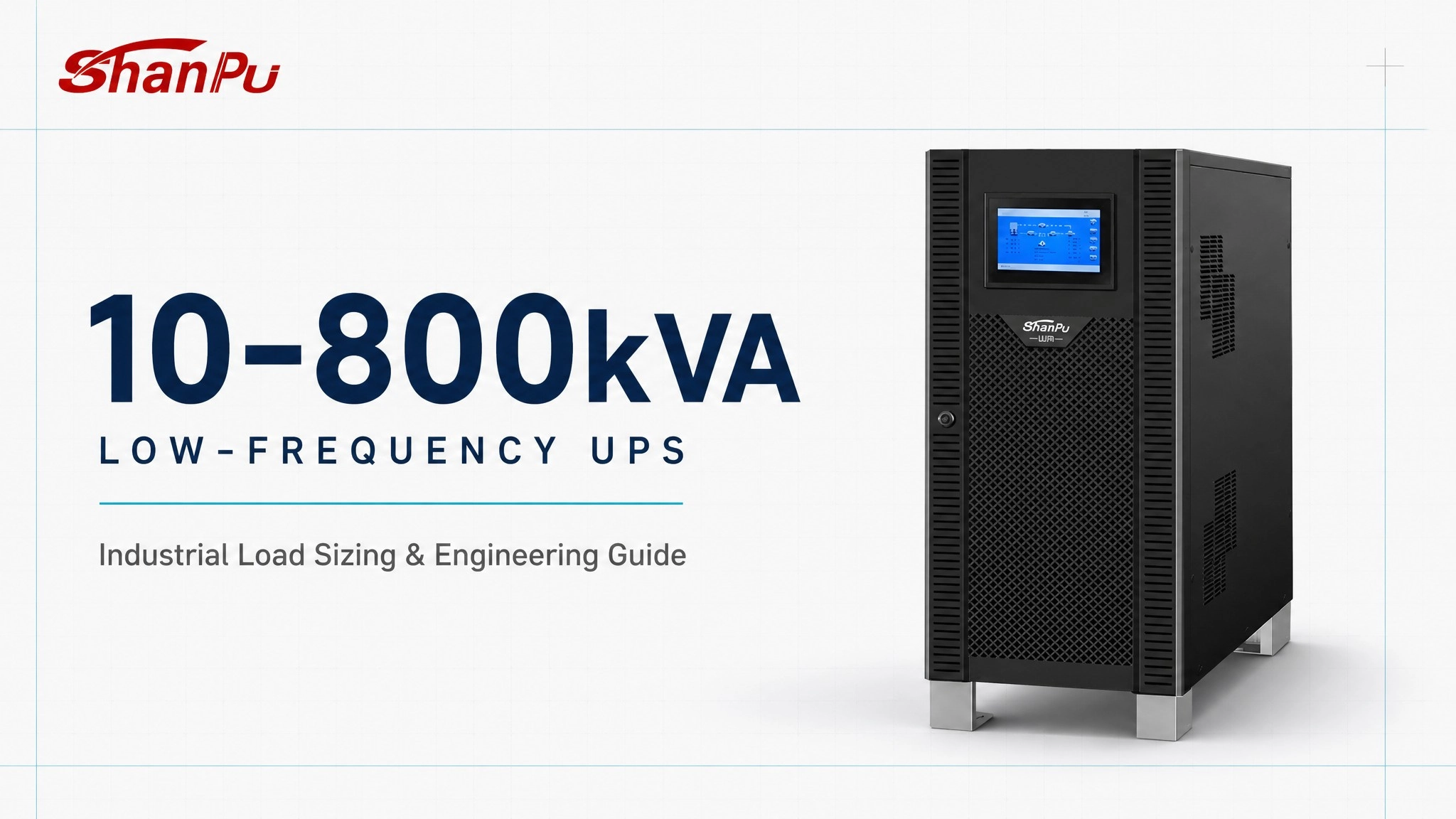
Low-Frequency UPS Engineering Guide: Sizing 10–800kVA Systems for Industrial Plant Loads
Voltage Sag Case Study: How a 1200kVA Modular UPS Project Was Rescued by Bus Distribution Box Selection
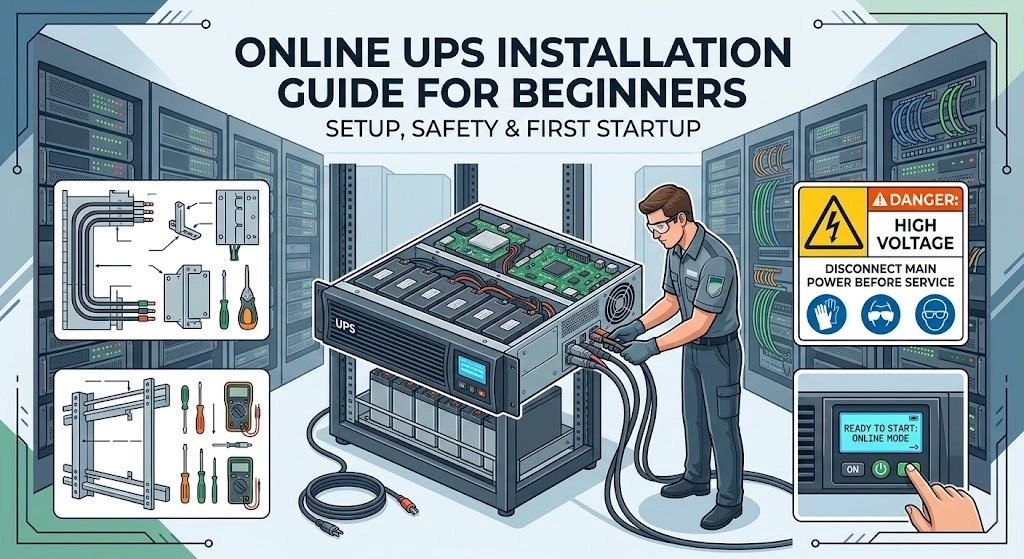
Online UPS Installation Guide for Beginners: Setup, Safety & First Startup
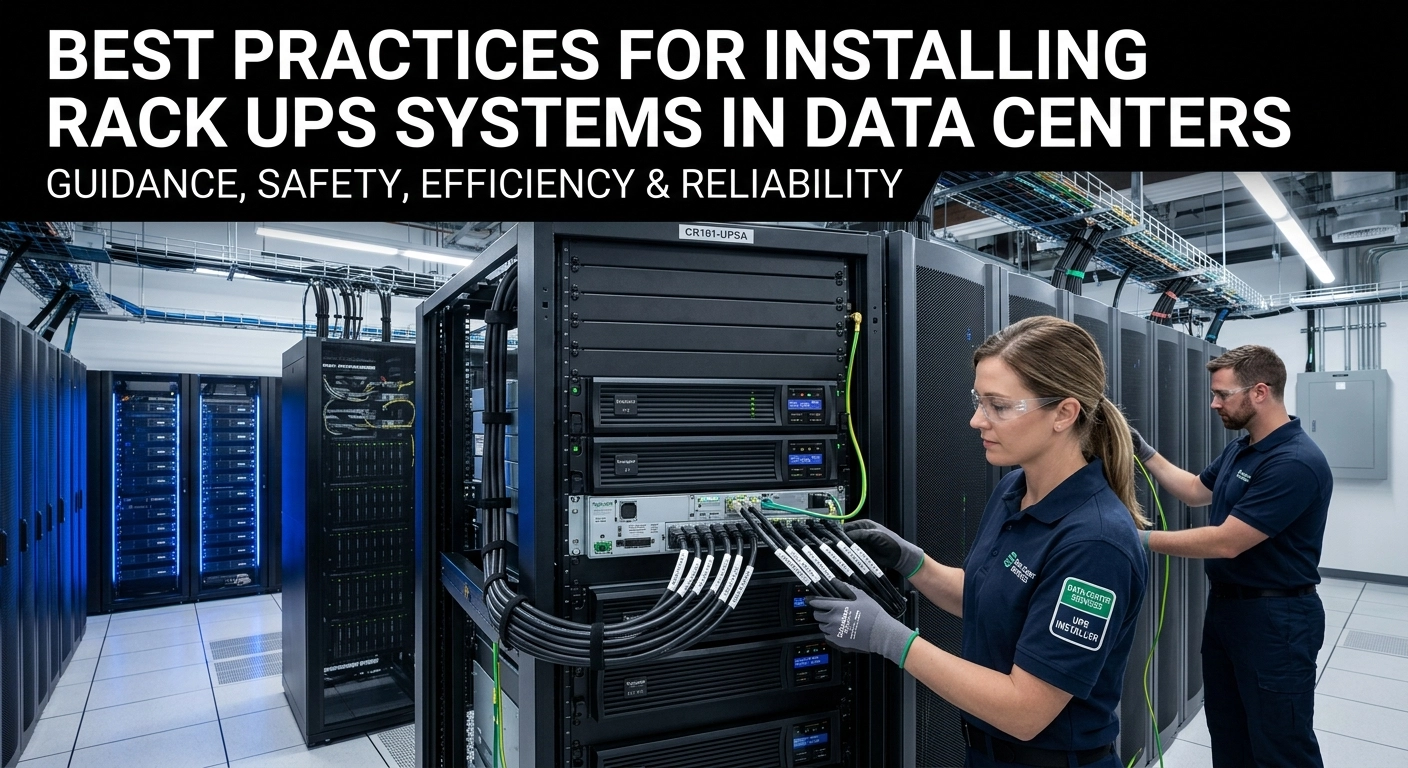
Best Practices for Installing Rack UPS Systems in Data Centers


Get in touch with us
If you have any comments or good suggestions, please leave us a message; later our professional staff will contact you as soon as possible.
© 2026 ShanPu. All Rights Reserved.
YouTube
SHANPU UPS
Shanpu