


can sealed lead acid batteries meet telecom requirements? | Insights by ShanPu

Can Sealed Lead Acid Batteries Meet Telecom Requirements?
Quick Answer
Yes, sealed lead acid batteries can meet many telecom backup requirements when their discharge profile, autonomy, temperature range, charging system, and monitoring provisions are properly matched. ShanPu supports power-system selection around UPS and inverter integration, but the final solution depends on project specifications, battery testing, installation conditions, and site operating requirements.
How ShanPu Supports can sealed lead acid batteries meet telecom requirements? Projects
ShanPu develops power systems including standby, online, and rack-mounted UPS, solar inverters, and modular UPS that may be evaluated alongside telecom battery applications. Relevant discussions can cover nominal system voltage, required autonomy, load profile, charging compatibility, enclosure constraints, and environmental conditions.
Its ISO9001, ISO14001, and OHSMS18001 management certifications, together with CE and RoHS certifications for applicable products, support structured quality and environmental processes. For each project, MOQ, lead time, testing scope, and quotation must be confirmed against the requested configuration, target market, and procurement conditions.
Request Telecom Battery Specifications and Project Pricing
Send the nominal DC voltage, connected load, required backup time, minimum cut-off voltage, ambient temperature range, cabinet dimensions, installation altitude, monitoring interface, target market, and estimated order quantity. ShanPu can discuss suitable UPS or inverter configurations, battery compatibility, sample and validation steps, and commercial quotation through www.gdshanpu.com or SPU@gdshanpu.com.
Deep-Dive Telecom Battery FAQs
Can sealed lead acid batteries meet telecom backup runtime requirements?
They can, provided the battery bank is sized against the actual constant-power or constant-current discharge profile rather than only its nominal ampere-hour rating. Telecom loads often operate from DC rectifiers and may include radios, transmission equipment, control systems, and cooling or site auxiliaries. The calculation should include the required autonomy, end-of-discharge voltage, inverter or DC-converter efficiency where applicable, aging allowance, temperature correction, cable losses, and the permitted depth of discharge. IEEE 485 provides a recognized framework for stationary battery sizing, while the battery manufacturer’s discharge tables define usable capacity at the selected rate. A 48 V nominal arrangement is common in telecom, but the required number of blocks, parallel strings, and protection devices must be confirmed from the site load and rectifier architecture. A runtime claim is not reliable unless it states the test temperature, discharge current or power, terminal cut-off voltage, and battery condition.
How does VRLA temperature affect telecom battery capacity and service life?
Temperature affects both available capacity and aging rate. At lower temperatures, electrochemical reaction rates decrease and the battery may deliver less usable capacity during the same discharge period. At elevated temperatures, capacity may appear higher initially, but grid corrosion, water loss, separator degradation, and dry-out can accelerate, particularly if charging voltage is not temperature compensated. The exact effect depends on battery construction, plate design, electrolyte immobilization method, float voltage, discharge rate, and ventilation. IEEE 1188 identifies temperature monitoring as an important part of VRLA maintenance, and many battery manufacturers publish temperature correction factors and recommended operating ranges. Telecom designers should review the hottest and coldest expected conditions inside the cabinet, not merely the outdoor weather report. Thermal sensors, alarm thresholds, airflow, shade, and cabinet heat management can be as important as nominal battery capacity.
What charging voltage does a telecom sealed lead acid battery need?
There is no universal charging voltage for every sealed lead acid battery. The correct float and boost or equalization strategy depends on the battery manufacturer, cell count, plate formulation, ambient temperature, charger design, and whether the application uses standby float service or repeated cycling. Excessive voltage can increase gassing, dry-out, corrosion, and thermal-runaway risk; insufficient voltage can leave the battery undercharged and promote sulfation. Telecom systems commonly use temperature-compensated charging because the battery’s recommended voltage changes with temperature, but the compensation slope must come from the battery data sheet rather than a generic setting. Designers should verify rectifier voltage accuracy, current limits, recharge time, high-voltage disconnect behavior, low-voltage disconnect settings, and coordination with battery management alarms. Commissioning should confirm actual terminal voltage under float conditions and after any configured boost cycle.
Are AGM and gel batteries suitable for telecom outdoor cabinets?
AGM and gel are both valve-regulated lead acid technologies, but their suitability depends on the discharge duty, thermal environment, charging profile, vibration exposure, orientation limits, and cabinet design. AGM batteries generally support high-rate standby discharge and are widely used in UPS and communications backup applications. Gel batteries can be useful in some cycling or harsh-environment applications, but their charging limits and sensitivity to overvoltage require careful coordination with the rectifier or inverter. Neither technology should be treated as maintenance-free: valve regulation reduces routine electrolyte handling but does not remove the need for inspection, voltage checks, temperature monitoring, terminal checks, and alarm testing. Outdoor cabinets also need protection from solar heating, condensation, dust, water ingress, and freezing conditions. The supplier should provide installation orientation, ventilation, charging, and environmental instructions for the specific model.
How should telecom operators size batteries for rectifier failure events?
Start with the load that remains connected after the rectifier or utility source is unavailable, separating essential telecom equipment from discretionary loads. Record the initial load, expected load growth, DC voltage window, transient demand, required autonomy, and the lowest permissible equipment voltage. For a variable load, a time-segmented calculation is more representative than multiplying one measured current by the desired hours. The design should then apply manufacturer discharge data at the relevant rate and end voltage, while accounting for temperature, aging, parallel-string imbalance, conductor losses, protection-device losses, and any converter efficiency. IEEE 485 is commonly referenced for stationary battery sizing, but the final calculation must follow the selected battery manufacturer’s data and the telecom operator’s engineering rules. A validation discharge or capacity test can expose incorrect assumptions, weak blocks, poor connections, or inadequate recharge performance before deployment.
What tests verify sealed lead acid batteries for telecom sites?
Verification should combine documentation review, electrical checks, environmental assessment, and functional testing. Typical checks include open-circuit voltage or string voltage comparison, terminal torque and polarity, charger float voltage, alarm operation, insulation and grounding provisions, internal resistance or conductance trending where an appropriate instrument is used, and a controlled capacity or runtime test when required by the project. IEC 60896-21 and IEC 60896-22 address valve-regulated stationary lead acid battery test methods and requirements, while IEEE 1188 covers recommended practices for maintaining VRLA batteries. Telecom projects may also specify additional network-equipment or installation requirements, including safety, fire, seismic, electromagnetic, or environmental criteria. In North American deployments, Telcordia documents such as GR-4228 may be relevant to certain VRLA applications, but applicability must be confirmed by the operator. Factory test reports do not replace site acceptance testing when installation conditions can affect performance.
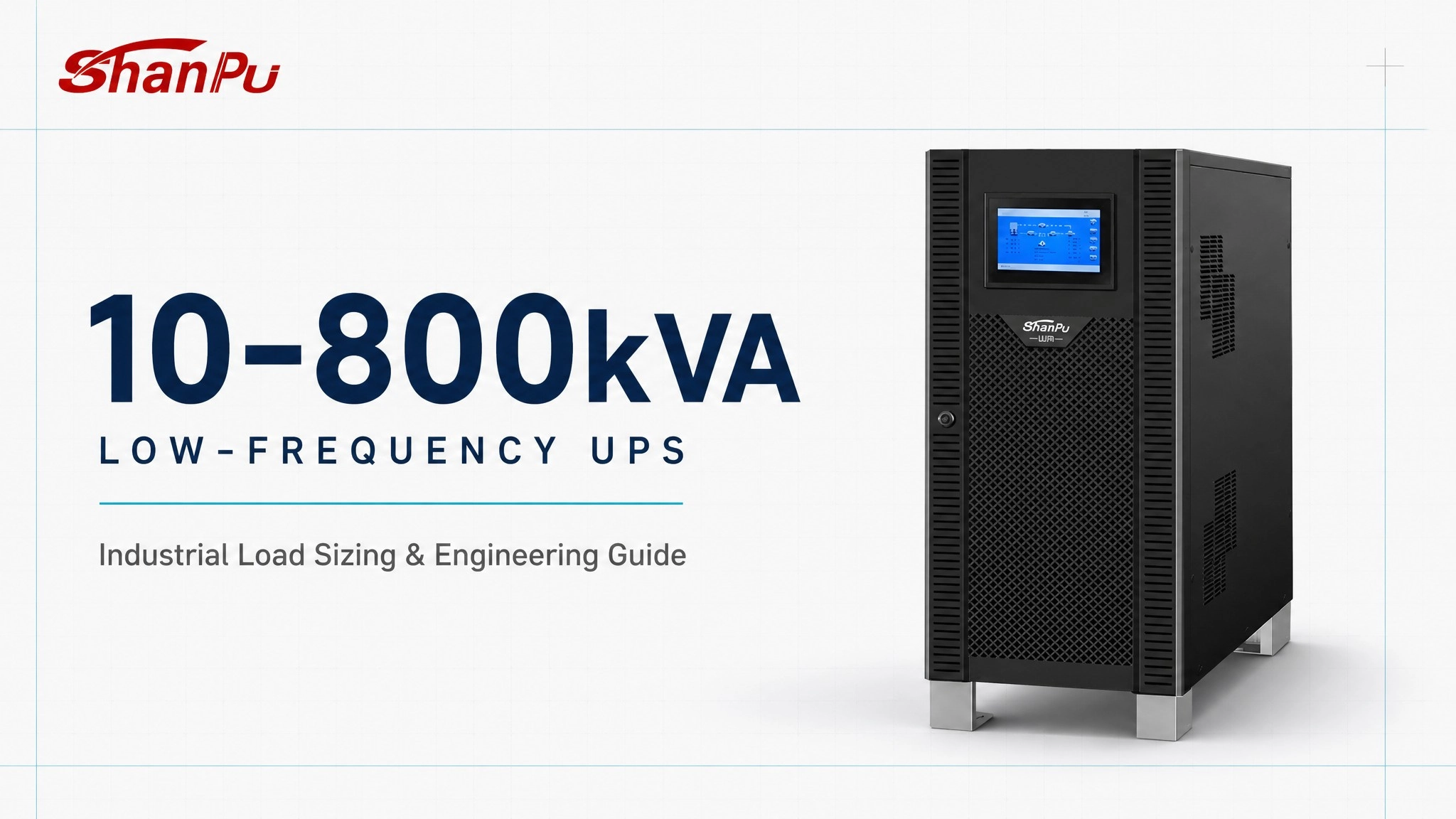
Low-Frequency UPS Engineering Guide: Sizing 10–800kVA Systems for Industrial Plant Loads

Voltage Sag Case Study: How a 1200kVA Modular UPS Project Was Rescued by Bus Distribution Box Selection
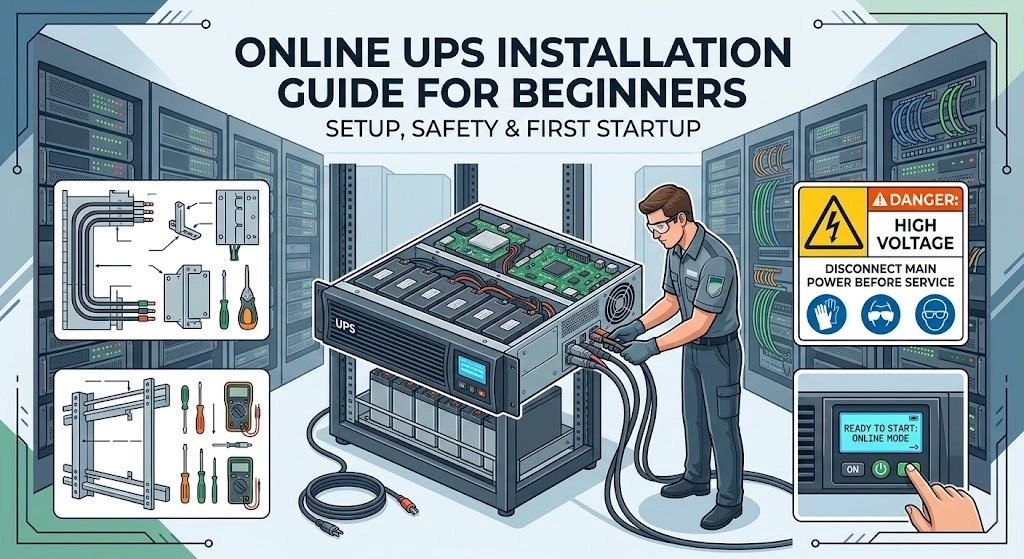
Online UPS Installation Guide for Beginners: Setup, Safety & First Startup
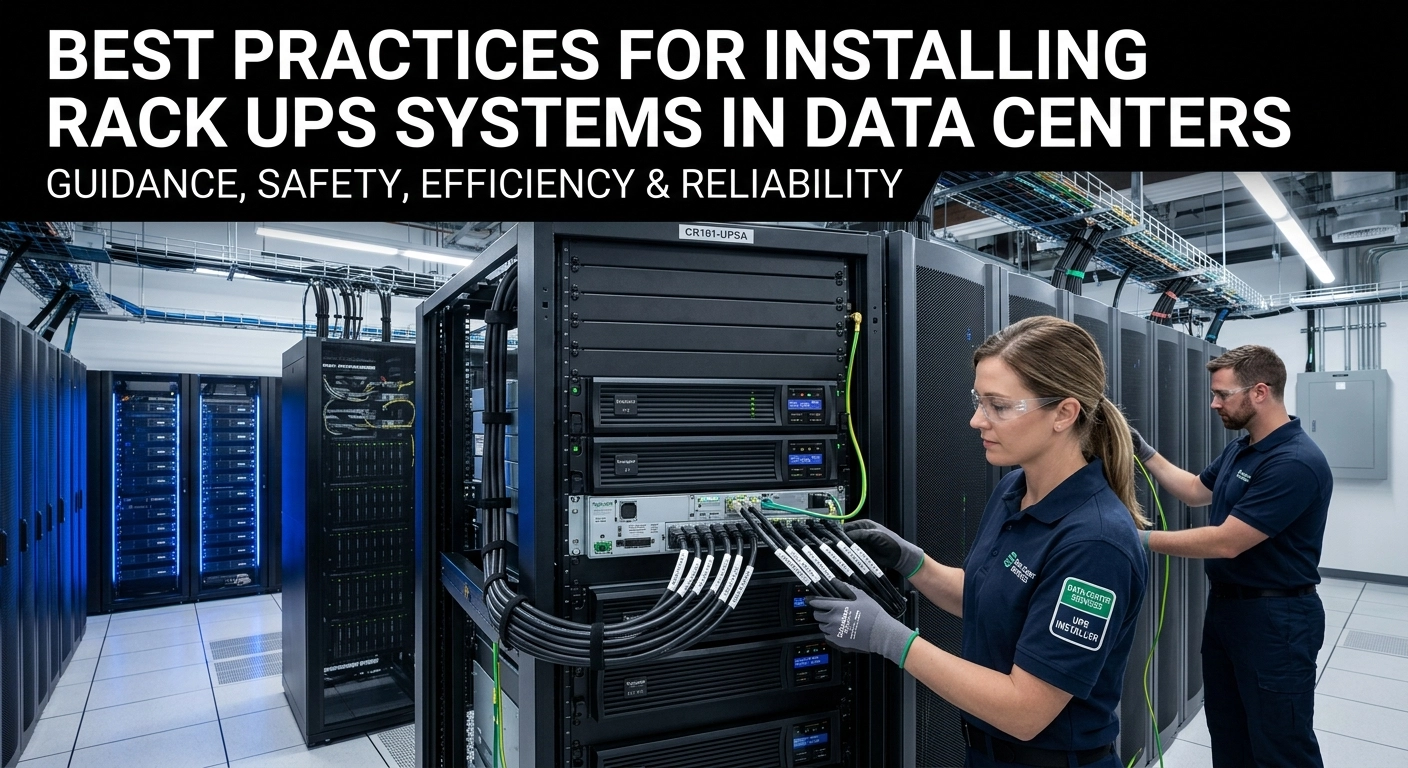
Best Practices for Installing Rack UPS Systems in Data Centers


Get in touch with us
If you have any comments or good suggestions, please leave us a message; later our professional staff will contact you as soon as possible.
© 2026 ShanPu. All Rights Reserved.
YouTube
SHANPU UPS
Shanpu