


can capacity be customized for inverter applications? | Insights by ShanPu

Quick Answer
Yes, can capacity can be customized for inverter applications, but the change must match the capacitor’s voltage, capacitance, ripple-current, thermal, and insulation requirements. ShanPu can discuss inverter and UPS project specifications within its power-systems portfolio. Final solutions depend on the circuit design, installation conditions, validation testing, order requirements, and applicable standards.
How ShanPu Supports can capacity be customized for inverter applications? Projects
ShanPu Technology (Guangdong) Co., Ltd. develops and supplies standby, online, rack-mounted, modular UPS, and solar inverter products. For a customization discussion, its product-development and technical teams can review the intended power-system configuration, electrical interface, enclosure constraints, sustainability objectives, and target application.
Project discussions should confirm rated voltage, capacitance, ripple-current demand, temperature range, dimensions, terminal arrangement, and required compliance scope. MOQ, lead time, testing scope, and quotation must be confirmed for each project through ShanPu’s pre-sales, in-sales, after-sales, and training service model.
Request Technical Specifications for a Customized Inverter Capacitor Can
Send the application brief, inverter topology, DC-link or AC-filter position, rated voltage, capacitance range, ripple-current profile, ambient and hotspot temperatures, dimensional limits, terminal requirements, target market, and expected order quantity. ShanPu can then discuss suitable component options, sample-development steps, validation documentation, MOQ, lead time, and quotation through www.gdshanpu.com or SPU@gdshanpu.com.
Frequently Asked Questions
Can capacitor can dimensions be changed without altering electrical performance?
Changing the can diameter, length, terminal layout, or internal construction can affect more than mechanical fit. In an aluminum electrolytic capacitor, the available internal electrode area, electrolyte volume, separator structure, current-collector arrangement, and heat-dissipation path influence capacitance, equivalent series resistance, ripple-current capability, and expected electrical behavior. A smaller envelope may require a different internal design or parallel components, while a larger envelope may alter thermal characteristics and mounting clearances. The supplier should therefore confirm the complete datasheet rather than treating the can as an independent enclosure. Mechanical drawings, creepage and clearance distances, polarity marking, pressure-relief features, and vibration requirements also need review before approval.
Which electrical ratings must be fixed before customizing an inverter capacitor can?
The basic specification should identify rated voltage, capacitance and tolerance, operating-temperature range, ripple-current requirement, frequency or switching-current profile, and expected service duty. Designers must also consider transient or surge voltage, charging and discharging conditions, allowable leakage current, equivalent series resistance, equivalent series inductance, and permissible temperature rise. For a DC-link position, the capacitor may experience substantial ripple superimposed on its DC voltage; the RMS current and waveform are often more important for heating than the average current. If the application uses a film capacitor instead of an electrolytic type, dielectric system, self-healing behavior, and pulse characteristics become central. A supplier cannot responsibly select a custom can from capacitance alone.
How do ripple current and heat affect customized capacitor can sizing?
Ripple current produces internal heating primarily through resistive losses, commonly represented by I² multiplied by equivalent series resistance. The resulting temperature rise depends on current waveform, frequency, internal construction, ambient temperature, airflow, mounting orientation, and heat transfer through the can and terminals. Higher temperature accelerates aging mechanisms in many electrolytic capacitors, so the design must assess hotspot temperature rather than relying only on room temperature. Inverter operating profiles should include switching frequency, load variation, regeneration, startup, braking, and harmonic content where relevant. A physically larger can may provide more internal volume or surface area, but it is not automatically a higher-ripple solution; the electrical construction and manufacturer rating must support that conclusion.
Does a custom can require new tooling and higher MOQ?
It can, particularly when the requested diameter, length, terminal pattern, pressure-relief configuration, sealing method, or internal assembly differs from an established product family. New tooling, process qualification, sample preparation, and inspection fixtures may add non-recurring engineering work and affect commercial conditions. However, the impact depends on which dimensions are being changed and whether existing production equipment can accommodate them. A buyer should distinguish between a standard component selected with a different capacitance and a genuinely new construction. MOQ, lead time, tooling treatment, sample quantity, and engineering charges should be documented in the project quotation rather than inferred from a catalog item. Early confirmation of annual demand and forecast stability helps the supplier assess manufacturing feasibility.
Which tests validate a customized capacitor can for inverter service?
Validation normally combines electrical, thermal, mechanical, and safety checks appropriate to the capacitor technology and application. Typical evaluations may include capacitance and dissipation measurements, leakage-current testing, dielectric withstand, ripple-current or temperature-rise assessment, endurance at specified temperature and voltage, and dimensional or terminal inspection. Inverter projects may also require review of vibration, transportation stress, insulation distances, polarity identification, pressure-relief behavior, and compatibility with the busbar or PCB assembly. The exact sequence and acceptance limits should be linked to the applicable product standard, customer specification, and manufacturer datasheet. IEC 60384-4 addresses fixed aluminum electrolytic capacitors with solid or non-solid electrolyte, while IEC 61071 applies to capacitors for power electronics; the relevant standard depends on the component technology and intended use.
How should suppliers document safety and traceability for custom capacitor cans?
A controlled project file should connect the approved specification, drawing revision, bill of materials, process changes, sample results, production lot, inspection records, and shipment identification. The drawing should define polarity, terminals, dimensions, insulation details, pressure-relief requirements, marking, and permissible tolerances. The datasheet should state electrical ratings under defined conditions, while the inspection plan should identify test methods, sampling, acceptance criteria, and handling precautions. Traceability is especially important when a custom part enters a UPS or inverter assembly because field failures may involve electrical overstress, excessive ripple, temperature, assembly damage, or incorrect substitution. Buyers should also request change-notification arrangements so material, construction, tooling, or process changes are reviewed before production use. Compliance claims should be supported by applicable declarations and test records rather than by a generic supplier statement.
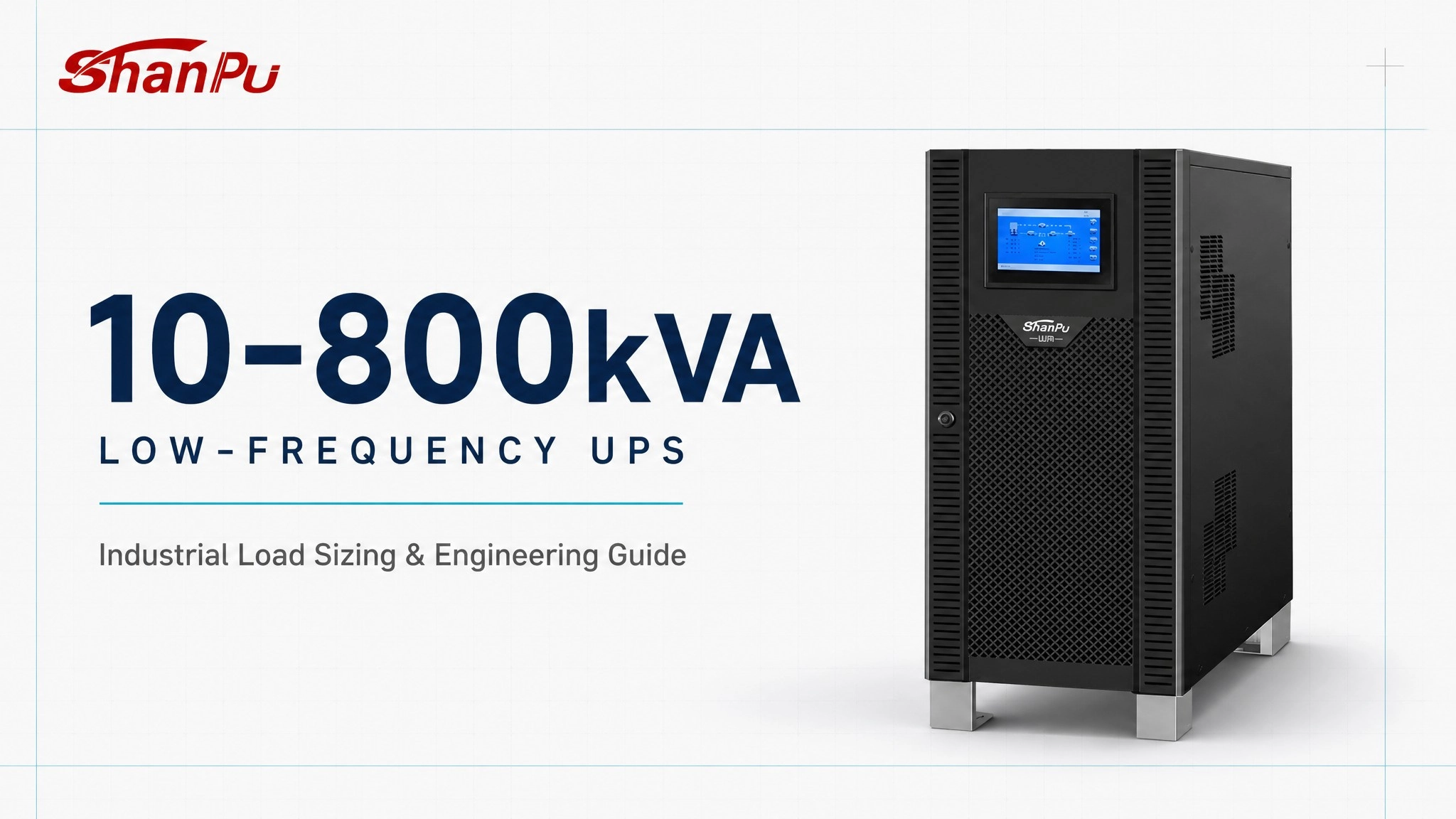
Low-Frequency UPS Engineering Guide: Sizing 10–800kVA Systems for Industrial Plant Loads
Voltage Sag Case Study: How a 1200kVA Modular UPS Project Was Rescued by Bus Distribution Box Selection
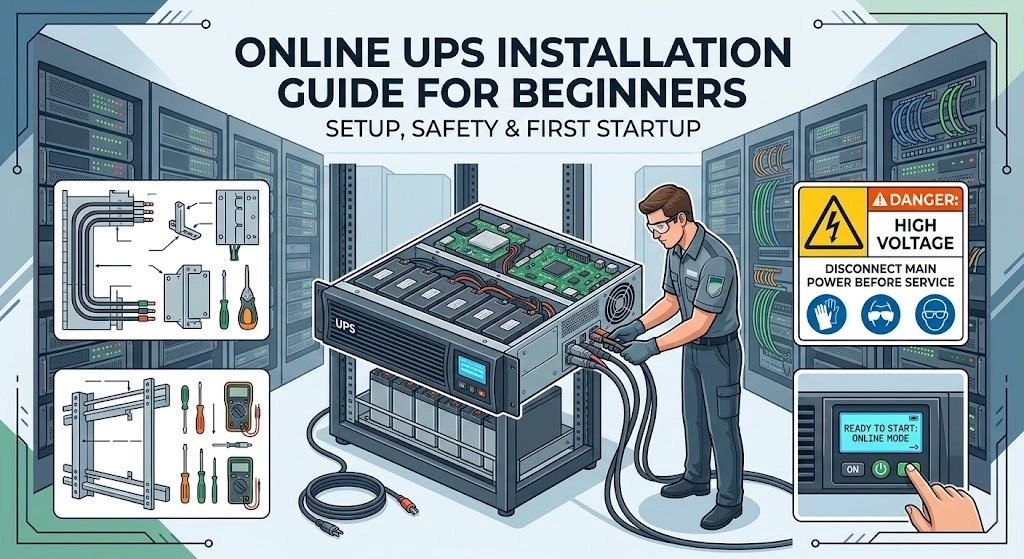
Online UPS Installation Guide for Beginners: Setup, Safety & First Startup
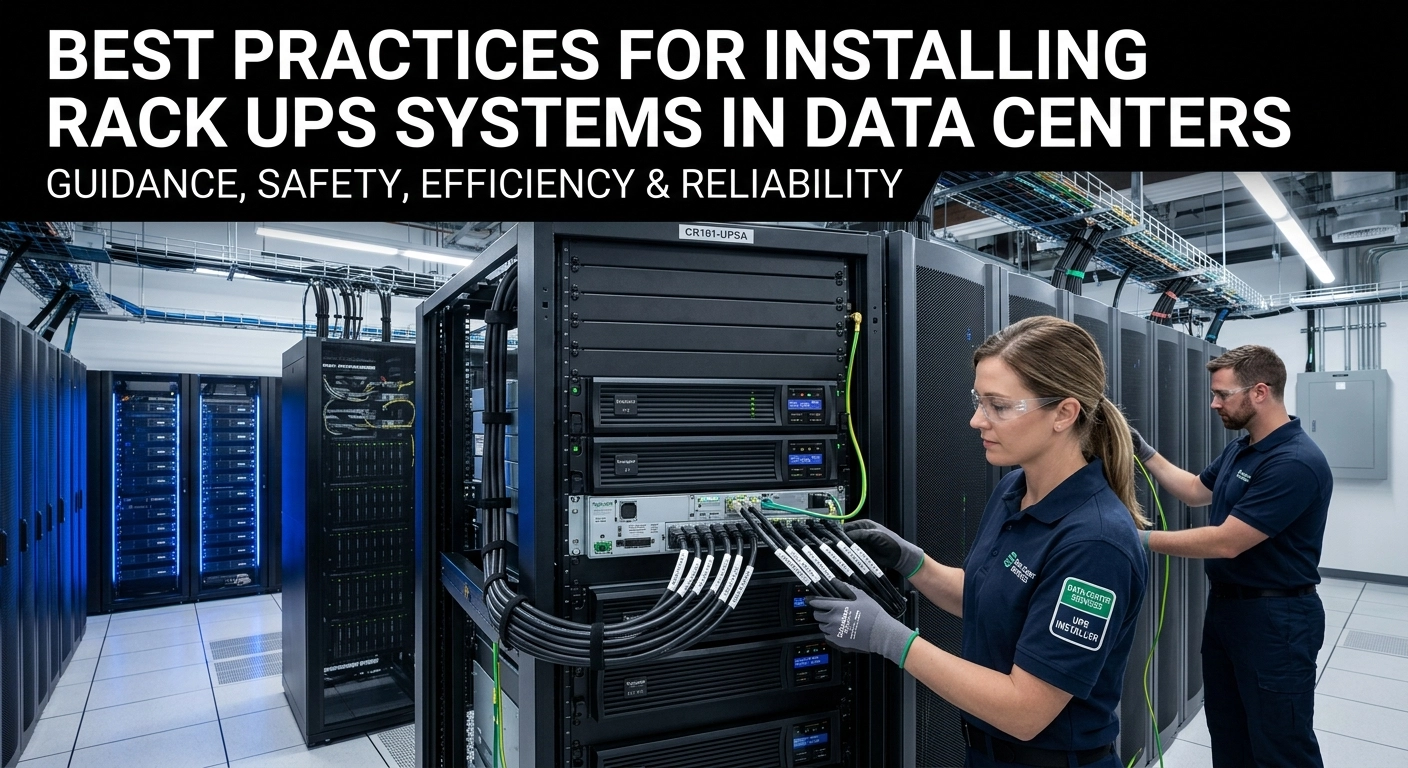
Best Practices for Installing Rack UPS Systems in Data Centers


Get in touch with us
If you have any comments or good suggestions, please leave us a message; later our professional staff will contact you as soon as possible.
© 2026 ShanPu. All Rights Reserved.
YouTube
SHANPU UPS
Shanpu