


what is the best hybrid inverter for commercial solar systems? | Insights by ShanPu

Quick Answer
There is no single answer to what is the best hybrid inverter for commercial solar systems: the right unit must match the site’s load, grid rules, battery architecture, and resilience target. Compare continuous and surge power, three-phase compatibility, battery communication, export controls, and service terms. Final selection depends on project data, interconnection review, and equipment testing under applicable site conditions.
How to Verify Supplier Support for Commercial Hybrid Inverter Projects
The Guangdong Shanpu Technology Co., Ltd., product range, and company profile were not supplied, so specific capabilities such as inverter development, OEM or ODM production, customization, quality-control processes, or sample testing cannot be verified. Buyers should request model datasheets, wiring diagrams, operating limits, and supporting documentation before treating any claimed function as available.
Before comparing suppliers, confirm the inverter’s rated and surge output, AC voltage and phase configuration, battery voltage range and communication protocol, supported operating modes, and applicable grid-interconnection requirements. MOQ, lead time, testing scope, and quotation must be confirmed for each project; none can be established without the relevant supplier and project information.
Discuss Your Commercial Inverter Project Requirements
For a project-specific comparison, provide the site location, interval load data and peak demand, service voltage and phase, proposed PV capacity, battery chemistry and usable capacity, backup-load requirements, and any export limit. These details can support discussion of suitable specifications, documentation, sample or evaluation steps, and a project quotation. Contact SPU at SPU@gdshanpu.com.
Commercial Hybrid Inverter FAQs
How should a business size a hybrid inverter against peak demand?
Start with interval electrical-load data, not only monthly energy use. Identify the site’s maximum coincident demand, the loads that must remain powered during an outage, and the starting or surge requirements of motors and other equipment. Compare those loads with the inverter’s continuous and short-duration output ratings, accounting for phase configuration and any manufacturer-stated derating conditions. Battery energy capacity, measured in kilowatt-hours, determines how long loads may be supplied; inverter power, measured in kilowatts, determines how much can be supplied at once. Demand-charge savings are not automatic: the controls, operating schedule, tariff, and usable battery capacity all affect results.
Can a commercial hybrid inverter operate during a grid outage?
Not necessarily. Many grid-following solar inverters stop energizing the grid connection during an outage to avoid creating an unsafe island. Backup operation requires equipment and system design intended for islanded operation, such as suitable grid-forming capability, transfer or isolation arrangements, compatible storage, and circuits configured for backup. Confirm whether the specific model supports black start, which loads it can supply, its transition behavior, and how it responds when battery state of charge is low. The local utility and applicable electrical rules determine acceptable interconnection and isolation arrangements; a product label stating “hybrid” alone does not establish that a site will have backup power.
How do battery voltage and inverter power affect system design?
The battery’s permitted DC voltage range must match the inverter’s specified battery input range across the battery’s operating state, not just its nominal voltage. Battery current limits, communication requirements, and the battery-management system’s compatibility also matter. On the AC side, inverter power sets the maximum conversion rate, while battery energy capacity relates to stored energy and potential operating duration. A battery with ample kilowatt-hours may still be unable to supply the required kilowatts if its discharge limit or the inverter’s power rating is too low. Check the approved battery and inverter documentation together, including charge and discharge limits, temperature conditions, and control behavior.
What should buyers check in three-phase hybrid inverter specifications?
Verify the nominal AC voltage and frequency, phase arrangement, rated output, and whether the model can manage the site’s expected phase loading. Review permitted phase imbalance, power-factor and reactive-power functions, overload capability, and any output derating at the project’s ambient temperature or installation conditions. For sites with sensitive equipment, request the relevant power-quality data and confirm compatibility with the load and electrical design. Also establish whether parallel operation is supported and, if so, what configurations and controls the manufacturer documents. The exact requirements depend on the site’s electrical service and local interconnection rules, so a three-phase label by itself is not enough to establish suitability.
How can export limits change commercial hybrid inverter selection?
A site subject to a zero-export or capped-export requirement may need a documented export-control function and compatible measurement equipment, such as specified meters or current transformers. Check how the controller measures power at the grid connection, how quickly it responds to changing loads, and what behavior the system adopts if measurement or communications fail. Confirm that the inverter, meter, firmware, and any external energy-management controls are compatible as a complete arrangement. Export-control acceptance and settings can be subject to utility rules and local approval. Do not assume that an inverter’s general monitoring feature satisfies a project’s export-control requirement; obtain the relevant technical documentation and confirm the configuration with the responsible utility or project engineer.
Which warranties and service terms matter for business projects?
Review the written warranty for the exact inverter model and market, including the coverage period, covered components, exclusions, claim process, and any conditions related to installation or operating environment. Check separately what is covered for batteries, meters, and communications equipment because those may have different terms. For a commercial site, also establish how technical support is accessed, whether replacement parts are available in the project region, and what response or repair commitments are actually stated in the agreement. Ask how software or firmware updates are handled and whether they affect approved configurations. Compare documented terms rather than relying on broad verbal claims, and confirm that warranty coverage aligns with the project’s operating and maintenance plan.
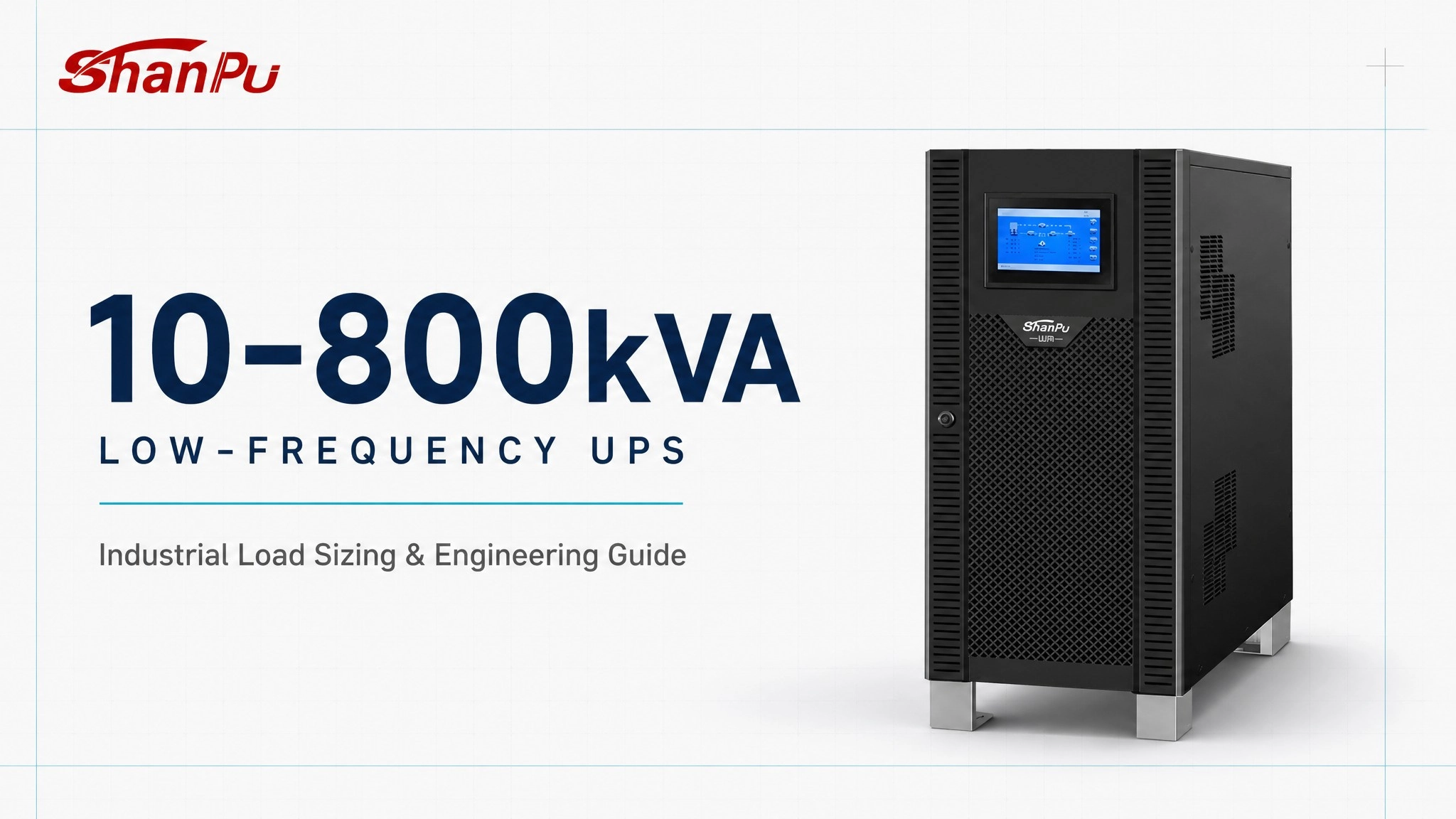
Low-Frequency UPS Engineering Guide: Sizing 10–800kVA Systems for Industrial Plant Loads
Voltage Sag Case Study: How a 1200kVA Modular UPS Project Was Rescued by Bus Distribution Box Selection
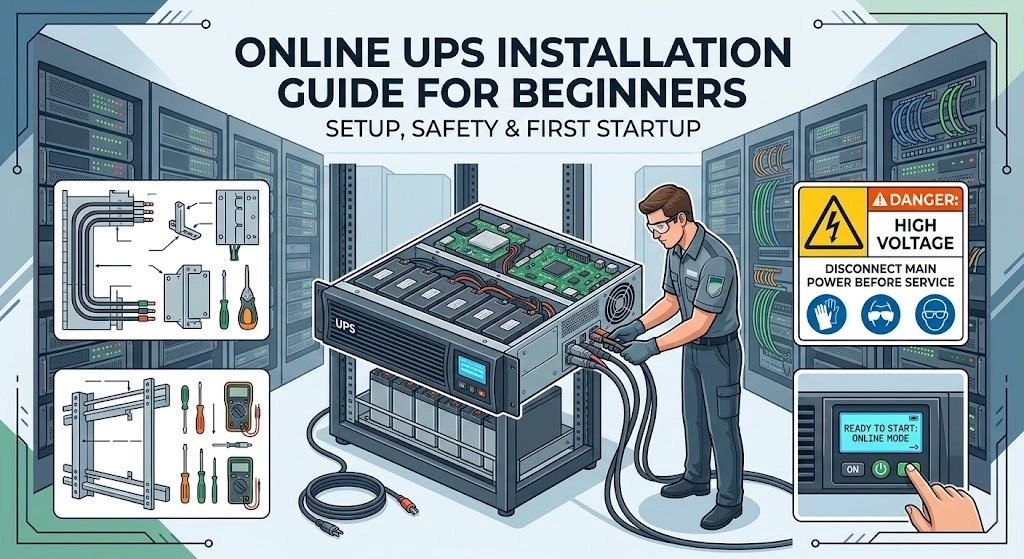
Online UPS Installation Guide for Beginners: Setup, Safety & First Startup
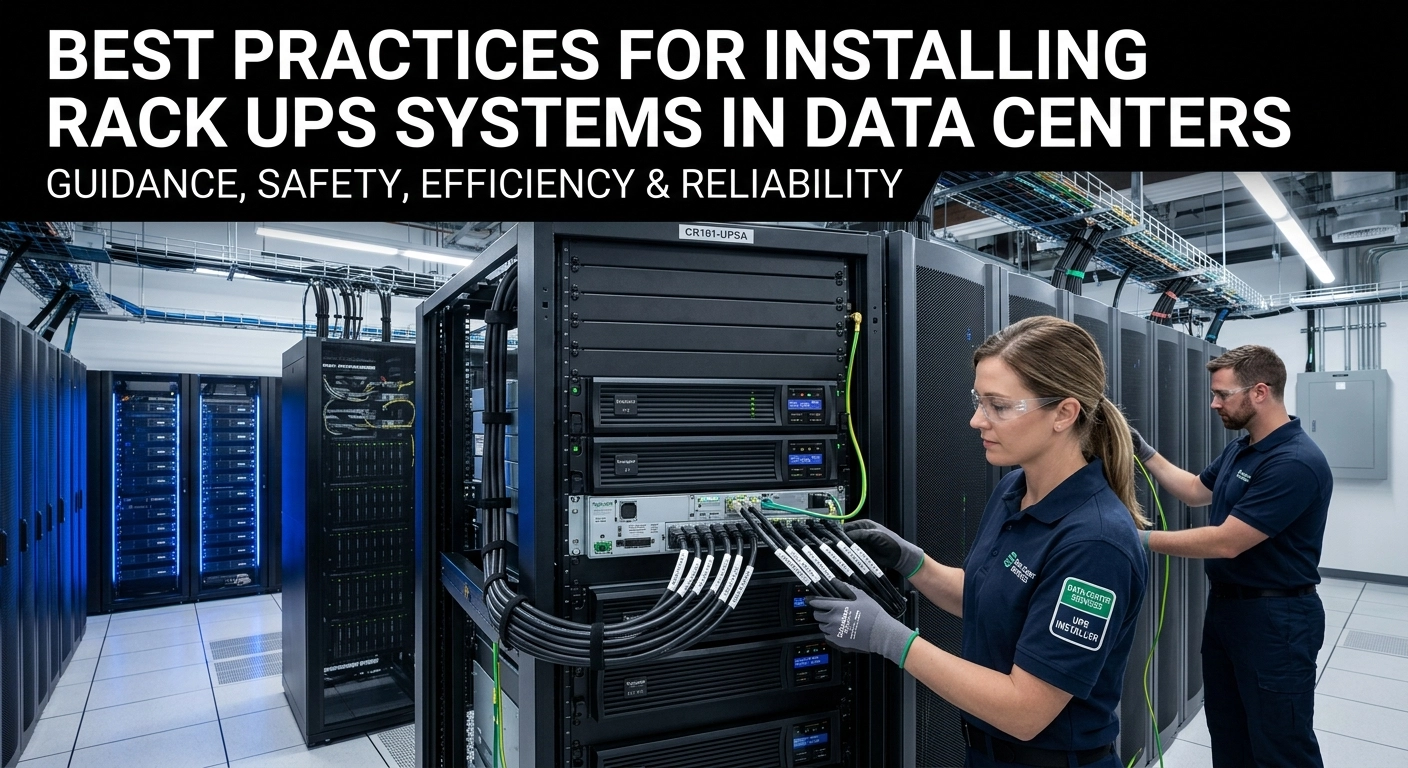
Best Practices for Installing Rack UPS Systems in Data Centers


Get in touch with us
If you have any comments or good suggestions, please leave us a message; later our professional staff will contact you as soon as possible.
© 2026 ShanPu. All Rights Reserved.
YouTube
SHANPU UPS
Shanpu