


which battery chemistry is best for rack mount ups orders? | Insights by ShanPu

Quick Answer
For most rack mount UPS deployments, lithium iron phosphate (LiFePO4) suits long-life, high-density, high-temperature sites, while VRLA remains practical for budget-limited or short-term projects. Deciding which battery chemistry is best for rack mount UPS orders depends on ambient temperature, required runtime, cycle life, and UPS compatibility. Final solutions depend on the specific project.
How Our Team Supports Rack Mount UPS Battery Projects
Our team supports buyers with chemistry comparison, specification review, and quotation preparation based on your load data, UPS model, and installation environment. We help translate runtime targets and site conditions into a clear battery configuration, so procurement and engineering teams can evaluate options on the same basis.
Core parameters we review include nominal DC voltage, capacity in Ah or Wh, discharge rate, rack unit height, communication protocol, and required certifications. MOQ, lead time, and quotation must be confirmed for each project, because they vary with configuration, documentation scope, and order volume.
Share Your Rack Mount UPS Battery Requirements
Please send the UPS model and kVA rating, DC bus voltage, required runtime at your actual load, ambient temperature range, target order quantity, destination market with required certifications, and delivery schedule. We can then discuss chemistry fit, module configuration, communication interfaces, and documentation needs. Contact us at SPU@gdshanpu.com.
FAQ
Is lithium iron phosphate worth the higher cost in rack UPS?
It is worth the premium when the project horizon is long or the installation environment is demanding. Lithium iron phosphate is typically priced at a multiple of VRLA per unit of capacity. In return, it commonly offers 2,000 to 6,000 cycles depending on cell grade and depth of discharge, against a few hundred cycles for VRLA at similar depths. Calendar life is also longer: VRLA units with a 5-year design life often need replacement in 3 to 5 years in real rack conditions, while LiFePO4 designs are commonly specified for 8 to 10 years or more.
Weight and footprint also matter. Lithium packs are often roughly half the weight of equivalent VRLA or less, which reduces rack loading and shipping cost. VRLA still makes commercial sense for temperature-controlled rooms, short equipment lifecycles, or tight capital budgets. Compare both options on a ten-year basis rather than on purchase price alone.
How does VRLA battery lifespan change at 30°C rack temperatures?
VRLA manufacturers rate design life at about 25°C (77°F). A widely used rule of thumb says service life roughly halves for every 8 to 10°C of sustained increase above that reference. A room at 30°C is only a modest deviation, but the temperature inside a loaded rack or battery cabinet is often several degrees higher than room air, so the effective figure can be considerably worse than the room reading suggests.
Float charging should be temperature compensated, commonly in the range of 3 to 5 mV per cell per °C. Without compensation, higher temperatures accelerate grid corrosion and water loss. LiFePO4 is generally less sensitive to moderate heat during float service, but it has its own limits: charging is restricted at low temperatures, and the BMS will cut off at high temperatures. Measure actual cabinet temperature before choosing a chemistry.
Can I mix lithium battery modules with existing lead-acid UPS cabinets?
Mixing chemistries within the same battery string is not acceptable practice. Replacing lead-acid with lithium inside an existing UPS also requires validation. The two chemistries use different voltage windows and charging profiles. A 12 V VRLA block is charged at roughly 13.5 to 13.8 V float, while a 4-cell LiFePO4 block has a 12.8 V nominal voltage with a different charge curve and a BMS that controls the current limits.
Before any retrofit, confirm that the UPS charger can be configured for lithium, that the DC bus voltage range matches the new string, and that the BMS communication (commonly RS485, CAN, or Modbus) is supported by the UPS firmware. Changing the battery type can also affect the UPS safety certification under standards such as IEC 62040-1 and UL 1778, and may affect warranty terms. The safer route is to replace the whole battery system with a configuration the UPS manufacturer or the supplier has verified.
What runtime should I specify for lithium versus VRLA rack UPS?
Specify runtime as a measurable condition: minutes at a stated load (for example 100% and 50% of rated watts), at a stated temperature, and at end of life. Do not specify it by nominal Ah alone. VRLA capacity ratings are usually quoted at the 20-hour rate, but UPS discharges last minutes. Because of the Peukert effect, usable capacity at a 10 to 15 minute rate is much lower than the nameplate figure. UPS-grade VRLA is therefore rated in watts per cell to a defined end voltage, often between 1.67 and 1.75 V per cell.
Lithium has a flatter discharge curve and allows deeper usable discharge, so fewer nominal watt-hours can deliver the same short runtime. For sizing, apply an aging margin: IEEE 485 for lead-acid commonly uses a 1.25 factor so the battery still meets the load at 80% remaining capacity. Request discharge tables from the supplier for each load level, and confirm whether they refer to new or end-of-life capacity.
Which certifications matter when ordering lithium battery rack UPS systems?
Start with the certifications that cover the battery itself. UL 1973 addresses stationary battery systems, and IEC 62619 covers the safety of secondary lithium cells and batteries for industrial applications. UL 9540A is a test method for evaluating thermal runaway fire propagation, and its results are often requested by insurers and fire authorities. For shipping, UN 38.3 testing is required for lithium batteries, and the goods are classified under UN3480 or UN3481 for dangerous goods transport.
At system level, the UPS is typically assessed under IEC 62040-1 or UL 1778, and markets such as the EU also require CE and RoHS documentation. Installation codes such as NFPA 855 apply capacity thresholds that vary by jurisdiction. Ask for the actual test reports and confirm they cover the exact model being ordered, not a similar product. Certificates for a different cell or pack design do not transfer.
How do I compare total cost of ownership between battery chemistries?
Build the comparison over a fixed period, commonly 10 years, and include every cost that differs between the options:
- Initial purchase price per usable kWh at the required discharge rate
- Number of replacements within the period, including labor, downtime planning, and disposal or recycling fees
- Cooling cost, since VRLA performance and life depend more strongly on holding temperatures near 25°C
- Maintenance and inspection frequency, including impedance or capacity testing
- Space and weight costs, including rack footprint, floor loading, and freight
- Risk costs, including the consequence of an unplanned battery failure at the site
Use usable end-of-life capacity rather than nameplate capacity so both options meet the same runtime target. For a bulk order, add logistics and documentation costs, such as dangerous goods handling for lithium shipments. The result often favors lithium for long-life or hard-to-service sites and VRLA for short-term or easily serviced installations, but it should be calculated from project data.
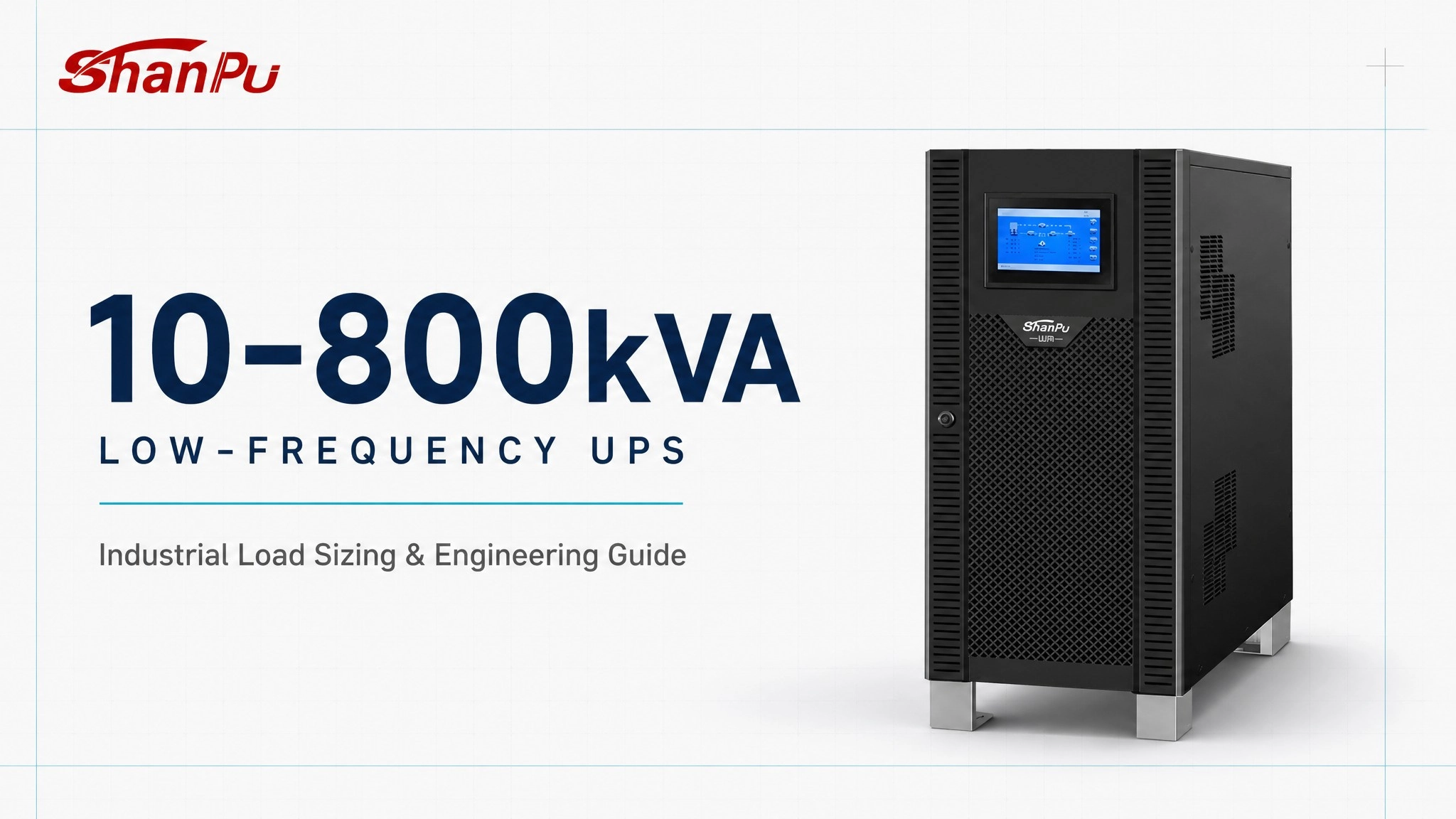
Low-Frequency UPS Engineering Guide: Sizing 10–800kVA Systems for Industrial Plant Loads

Voltage Sag Case Study: How a 1200kVA Modular UPS Project Was Rescued by Bus Distribution Box Selection
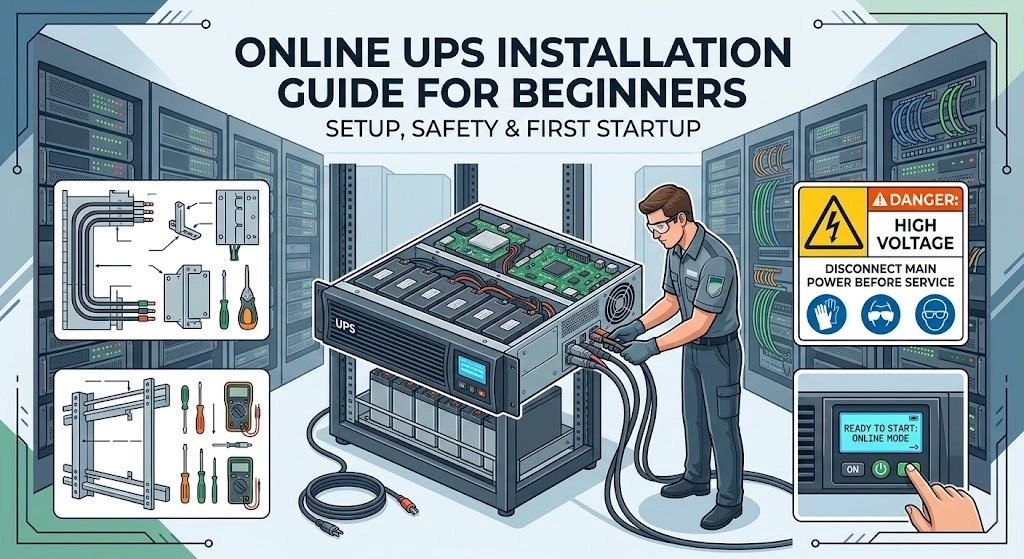
Online UPS Installation Guide for Beginners: Setup, Safety & First Startup
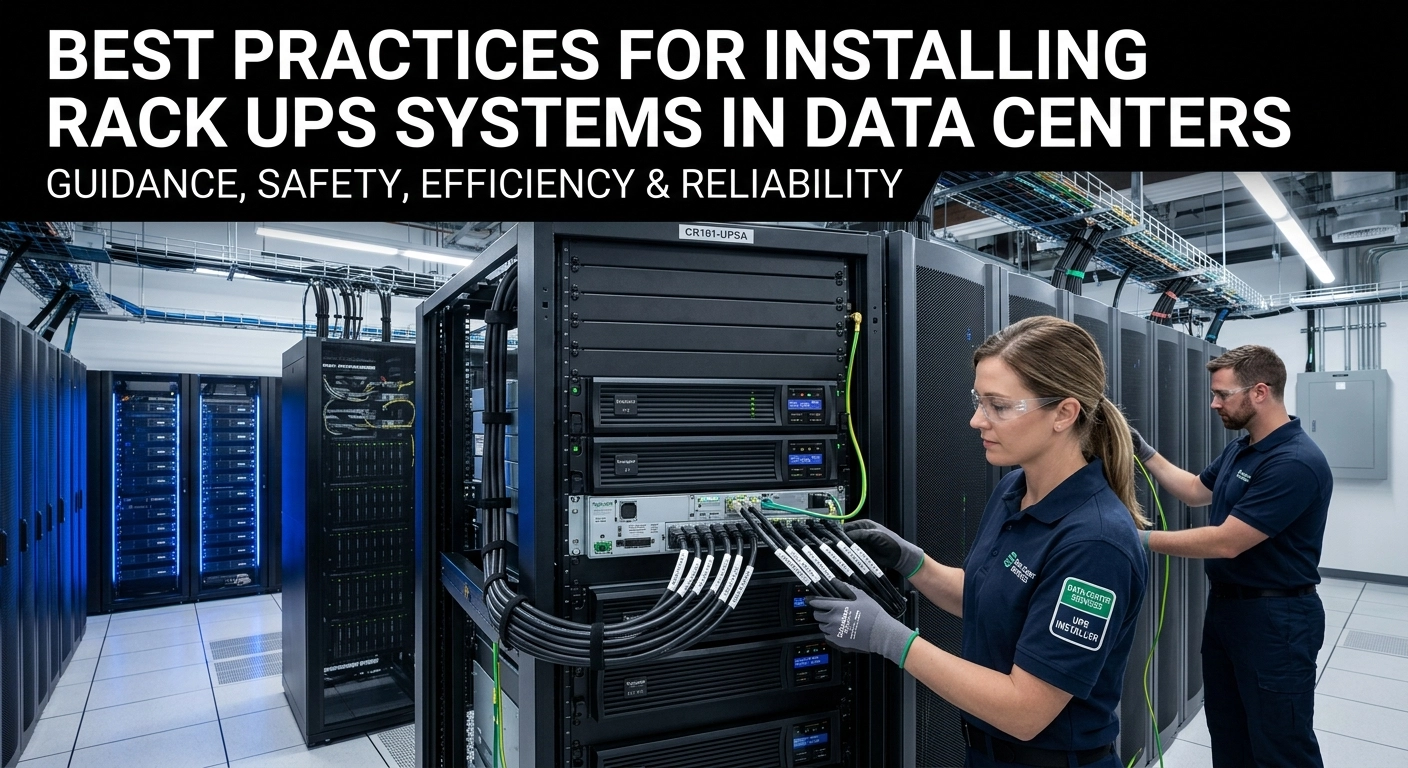
Best Practices for Installing Rack UPS Systems in Data Centers


Get in touch with us
If you have any comments or good suggestions, please leave us a message; later our professional staff will contact you as soon as possible.
© 2026 ShanPu. All Rights Reserved.
YouTube
SHANPU UPS
Shanpu