


how do battery compatibility and inverter design affect sourcing? | Insights by ShanPu

Quick Answer
Battery compatibility and inverter design affect sourcing because voltage window, communication protocol, and power limits decide whether components operate together safely and efficiently. Verify these factors first: nominal and operating voltage range, charge/discharge current limits, BMS communication protocol (CAN or RS485), inverter topology, and certifications. Final solutions depend on the specific project.
How Our Team Supports Battery and Inverter Sourcing Projects
Our team supports buyers by reviewing battery and inverter datasheets side by side before quotation, so voltage windows, current limits, and communication protocols are checked against the intended application. Depending on the project, support can include specification alignment, sample coordination, and quality documentation review. Customization requests, such as OEM labeling, are assessed case by case.
Core buyer parameters we typically review include nominal voltage, capacity in kWh, continuous and peak power, cell chemistry, IP rating, and required certifications. MOQ, lead time, and quotation must be confirmed per project, because they vary with configuration, customization depth, and order volume.
Share Your Battery and Inverter Sourcing Requirements
Send us your target application, system voltage, required power and energy capacity, battery chemistry preference, inverter type, destination-market certifications, and estimated order quantity. We can discuss compatibility checks, communication protocol matching, sample planning, and quotation scope. Contact our team at SPU@gdshanpu.com to start the technical review.
FAQ
Why does inverter MPPT voltage range limit my battery choices?
The MPPT range applies to the PV input, not the battery, and confusing the two is a common sourcing error. The battery is governed by a separate DC input window. A 16-cell LFP pack, for example, has a nominal voltage of 51.2V and reaches roughly 58.4V at full charge (3.65V per cell). Its discharge cutoff sits well below nominal, so the inverter's battery window must cover that entire span. High-voltage battery stacks, often in the 100V to 500V range, require a matching high-voltage inverter and cannot be substituted for a 48V design.
The MPPT range still matters indirectly. Crystalline silicon module open-circuit voltage rises as temperature drops (typically around -0.25% to -0.30% per degree Celsius), so the coldest-site string voltage must stay below the inverter's maximum PV input. In off-grid charge controllers, PV operating voltage must also sit comfortably above battery voltage to allow charging.
Can a 48V lithium battery communicate with any hybrid inverter?
No. A shared nominal voltage does not mean shared communication. Most lithium batteries use a BMS that talks to the inverter over CAN bus or RS485 (often Modbus-based), and each inverter brand supports specific protocols, point tables, and connector pin-outs. RJ45 ports on two products can look identical while carrying different signal assignments.
In closed-loop communication, the BMS reports charge voltage limit, charge current limit, discharge current limit, and state of charge. The inverter adjusts its behavior accordingly. Without that link, the inverter falls back on voltage-based control, which is less precise with LFP chemistry because its discharge curve is very flat. Before sourcing, request the protocol document, the inverter manufacturer's approved battery list, and the firmware versions tested, since a firmware update on either side can change behavior.
How do I match battery C-rate with inverter surge power?
Start with current, not just kilowatts. A 5kW inverter on a 48V system draws roughly 100A to 110A from the battery once conversion losses are included. A 5kWh battery rated at 0.5C continuous can deliver only about 2.5kW, so it would be undersized for that inverter at full load, even if the voltages match. Check the BMS continuous discharge current rating, not only the cell datasheet, because the BMS, busbars, and fuses often set the real limit.
Surge is a separate check. Inverters commonly specify peak output of about two times rated power for a few seconds, which motor-driven loads such as pumps and compressors can trigger. Confirm the battery's peak discharge rating and its duration, and size DC cables and protection for the inverter's maximum input current. Paralleling battery modules is a common way to raise total current capability, provided the manufacturer supports the module count.
Which certifications should I verify when sourcing batteries and inverters together?
Match certifications to the destination market and to the exact model number on the certificate. For lithium batteries, buyers commonly check IEC 62619 (safety for industrial lithium cells and batteries), UL 1973 for stationary storage in North America, and UN 38.3 for transport. Shipping also falls under dangerous goods rules for lithium batteries (UN3480 and UN3481, Class 9). For complete energy storage systems, UL 9540 is frequently requested, with UL 9540A as a fire propagation test method.
For inverters, IEC 62109-1 and IEC 62109-2 address PV inverter safety, and grid-connected units need local grid-code compliance, such as VDE-AR-N 4105 or EN 50549-1 in Europe, AS/NZS 4777.2 in Australia, or UL 1741 with IEEE 1547 in North America. CE marking relies on Low Voltage and EMC directives. Ask for full test reports, not only certificate summaries, and confirm the issuing laboratory is accredited.
Does high-frequency versus low-frequency inverter design change battery sourcing requirements?
Yes, in several practical ways. Low-frequency inverters use a line-frequency transformer, which adds weight and cost but typically provides galvanic isolation and stronger tolerance to surge loads. High-frequency designs use a compact ferrite transformer or transformerless stages, offering lighter weight and often better efficiency at partial load, though surge capability and isolation features vary by model.
For battery sourcing, the key consequence is peak current demand. A low-frequency unit driving inductive loads can pull high short-duration current from the DC side, so the battery's BMS must support that peak without tripping overcurrent protection. Topology also influences DC ripple, grounding arrangements, and idle consumption, which affects standby drain on smaller batteries. Compare the inverter's maximum DC input current and surge specification with the battery's peak discharge rating rather than relying on topology labels alone.
What technical documents prevent compatibility failures before placing a bulk order?
Request a defined document set from both sides. From the battery supplier: cell and module datasheet, BMS parameter sheet (voltage, current, temperature thresholds), communication protocol table, cycle-life and warranty terms including any energy throughput limit, and safety and transport certificates. From the inverter supplier: datasheet with DC input window and maximum DC current, the approved battery compatibility list, firmware version records, and grid-code or safety certificates.
Documents alone do not confirm field behavior, so run a pre-order sample test. Useful checks include a communication handshake with the target inverter firmware, full charge and discharge cycles, a load-step test near peak power, and protection trip verification for over-voltage, under-voltage, and over-temperature. Record the tested configuration and firmware versions, then reference them in the purchase agreement so the bulk order matches the validated sample.
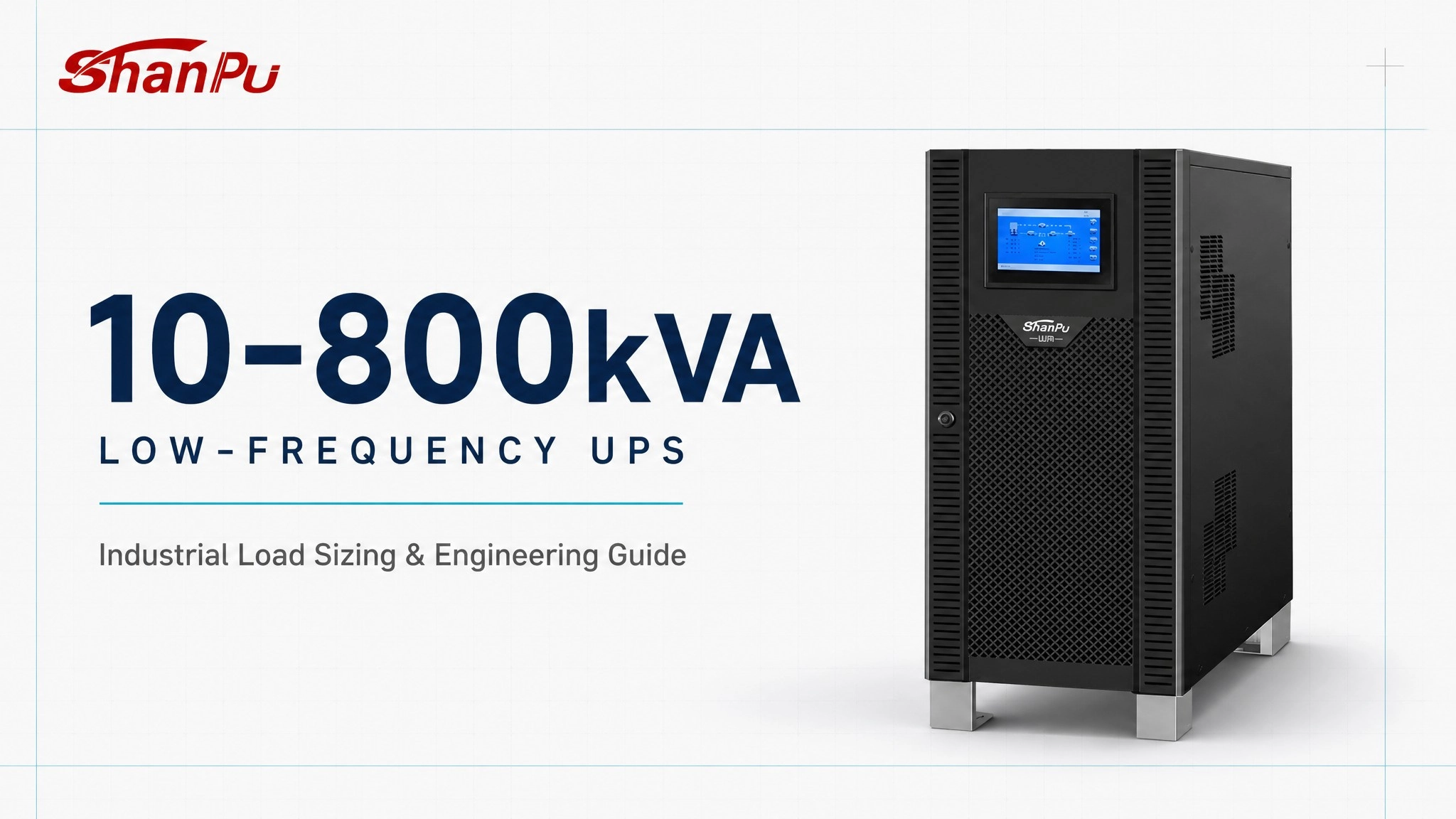
Low-Frequency UPS Engineering Guide: Sizing 10–800kVA Systems for Industrial Plant Loads
Voltage Sag Case Study: How a 1200kVA Modular UPS Project Was Rescued by Bus Distribution Box Selection
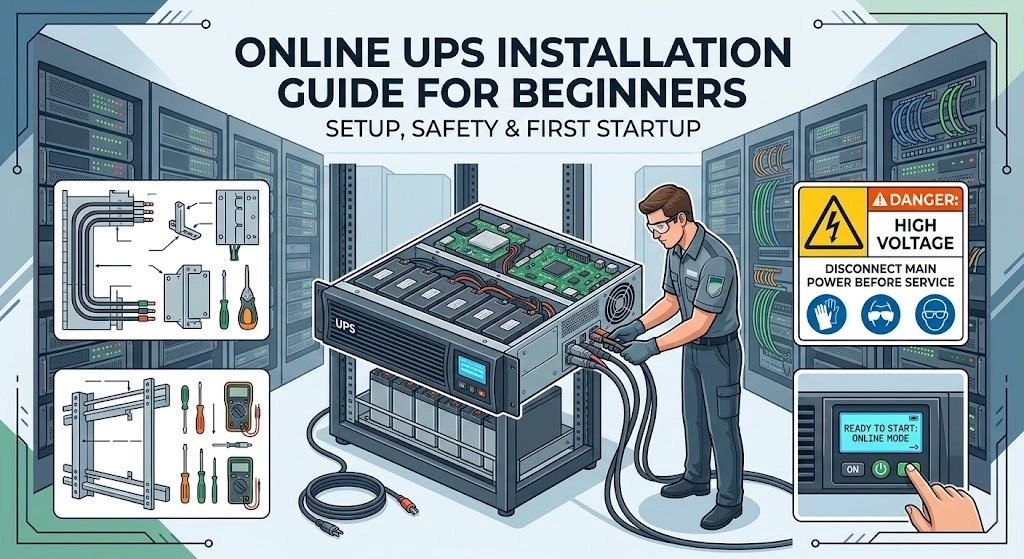
Online UPS Installation Guide for Beginners: Setup, Safety & First Startup
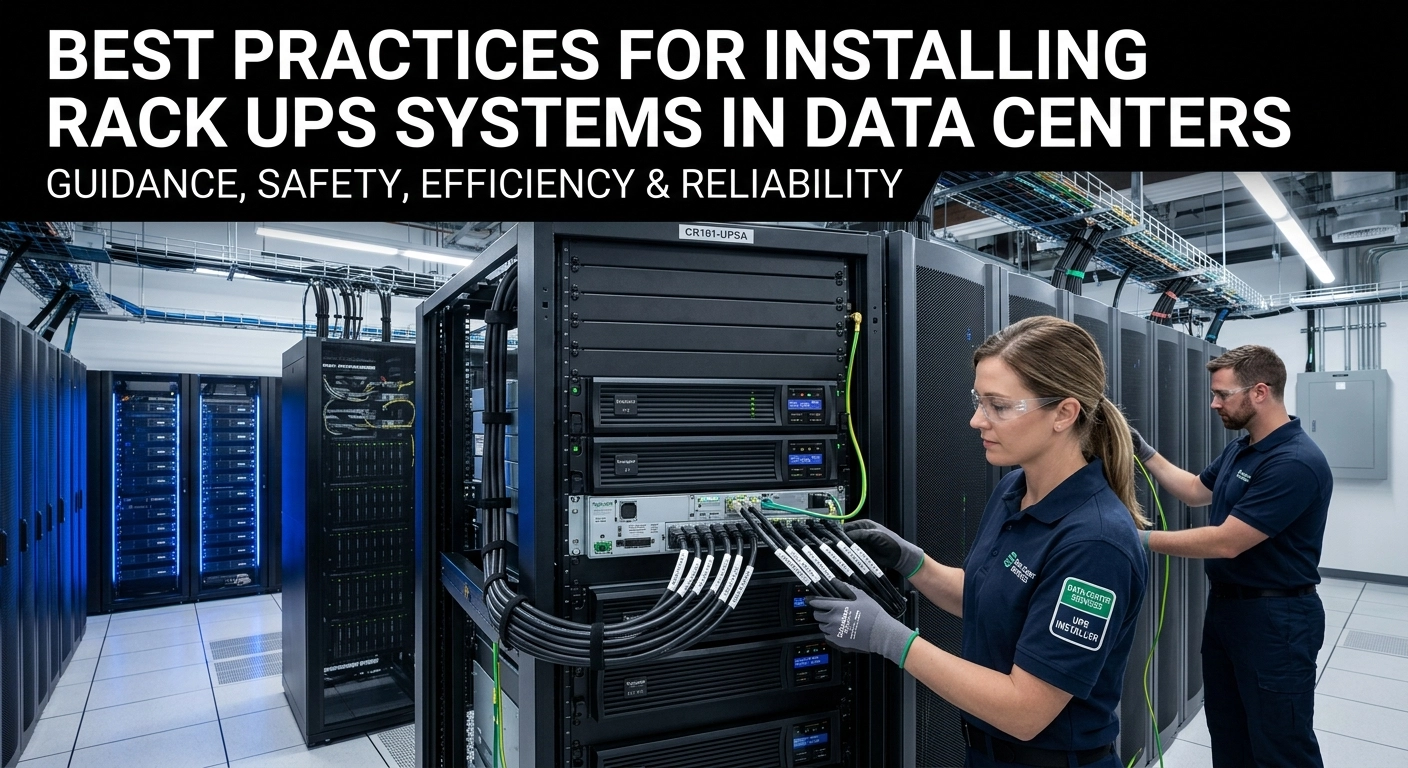
Best Practices for Installing Rack UPS Systems in Data Centers


Get in touch with us
If you have any comments or good suggestions, please leave us a message; later our professional staff will contact you as soon as possible.
© 2026 ShanPu. All Rights Reserved.
YouTube
SHANPU UPS
Shanpu