


Top pv inverter Manufacturers and Suppliers

The global PV inverter market includes established suppliers serving residential, commercial, industrial, and utility-scale projects, but the right choice depends on system architecture, grid requirements, service coverage, and lifetime economics rather than a single universal ranking. This guide compares Huawei, Sungrow, SMA, SolarEdge, and Fronius as a practical international shortlist. Buyers should verify local approvals, warranty terms, cybersecurity and monitoring provisions, spare-parts availability, and grid-code compliance for the project’s destination market. Because no target region or company profile was provided, the comparison is global and does not make a location-specific recommendation or endorse an unnamed supplier.
How to Evaluate PV Inverter Suppliers Before Requesting Quotes
Match the inverter architecture to the project
Start with the design rather than the brand. String inverters are common in residential, commercial, and utility-scale installations because they convert the output of groups of PV modules and can be deployed in modular arrays. Central inverters may suit large, consolidated plants with appropriate electrical design and maintenance capabilities. Module-level power electronics, including optimizers paired with inverters, can offer more granular monitoring or help manage shading and differences among modules, but introduce additional components and design considerations.
Ask suppliers to identify the exact inverter topology, operating voltage range, maximum input current, number of maximum power point tracking channels, allowable string configuration, and compatibility with the selected modules and storage equipment. Do not compare nominal AC power alone: assess DC-to-AC ratio limits, clipping assumptions, temperature-related derating, reactive-power capability, and expected operating conditions. A technically suitable inverter should be checked against the project’s one-line diagram and yield assumptions by a qualified designer.
Confirm standards, grid rules, and commissioning requirements
Certificates and grid approvals are market-specific. Obtain current certificates for the precise model and firmware, not only a general corporate statement or a certificate for a similar product. Check electrical safety requirements, electromagnetic compatibility, anti-islanding protection, power-quality functions, and local interconnection rules. The IEC 62109 safety standard series addresses safety of power converters used in photovoltaic power systems; buyers should confirm which locally adopted standards apply to their project.
Grid-support functions and utility approval can determine whether an otherwise capable inverter is usable. In the United States, for example, buyers may encounter IEEE 1547 requirements for distributed energy resource interconnection; the applicable edition and utility implementation should be confirmed rather than assumed. See the IEEE 1547 standard information and consult the local utility or authority having jurisdiction. In other countries, national grid codes and certification schemes differ.
Evaluate total cost of ownership and service readiness
Purchase price is only one component of lifecycle cost. Compare warranty duration and exclusions, labor and freight coverage, replacement logistics, service response commitments, software access, monitoring fees, and the availability of trained technicians. Establish who is responsible for commissioning, firmware updates, fault diagnosis, and warranty claims. For larger projects, buyers should request references for comparable installed systems and review how the supplier handles failures, product substitutions, and end-of-life support.
Assess the supplier as well as the hardware. Review its authorized distribution structure, financial and operational capacity, local technical support, documentation quality, and product-change notification process. The IEA Photovoltaic Power Systems Programme publishes work on PV deployment and system performance that can help buyers understand wider technology and market developments. A manufacturer’s global scale may be useful, but it does not automatically guarantee local stock or fast service in a particular country.
Leading Global PV Inverter Manufacturers to Shortlist
The companies below are established participants in the international PV inverter market. They are presented as a shortlist, not as a measured market-share ranking or a guarantee of suitability in every country. Product availability, certifications, warranty coverage, and authorized service vary by model and destination market, so confirm current details directly before placing an order.
Residential and distributed-generation options
Huawei Digital Power: Huawei’s FusionSolar portfolio includes string inverter solutions for distributed and larger PV applications, alongside monitoring and energy-management offerings. Buyers may consider Huawei when they want a coordinated digital platform and a broad product range. Confirm that the specific model is approved locally, that the monitoring and communications architecture meets project requirements, and that the installer can provide ongoing technical support. In regions where policy, cybersecurity, data hosting, or procurement rules affect vendor eligibility, assess those requirements independently before shortlisting.
SolarEdge: SolarEdge is known for a system architecture that pairs inverters with module-level power optimizers in many of its PV configurations. This approach can be worth evaluating where module-level monitoring, layout flexibility, or partial-shading management is important. Buyers should compare the complete system bill of materials, including optimizers, communications equipment, and any required accessories, rather than comparing inverter unit prices in isolation. Check compatibility, installation procedures, warranty terms for the full system, and the consequences of adding specialized components to maintenance planning.
Fronius: Fronius offers inverter products for residential and commercial PV applications, including the GEN24 family and commercial-oriented solutions such as Tauro. Buyers may value a portfolio that spans multiple project sizes and offers monitoring and energy-management features, depending on model and market. Verify the precise product generation, local service arrangements, and compatibility with batteries or other system components. For projects that depend on local installer expertise, request evidence that the proposed service partner is trained for the selected model.
Commercial, industrial, and utility-scale options
Sungrow: Sungrow supplies PV inverters across residential, commercial, and utility-scale segments, with string and central inverter offerings in its broader portfolio. Its range makes the company a practical candidate for buyers comparing equipment across project scales or planning a multi-site procurement. Evaluate each model’s technical parameters, grid-support functions, monitoring tools, and service plan separately; a supplier’s breadth does not mean every product is available or certified in every market. Request references that match the intended plant size, operating conditions, and system architecture.
SMA Solar Technology: SMA provides inverter solutions for residential, commercial, and large-scale PV projects, including products such as Sunny Tripower and utility-focused solutions. Buyers may shortlist SMA when they want a supplier with long experience in inverter technology and a portfolio covering different system types. As with any manufacturer, confirm the current product line, local warranty terms, grid approvals, and spare-parts pathway. For commercial and utility plants, clarify monitoring-platform responsibilities, plant-controller integration, and the service escalation route before contract award.
How to compare the shortlisted suppliers fairly
Use the same technical and commercial assumptions in every request for quotation. Send each supplier the same single-line diagram, module data, site conditions, grid requirements, expected operating profile, and commissioning schedule. Ask each to identify deviations, exclusions, recommended accessories, and any assumptions behind its yield or availability estimates. This makes the proposals more comparable and reduces the risk that a low initial quote omits necessary equipment or services.
For a bankable procurement process, request a model-specific datasheet, installation and commissioning manuals, certificates, warranty document, service contact details, and a clear bill of materials. Ask how firmware changes are managed and whether the supplier gives advance notice of product revisions. For projects with storage, confirm system interoperability and operating modes rather than assuming that products from the same broad ecosystem will work together in every configuration. For utility projects, include plant-level controls, communications, cybersecurity responsibilities, and grid-support testing in the scope.
Neither a large installed base nor a well-known brand replaces project due diligence. A smaller local distributor may provide valuable service access, while a globally recognized manufacturer may have limited local inventory. Conversely, a low-cost offer may carry material risk if the warranty is difficult to enforce or replacement lead times are unclear. Buyers should distinguish the manufacturer, importer, distributor, EPC contractor, and warranty service provider in the contract and confirm who is accountable for each obligation.
Comparison Table and Procurement Conclusion
| Company | Core advantage | Typical best-fit consideration |
|---|---|---|
| Huawei Digital Power | Broad string inverter and digital-energy portfolio | Distributed or larger PV projects where the platform and local eligibility meet requirements |
| Sungrow | Product coverage across residential, commercial, and utility segments | Buyers comparing equipment options across multiple project scales |
| SMA Solar Technology | Portfolio serving residential through large-scale applications | Projects prioritizing model-specific service planning and established product options |
| SolarEdge | Inverter systems incorporating module-level power electronics | Designs where module-level monitoring or layout flexibility is a key consideration |
| Fronius | Residential and commercial inverter offerings with monitoring features | Projects where local installer capability and the selected product generation align |
The best PV inverter supplier is the one that satisfies the project’s technical specification and can support the equipment throughout its operating life. Use the shortlist to request comparable proposals, then validate certification, warranty enforceability, local service, total system cost, and performance assumptions. Before selecting a supplier, have the project engineer review the proposed model and confirm that its certifications and grid functions match the installation location. No single manufacturer is the automatic High Quality choice for every buyer; a defensible recommendation depends on the market, project design, and verified supplier support. Contact us to discuss your PV inverter sourcing requirements and build a project-specific supplier shortlist.
Frequently Asked Questions
What should buyers compare when selecting a PV inverter supplier?
Compare the inverter architecture and model specifications, local certifications and grid approvals, warranty terms, service response, spare-parts availability, commissioning support, monitoring requirements, and total lifecycle cost.
Are string inverters or central inverters better for a PV project?
The choice depends on project scale, electrical design, operating conditions, and maintenance capability. String inverters are common across residential, commercial, and utility installations, while central inverters may suit large consolidated plants. A qualified designer should assess the project-specific configuration.
Why do buyers need to check inverter certifications for the destination market?
Certificates and grid approvals are market- and model-specific. Buyers should verify current documentation for the exact model and firmware and confirm applicable electrical safety, power-quality, anti-islanding, and interconnection requirements with the local authority or utility.
What should an inverter warranty review cover?
Review the warranty duration and exclusions, whether labor and freight are covered, the claim process, replacement logistics, service response commitments, and who is responsible for technical support and warranty enforcement in the destination market.
Can PV inverters from different manufacturers be compared by price alone?
No. Compare the complete system bill of materials, required accessories, monitoring and communications costs, certification status, warranty, service arrangements, and project-specific performance assumptions. A low inverter price may omit necessary equipment or lifecycle support.
Which PV inverter manufacturer is best for every project?
There is no universal best manufacturer. Suitability depends on the project design, destination-market approvals, product availability, local technical support, grid requirements, warranty terms, and the buyer’s lifecycle-cost priorities.
-
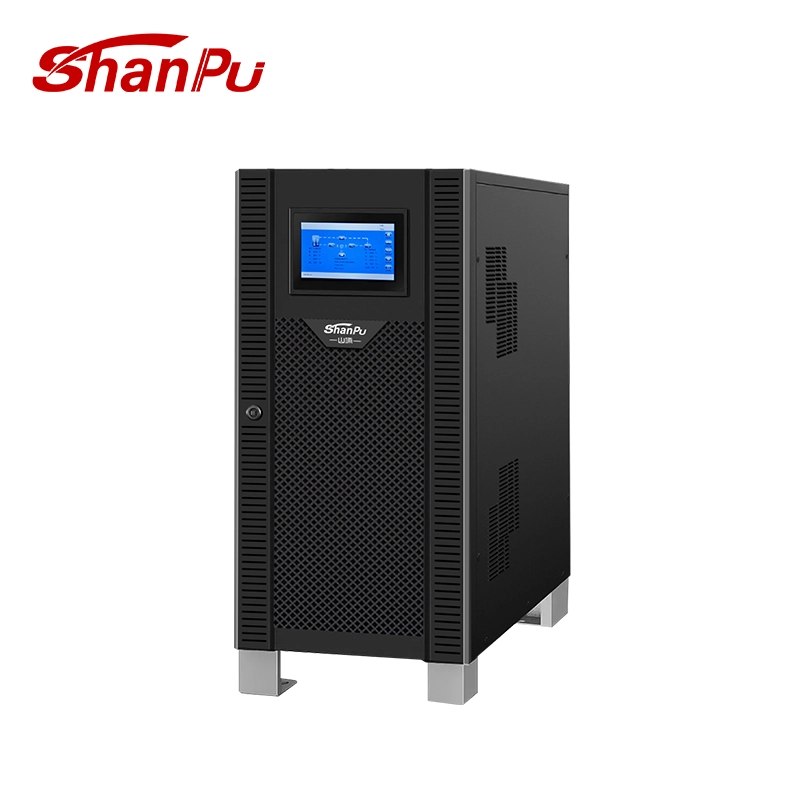
ShanPu 3C33 10-800kVA three-phase industrial UPS is a low-frequency UPS with transformer-based online double conversion for factories and plants. Equipment, automation and control loads stay online through grid disturbance and outage with 0ms transfer.
- Rated 10-800kVA with three-phase input and output at 380/400/415Vac, the 3C33 scales from single machines to full production lines. A low-frequency isolation transformer blocks surge, harmonic and common-mode disturbance before reaching PLCs and drives; microprocessor control keeps output within ±1% across a 304-456Vac input window. External VRLA banks size backup time to the process.
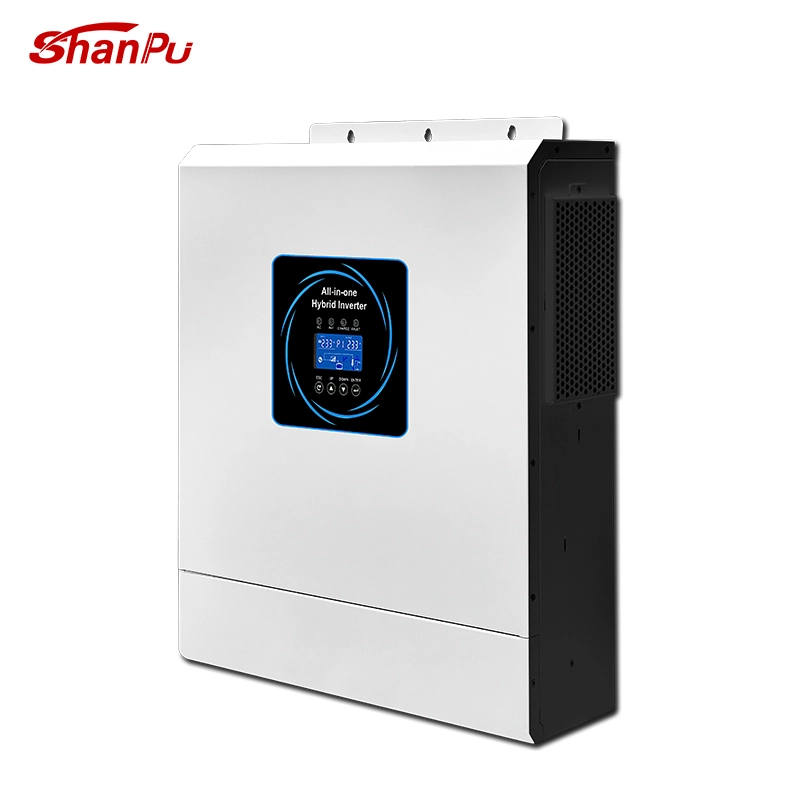
ShanPu SP-12KW/48V is an all-in-one hybrid inverter that integrates dual MPPT solar charging, 48V battery management and dual-output DC-to-AC inversion in one unit for large residential, commercial and light industrial storage systems. Two independent MPPT channels harvest power from separate PV arrays and convert it into regulated 48V DC, charging the battery bank at up to 160A while feeding the inverter stage; the controller automatically selects between solar, utility and battery based on the configured priority mode (SUB / SBU / SUF).The dual AC output design separates critical loads from non-critical circuits, while the 160A MPPT charging current and up to 160A AC charging rapidly recharge 48V battery banks after prolonged cloudy periods or heavy discharge. The 48V architecture reduces line losses and supports higher power delivery, and the Pro model adds parallel expansion plus optional WiFi monitoring for larger projects.
ShanPu SP-3.6KW/24V is an all-in-one hybrid inverter that combines a 100A MPPT solar charger, 24V battery management and DC-to-AC inversion in one compact unit. Built for residential and small commercial systems, it delivers reliable power management with efficient energy conversion and straightforward installation.The inverter supports up to 5000W PV array power with a 60-500Vdc MPPT tracking range and up to 96% peak conversion efficiency from PV to AC. It can also run directly from solar PV or utility without a battery connected, and RS485 communication with automatic lithium battery activation makes LiFePO4 integration straightforward.
ShanPu SP-6.2KW/48V is an all-in-one hybrid inverter that integrates MPPT solar charging, 48V battery management and DC-to-AC inversion into a single unit for medium residential and small commercial storage systems. Solar PV power is processed by the MPPT charger and converted into regulated 48V DC, which simultaneously charges the battery bank and supplies the inverter stage, while the built-in controller automatically selects the energy source - solar, utility or battery - based on the configured operating mode.
© 2026 ShanPu. All Rights Reserved.
YouTube
SHANPU UPS
Shanpu