


Portable Power Inverter ODM Development Process from Concept to Mass Production

- Understanding the ODM Roadmap for Portable Power Inverters
- Navigating Certification and Compliance for Global Markets
- Key Metrics Comparison: Traditional ODM vs. Modern Optimized ODM Process
- Scaling to Mass Production and Why Your Manufacturing Partner Defines Your Success
- Frequently Asked Questions
The journey from a napkin sketch to a certified, shelf-ready portable power inverter is one of the most demanding engineering and commercial challenges in the power electronics industry. Having spent fifteen years working alongside inverter manufacturers, sourcing teams, and OEM buyers across Asia, Europe, and North America, I can tell you with confidence that most ODM projects fail not because of bad ideas, but because of poor process discipline. In this article I walk through every critical phase of the ODM development cycle, share the hard-won lessons I have accumulated, and explain why choosing the right manufacturing partner can mean the difference between a product launch and a product disaster.
Understanding the ODM Roadmap for Portable Power Inverters
Phase 1 — Market Research and Technical Brief
Every successful portable power inverter project I have been involved in starts with a rigorous market research phase that most buyers underestimate. Before a single schematic is drawn, I insist on answering four foundational questions: Who is the end user? What load profile will the inverter handle? What regulatory markets must the product enter? And what is the realistic landed cost target? These questions shape every downstream engineering decision. For instance, a unit destined for the North American RV market must comply with UL safety standards, while a product targeting the European outdoor leisure segment must carry CE marking and meet the Low Voltage Directive. Skipping this step is the single biggest reason I see ODM timelines blow out by six months or more.
Once the market brief is locked, I work with the client to produce a formal technical specification document. This covers output waveform type (pure sine wave versus modified sine wave), continuous wattage rating, peak surge capacity, input voltage range, efficiency targets, thermal management strategy, enclosure IP rating, and communication interfaces such as USB-A, USB-C, or Bluetooth monitoring. I always push clients to over-specify at this stage. It is far cheaper to descope a feature in engineering than to add it during tooling.
Phase 2 — Concept Design and Feasibility Validation
With the technical brief approved, the ODM engineering team moves into concept design. In my experience, the best inverter manufacturers maintain an in-house library of validated reference designs, which dramatically compresses this phase. A good reference design gives the team a proven power stage topology, a tested gate driver circuit, and a thermal model they can adapt rather than build from scratch. This is where the choice of topology matters enormously. For portable applications below 3 kW, a full-bridge SPWM topology with a high-frequency transformer is typically the right call because it balances efficiency, size, and cost. Above 3 kW, I generally recommend evaluating a multilevel topology to keep switching losses manageable.
Feasibility validation includes a preliminary bill of materials (BOM) cost analysis, a component sourcing risk assessment, and a first-pass thermal simulation. I always request that the ODM partner run a IEEE-aligned reliability prediction at this stage. It sounds like overkill for a portable product, but catching a marginal electrolytic capacitor specification now versus during certification testing saves weeks and tens of thousands of dollars.
Phase 3 — EVT, DVT, and PVT Builds
The three-build validation sequence — Engineering Validation Test (EVT), Design Validation Test (DVT), and Production Validation Test (PVT) — is the backbone of any credible ODM process. At EVT, the goal is purely functional: does the circuit do what the schematic says it should? I typically see two to three EVT iterations before the design is stable enough to move forward. At DVT, the focus shifts to reliability and regulatory compliance. This is where the unit goes into a climatic chamber for temperature cycling, where conducted and radiated EMC pre-scans are run, and where safety isolation tests are performed. By PVT, the design should be frozen. PVT is about proving that the manufacturing process itself is capable of producing consistent units, not about finding more design bugs.
Navigating Certification and Compliance for Global Markets
The Certification Landscape for Portable Inverters
Certification is the phase that most first-time ODM buyers dread, and honestly, their anxiety is justified. The global certification landscape for a portable power inverter is genuinely complex. CE marking in Europe requires compliance with the EMC Directive, the Low Voltage Directive, and increasingly the Ecodesign Regulation. In North America, UL 458 covers inverters for mobile applications, while FCC Part 15 governs unintentional emissions. Australia and New Zealand require RCM marking. Japan has the PSE mark. Each of these certifications has its own test laboratory requirements, documentation packages, and renewal cycles. According to the International Electrotechnical Commission (IEC), the IEC 62040 series is the foundational standard family for inverter and UPS products, and I always recommend that ODM partners align their internal test protocols to IEC requirements even for markets that use regional standards, because the overlap is substantial and it avoids duplicate testing.
One practical tip I give every client: engage a third-party test laboratory as a consultant during DVT, not just as a final certification body. Having a lab engineer review your test plan before you submit saves enormous time. I have seen projects where a simple grounding topology change caught during a pre-compliance scan avoided a full re-spin of the PCB layout.
Managing Supply Chain and Component Risk
The global semiconductor shortage of 2020 to 2023 permanently changed how I advise clients on component strategy. For any portable power inverter ODM project, I now mandate a dual-source strategy for every critical active component: the main controller IC, the gate drivers, the power MOSFETs, and the battery management IC if the product includes an integrated battery pack. This adds a small amount of BOM complexity but provides enormous supply chain resilience. I also strongly recommend that the ODM partner maintain a minimum of twelve weeks of safety stock for long-lead components before mass production launch. The cost of carrying that inventory is trivial compared to the revenue loss from a production stoppage.
Key Metrics Comparison: Traditional ODM vs. Modern Optimized ODM Process
| Development Phase | Traditional ODM Approach | Modern Optimized ODM Approach | Time Saving |
|---|---|---|---|
| Market Research & Brief | Informal, buyer-driven, 2–4 weeks | Structured template, joint workshop, 1–2 weeks | Up to 50% |
| Concept Design | Custom from scratch, 8–12 weeks | Reference design library, 4–6 weeks | 40–50% |
| EVT Build & Test | 3–5 iterations, 12–16 weeks | 2–3 iterations, 6–10 weeks | 30–40% |
| Certification (CE + UL) | Sequential submission, 16–24 weeks | Parallel submission with pre-compliance, 10–14 weeks | 35–40% |
| PVT to Mass Production | 4–8 weeks ramp | 2–4 weeks ramp with SPC controls | Up to 50% |
| Total Typical Timeline | 18–28 months | 10–16 months | 35–45% |
Scaling to Mass Production and Why Your Manufacturing Partner Defines Your Success
Production Line Setup and Quality Control Systems
Transitioning from PVT to mass production is where many ODM relationships either solidify or fracture. The key indicators I look for in a manufacturing partner at this stage are: a documented Statistical Process Control (SPC) program on critical parameters such as output voltage accuracy, no-load current draw, and efficiency at 50% and 100% load; a 100% end-of-line functional test with automated data logging; and a clearly defined non-conformance management process. According to ISO 9001 quality management principles, every production process must have measurable control points, and the best inverter manufacturers I have worked with treat their production floor as a living quality system, not a static checklist.
I also pay close attention to how a manufacturer handles first-article inspection (FAI) at the start of each production run. A rigorous FAI process catches tooling drift, component substitution issues, and process parameter deviations before they propagate through a full production batch. This is non-negotiable for me on any project above 500 units per month.
Why ShanPu Stands Out as an ODM Partner for Portable Power Solutions
After evaluating dozens of inverter manufacturers over my career, I have come to appreciate partners who combine deep engineering capability with genuine process maturity. Shanpu Technology (Guangdong) Co., Ltd. is one of the companies that consistently demonstrates both. As a leading power systems company, ShanPu brings a product portfolio that spans standby, online, and rack-mounted uninterruptible power supply solutions, solar inverters, and modular UPS platforms, giving ODM clients access to proven power conversion architectures that can be adapted for portable applications with significantly reduced development risk.
What genuinely impresses me about ShanPu is the breadth of their certification portfolio. Holding ISO 9001 for quality management, ISO 14001 for environmental management, and OHSMS 18001 for occupational health and safety, alongside CE and RoHS product certifications, means that ShanPu operates within a compliance framework that directly accelerates the regulatory approval process for ODM clients targeting European and international markets. When I am advising a buyer who needs to hit a specific market window, a partner with pre-established certification infrastructure is worth its weight in gold.
ShanPu's product range is also directly relevant to the growing demand for sophisticated portable and outdoor power solutions. Their energy storage inverter and Solar Energy Storage System platforms reflect a deep understanding of bidirectional power conversion, which is increasingly the technical foundation of High Quality portable power inverter products. Their outdoor power supply and outdoor uninterruptible power supply offerings demonstrate that the company understands the ruggedization and thermal management challenges unique to field-deployed applications. For buyers looking to develop products in the inverter energy storage or energy storage systems space, ShanPu's engineering team brings validated topologies and thermal models that compress the EVT phase considerably.
ShanPu's commitment to sustainability also resonates with the market reality I see every day. Buyers in government, finance, education, and manufacturing — all sectors ShanPu serves — are under increasing pressure from procurement policies that mandate environmentally responsible supply chains. ShanPu's focus on developing products that save resources and reduce environmental impact is not just a marketing statement; it is embedded in their ISO 14001 certification and reflected in the efficiency specifications of their solar inverter and lead acid battery compatible product lines.
The company's 1+3 service model — covering pre-sales consultation, in-sales project management, after-sales technical support, and structured training — is exactly the kind of partnership infrastructure that makes a complex ODM project manageable. In my experience, the after-sales and training components are chronically undervalued by buyers during vendor selection, and then desperately missed when a production issue emerges six months after launch.
Final Thoughts on Choosing the Right ODM Path
The portable power inverter market is growing rapidly, driven by the convergence of outdoor recreation trends, emergency preparedness awareness, and the broader energy transition toward distributed solar and storage. The International Energy Agency's World Energy Outlook consistently highlights the acceleration of distributed energy resources, and portable inverter products sit squarely at the intersection of that macro trend and consumer demand. But capturing that opportunity requires an ODM process that is disciplined, well-resourced, and backed by a manufacturing partner with genuine technical depth. Cutting corners at the concept or certification phase does not save money — it defers costs to the worst possible moment, which is after your product is in the hands of customers.
Frequently Asked Questions
How long does a portable power inverter ODM project typically take from concept to mass production?
Based on my experience, a well-managed ODM project using a modern optimized process takes between 10 and 16 months from initial concept brief to mass production launch. Traditional approaches without reference design libraries and parallel certification submissions can stretch to 18 to 28 months. The biggest time savings come from using a manufacturer with proven reference designs and an established certification infrastructure.
What certifications does a portable power inverter need for global markets?
For European markets, CE marking is mandatory, covering the EMC Directive and Low Voltage Directive. North American markets require UL 458 for mobile inverter applications and FCC Part 15 for emissions. Australia and New Zealand require RCM marking, Japan requires the PSE mark, and the IEC 62040 series provides the foundational international standard framework. Engaging a third-party test laboratory during DVT rather than only at final submission significantly reduces certification timelines.
What is the difference between EVT, DVT, and PVT in inverter development?
EVT (Engineering Validation Test) confirms that the circuit functions as designed and typically requires two to three iterations. DVT (Design Validation Test) validates reliability, regulatory compliance, EMC performance, and safety isolation with the design frozen. PVT (Production Validation Test) proves that the manufacturing process itself can consistently produce conforming units. Each phase has distinct entry and exit criteria, and skipping or compressing any phase significantly increases the risk of post-launch field failures.
How do I choose the right ODM manufacturer for a portable power inverter project?
I evaluate ODM manufacturers on five criteria: depth of reference design library to compress development time, breadth of certification portfolio to accelerate regulatory approval, supply chain resilience including dual-source strategies for critical components, quality management maturity demonstrated by ISO 9001 certification and SPC programs on production lines, and the comprehensiveness of their after-sales and technical support infrastructure. A manufacturer serving demanding sectors such as government, finance, and industrial applications typically demonstrates the process discipline required for a successful ODM project.
What is the role of a Solar Energy Storage System in portable power inverter design?
Modern premium portable power inverters increasingly integrate bidirectional power conversion capability, allowing them to function as both an inverter and a charger within a broader Solar Energy Storage System architecture. This means the inverter must manage AC output, DC charging from solar panels, and battery management simultaneously. Manufacturers with proven solar inverter and energy storage inverter platforms bring validated bidirectional topologies that significantly reduce the engineering risk for ODM clients developing advanced portable products.
Why is component dual-sourcing important for portable power inverter mass production?
The global semiconductor shortage demonstrated that single-source dependency on critical components such as controller ICs, gate drivers, and power MOSFETs can halt production entirely. I now mandate a dual-source strategy for every critical active component on any ODM project. The incremental BOM complexity is minimal compared to the revenue protection it provides. I also recommend that manufacturing partners maintain at least twelve weeks of safety stock for long-lead components before the mass production launch date.
-
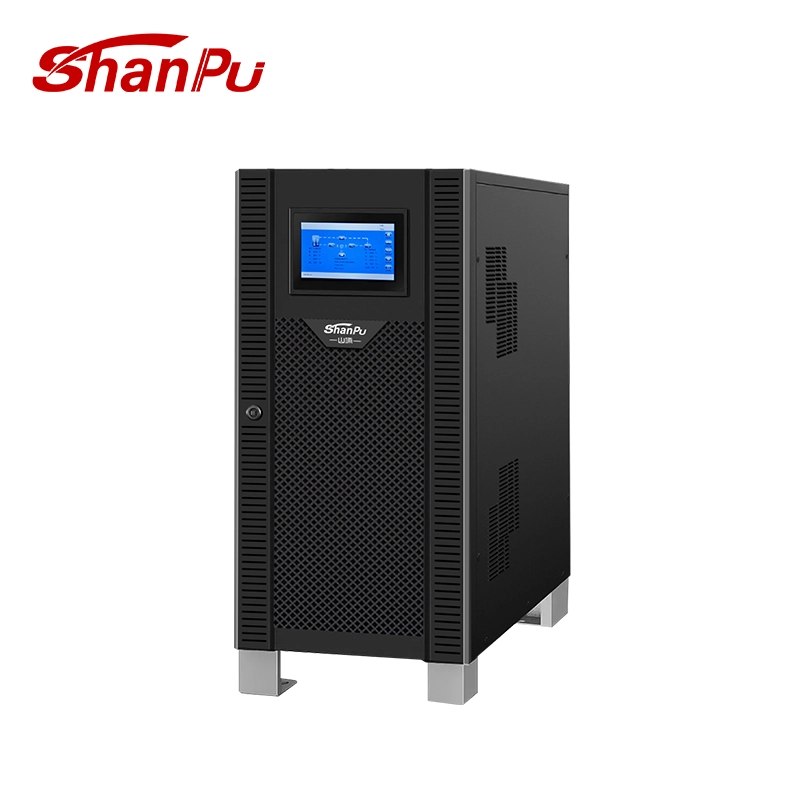
ShanPu 3C33 10-800kVA three-phase industrial UPS is a low-frequency UPS with transformer-based online double conversion for factories and plants. Equipment, automation and control loads stay online through grid disturbance and outage with 0ms transfer.
- Rated 10-800kVA with three-phase input and output at 380/400/415Vac, the 3C33 scales from single machines to full production lines. A low-frequency isolation transformer blocks surge, harmonic and common-mode disturbance before reaching PLCs and drives; microprocessor control keeps output within ±1% across a 304-456Vac input window. External VRLA banks size backup time to the process.
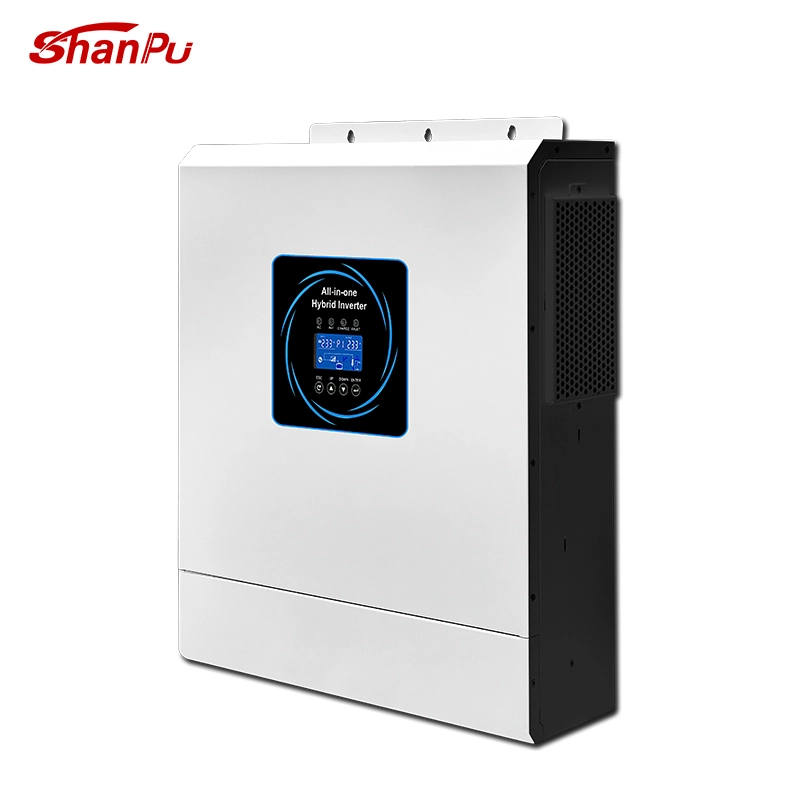
ShanPu SP-12KW/48V is an all-in-one hybrid inverter that integrates dual MPPT solar charging, 48V battery management and dual-output DC-to-AC inversion in one unit for large residential, commercial and light industrial storage systems. Two independent MPPT channels harvest power from separate PV arrays and convert it into regulated 48V DC, charging the battery bank at up to 160A while feeding the inverter stage; the controller automatically selects between solar, utility and battery based on the configured priority mode (SUB / SBU / SUF).The dual AC output design separates critical loads from non-critical circuits, while the 160A MPPT charging current and up to 160A AC charging rapidly recharge 48V battery banks after prolonged cloudy periods or heavy discharge. The 48V architecture reduces line losses and supports higher power delivery, and the Pro model adds parallel expansion plus optional WiFi monitoring for larger projects.
ShanPu SP-3.6KW/24V is an all-in-one hybrid inverter that combines a 100A MPPT solar charger, 24V battery management and DC-to-AC inversion in one compact unit. Built for residential and small commercial systems, it delivers reliable power management with efficient energy conversion and straightforward installation.The inverter supports up to 5000W PV array power with a 60-500Vdc MPPT tracking range and up to 96% peak conversion efficiency from PV to AC. It can also run directly from solar PV or utility without a battery connected, and RS485 communication with automatic lithium battery activation makes LiFePO4 integration straightforward.
ShanPu SP-6.2KW/48V is an all-in-one hybrid inverter that integrates MPPT solar charging, 48V battery management and DC-to-AC inversion into a single unit for medium residential and small commercial storage systems. Solar PV power is processed by the MPPT charger and converted into regulated 48V DC, which simultaneously charges the battery bank and supplies the inverter stage, while the built-in controller automatically selects the energy source - solar, utility or battery - based on the configured operating mode.
© 2026 ShanPu. All Rights Reserved.
YouTube
SHANPU UPS
Shanpu