


Custom hybrid inverter Manufacturers and Suppliers

Choosing a custom hybrid inverter manufacturer requires more than comparing rated power and unit price. B2B buyers should assess the supplier’s power-electronics engineering, battery and grid integration capabilities, prototype process, production controls, certification plan, intellectual property protections, and ability to deliver reliably into the destination market. Since no target region was specified for this guide, it makes no assumptions about local tariffs, incentives, shipping advantages, or regulatory rules; buyers should verify those factors for the actual manufacturing and sales jurisdictions before placing an order.
Why Customization Matters in a Changing Energy Market
Match the inverter to the complete energy system
A hybrid inverter coordinates energy from sources such as photovoltaic arrays, batteries, and the utility grid, and may also manage backup loads or a generator. The right design depends on how these elements interact at the site, not simply on the inverter’s headline power rating. A commercial buyer should document the expected PV input range, battery chemistry and voltage, continuous and peak output, backup duration, grid connection, ambient conditions, and intended operating modes before requesting quotations. These requirements let manufacturers assess whether a proven platform can be adapted or whether the project needs a more substantial redesign.
System boundaries are particularly important. Specify whether the product must include an integrated battery charger, transfer switch, energy-management interface, monitoring gateway, or protection devices, and identify which elements will be supplied by other vendors. Clarify whether the inverter will operate in grid-following, backup, or other modes and how it should behave during abnormal grid conditions. A written interface-control document reduces the risk of late changes caused by incompatible battery communications, connector choices, control signals, or site wiring assumptions.
Decide what should be standard and what should be bespoke
Customization can cover enclosure dimensions, connector placement, firmware behavior, communications protocols, user interface language, power ratings, environmental protection, or integration with a buyer’s battery and monitoring platform. Each change has a different engineering and validation cost. Buyers should distinguish mandatory requirements from preferences and explain the commercial reason for each requested change. For example, a mounting constraint may be non-negotiable, while a cosmetic enclosure color may be a lower priority if it extends tooling lead time.
Not every customization requires a new product architecture. A supplier may be able to configure a qualified platform with an alternative communications interface or enclosure, while changes to power topology, switching components, cooling, or protection strategy can require deeper design work and retesting. Ask the manufacturer to identify the baseline design, proposed modifications, affected components, validation activities, and any resulting certification implications. That change-impact assessment helps buyers understand the real cost and schedule before committing.
| Decision area | Standard product | Custom solution | Buyer verification |
|---|---|---|---|
| Electrical ratings | Fixed voltage and power options | Ratings tailored to a defined system or market need | Confirm operating limits, overload behavior, and test evidence |
| Battery and communications | Predefined supported batteries and protocols | Specified battery interface, protocol, or control behavior | Obtain interface documentation and test the exact pairing |
| Mechanical design | Catalog enclosure and mounting arrangement | Modified dimensions, connectors, or environmental features | Review drawings, thermal assumptions, and tooling ownership |
| Schedule and cost | Typically clearer from an existing product offer | Includes engineering, prototypes, validation, and possible tooling | Request milestone estimates, non-recurring charges, and volume pricing |
How to Qualify a Custom Manufacturing Partner
Assess engineering depth and prototype discipline
Ask who will own electrical design, embedded software, thermal analysis, mechanical engineering, and verification. A credible supplier should be able to explain its design review process, document assumptions, track requirements, and identify technical risks rather than simply promise that a specification is achievable. Request relevant examples of comparable power-electronics work, while respecting confidentiality, and determine whether the engineering team is in-house or dependent on subcontractors. For a custom hybrid inverter, clarify who controls firmware releases and how defects, security updates, and field changes will be managed over the product life.
Agree on a staged development plan. A typical sequence may include requirements review, architecture approval, engineering samples, design validation, pre-production units, and production release. At each stage, define the sample quantity, acceptance criteria, test reports, decision owner, and process for approving deviations. Early prototypes can expose mechanical fit, battery communication, or control issues, but they should not be treated as proof of production readiness. Buyers should reserve time for design corrections and repeat testing where results do not meet the agreed criteria.
Request a validation matrix tied to the intended use and destination market. Depending on the design and application, evaluation may cover electrical safety, temperature rise, abnormal operation, electromagnetic compatibility, environmental exposure, grid-interconnection behavior, and software functions. Standards and certification routes vary by jurisdiction and product configuration; a manufacturer’s statement that a related model is certified does not establish that a modified version is covered. Use recognized technical frameworks, including relevant IEC standards and publications, and confirm the precise applicable editions and scope with the testing laboratory or certification body.
Verify quality systems, traceability, and change control
Supplier qualification should cover both the factory’s management system and the product-specific controls used on the production line. Ask for the scope and validity of any quality certification, audit findings relevant to the project, incoming inspection methods, work instructions, calibration controls, and corrective-action process. An ISO certificate can be useful evidence of a quality-management framework, but it is not a substitute for product testing or proof that a particular hybrid inverter meets its requirements. Review the certificate scope and the actual manufacturing site; guidance is available from the International Organization for Standardization’s ISO 9001 overview.
For production units, agree on serial-number traceability and the records retained for critical components, firmware versions, test results, and final inspection. Establish how the supplier will control substitutions when a component becomes unavailable. Changes to power semiconductors, capacitors, magnetics, cooling parts, or safety-related components can affect performance and qualification, so the contract should require advance written approval and risk-based revalidation. Define defect classification, containment timing, root-cause reporting, corrective-action deadlines, warranty responsibilities, and access to relevant production records.
Protect design ownership and commercial continuity
Before exchanging detailed drawings, source code, or system information, use confidentiality terms that identify permitted use, authorized recipients, and handling obligations. The manufacturing agreement should distinguish buyer-owned background intellectual property, supplier-owned platform technology, and project-specific developments. It should also state who owns tooling, test fixtures, custom firmware, and design files; whether the buyer receives a license or source-code escrow; and what happens to those assets if the supplier relationship ends. Contract language should be reviewed by qualified counsel in the relevant jurisdictions rather than copied from a generic template.
Commercial terms deserve the same precision as technical requirements. Set out forecast assumptions, minimum order quantities, capacity reservation, price-adjustment rules, payment milestones, lead-time commitments, acceptance procedures, warranty coverage, and remedies for nonconforming units. A low prototype quote may exclude certification, tooling, engineering changes, or repeat tests. Ask for a transparent breakdown of non-recurring engineering charges and unit-price tiers, and confirm whether quoted delivery dates start at order placement, drawing approval, material availability, or another milestone.
Plan Compliance, Logistics, and Production Readiness
Build certification and market access into the project plan
Determine early which jurisdictions will receive the product and identify the applicable electrical-safety, electromagnetic-compatibility, grid-interconnection, labeling, and energy requirements. Requirements can vary by country, utility, installation type, and product configuration. For example, the relevant grid rules may depend on whether the inverter exports power, operates in backup mode, or is installed as part of a larger system. Buyers should seek confirmation from the local authority, utility, qualified test laboratory, or certification body; a manufacturer’s general claim of “international compliance” is not enough.
Ask who will be the certification applicant and who will pay for testing, factory inspections, renewals, and changes to the product. Confirm whether the certificate covers the exact model, firmware, accessories, manufacturing site, and intended market. In North America, for example, the scope of a product evaluation may involve standards such as UL 1741, but applicability and current requirements should be confirmed with the relevant certification organization. See UL’s renewable-energy testing and certification services for an overview of its service area, not as a substitute for a project-specific compliance determination.
Compare total landed cost, not just factory price
Regional sourcing benefits are project-specific and cannot be assumed without knowing the manufacturing location, destination, shipment terms, and trade rules. Compare the total landed cost across qualified suppliers, including unit price, tooling, testing, packaging, freight, insurance, customs brokerage, duties, taxes, warehousing, and after-sales support. Ask for the proposed Incoterm and named place, shipment mode, packing dimensions, gross weight, and responsibility for export and import documentation. Verify tariff classification and origin rules with a customs broker or the relevant government authority; neither a supplier’s estimate nor a general online calculator guarantees the final duty treatment.
Power-conversion equipment may include components subject to transport, packaging, or handling requirements, and any shipment containing batteries may have additional rules. Confirm the actual shipment contents and obtain applicable transport documents from the responsible logistics provider. Before placing a production order, assess packaging protection, moisture control, palletization, labeling, spare-parts availability, and the route for warranty returns. For a new supplier, a pilot shipment can test documentation, customs clearance, transit time, and receiving inspection before the buyer scales to regular orders.
Use a practical sourcing checklist before the purchase order
A disciplined decision process turns supplier discussions into verifiable commitments. Ask each shortlisted manufacturer to respond to the same requirements package and identify exceptions explicitly. Compare not only engineering price and lead time, but also the quality of the proposed validation plan, clarity of technical answers, evidence of production controls, and willingness to document change management. A supplier that flags a genuine design risk early may be a safer partner than one that accepts every requirement without qualification.
Before releasing a purchase order, confirm the approved specification and revision, bill-of-material responsibility, firmware version, prototype acceptance record, production test limits, packaging specification, inspection rights, delivery milestones, warranty process, and change-approval procedure. Record open issues with an owner and due date. If a modification affects safety, performance, certification, or interoperability, require written technical approval before production continues. This process is particularly important when a bespoke hybrid inverter must operate with third-party batteries, site controllers, or monitoring platforms.
Finally, plan for the product lifecycle rather than only the first shipment. Establish how the manufacturer will notify the buyer about component obsolescence, production-site changes, firmware vulnerabilities, and end-of-life decisions. Agree on access to replacement units or compatible revisions, availability of critical spares, and technical support response times. For projects deployed across multiple markets, maintain a configuration record showing the approved hardware, firmware, labeling, and certification status for each variant. Clear configuration control helps prevent an apparently minor update from creating a field compatibility or compliance problem.
Contact us with your project requirements to discuss a custom hybrid inverter sourcing plan tailored to your target market and production needs.
Frequently Asked Questions
What information should I provide when requesting a custom hybrid inverter quotation?
Document the PV input range, battery chemistry and voltage, continuous and peak output, backup duration, grid connection, ambient conditions, operating modes, and any required interfaces, enclosure features, or protection devices. Separate mandatory requirements from preferences and explain which system components the manufacturer is expected to supply.
How can I determine whether a supplier can engineer a bespoke inverter rather than modify a catalog product?
Ask who owns electrical design, embedded software, thermal analysis, mechanical engineering, and verification. Request relevant examples, a requirements and design review process, a staged prototype plan, a validation matrix, and clear identification of the baseline platform and modifications. Confirm how firmware releases, defects, and field changes will be controlled.
Does certification of a similar inverter prove that my custom model is compliant?
No. A related model’s certification does not automatically cover a modified version. Confirm the applicable requirements for each destination and whether the certification scope covers the exact model, firmware, accessories, manufacturing site, and intended use. Seek confirmation from the relevant authority, utility, laboratory, or certification body.
What quality and production records should I require from a custom inverter manufacturer?
Agree on serial-number traceability and retained records for critical components, firmware versions, production test results, and final inspection. Review the factory’s quality-system scope, incoming inspection, calibration controls, corrective-action process, and change control. Require advance approval for substitutions that may affect performance, safety, or qualification.
How should I compare regional suppliers and estimate the delivered cost?
Compare total landed cost, including unit price, engineering, tooling, testing, packaging, freight, insurance, brokerage, duties, taxes, warehousing, and support. Verify the shipment terms, named place, tariff classification, and origin rules with a customs broker or the relevant government authority. Regional advantages depend on the actual origin, destination, route, and trade rules.
What should a custom inverter manufacturing contract say about intellectual property?
Distinguish buyer-owned background IP, supplier platform technology, and project-specific developments. Define ownership or licenses for tooling, test fixtures, firmware, and design files, as well as permitted use, confidentiality, and access if the relationship ends. Have qualified counsel review the agreement in the relevant jurisdictions.
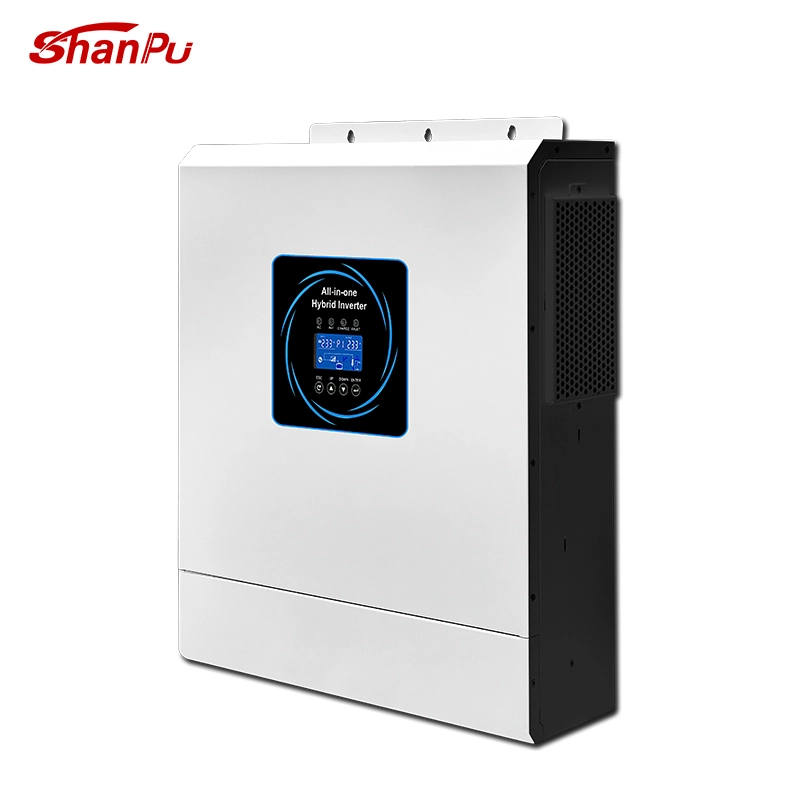
ShanPu SP-12KW/48V is an all-in-one hybrid inverter that integrates dual MPPT solar charging, 48V battery management and dual-output DC-to-AC inversion in one unit for large residential, commercial and light industrial storage systems. Two independent MPPT channels harvest power from separate PV arrays and convert it into regulated 48V DC, charging the battery bank at up to 160A while feeding the inverter stage; the controller automatically selects between solar, utility and battery based on the configured priority mode (SUB / SBU / SUF).The dual AC output design separates critical loads from non-critical circuits, while the 160A MPPT charging current and up to 160A AC charging rapidly recharge 48V battery banks after prolonged cloudy periods or heavy discharge. The 48V architecture reduces line losses and supports higher power delivery, and the Pro model adds parallel expansion plus optional WiFi monitoring for larger projects.
ShanPu SP-6.2KW/48V is an all-in-one hybrid inverter that integrates MPPT solar charging, 48V battery management and DC-to-AC inversion into a single unit for medium residential and small commercial storage systems. Solar PV power is processed by the MPPT charger and converted into regulated 48V DC, which simultaneously charges the battery bank and supplies the inverter stage, while the built-in controller automatically selects the energy source - solar, utility or battery - based on the configured operating mode.
-
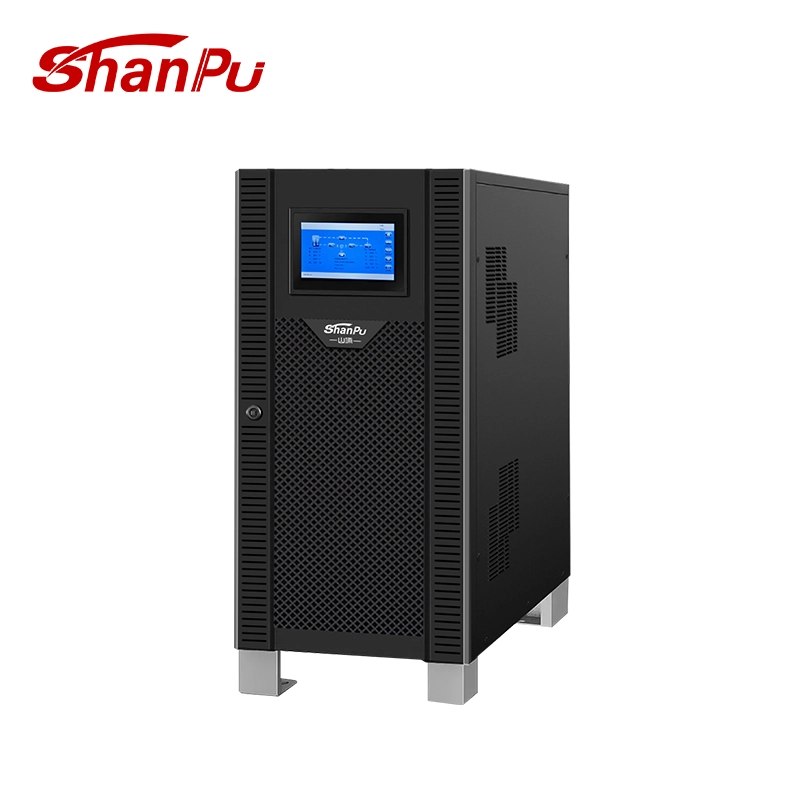
ShanPu 3C33 10-800kVA three-phase industrial UPS is a low-frequency UPS with transformer-based online double conversion for factories and plants. Equipment, automation and control loads stay online through grid disturbance and outage with 0ms transfer.
- Rated 10-800kVA with three-phase input and output at 380/400/415Vac, the 3C33 scales from single machines to full production lines. A low-frequency isolation transformer blocks surge, harmonic and common-mode disturbance before reaching PLCs and drives; microprocessor control keeps output within ±1% across a 304-456Vac input window. External VRLA banks size backup time to the process.
ShanPu SP-3.6KW/24V is an all-in-one hybrid inverter that combines a 100A MPPT solar charger, 24V battery management and DC-to-AC inversion in one compact unit. Built for residential and small commercial systems, it delivers reliable power management with efficient energy conversion and straightforward installation.The inverter supports up to 5000W PV array power with a 60-500Vdc MPPT tracking range and up to 96% peak conversion efficiency from PV to AC. It can also run directly from solar PV or utility without a battery connected, and RS485 communication with automatic lithium battery activation makes LiFePO4 integration straightforward.
© 2026 ShanPu. All Rights Reserved.
YouTube
SHANPU UPS
Shanpu