


How to Choose a Grid-Tied Inverter for a Small Home, Large Home, or Commercial Site

Choosing a grid-tied inverter for a small home, a large residence, or a commercial site requires more than matching a device’s rated output to the solar array. Buyers should assess the building’s electrical service, expected daytime loads, roof or site layout, utility interconnection rules, equipment protection, monitoring requirements, and future expansion plans. A suitable solar inverter converts photovoltaic direct current into grid-compatible alternating current, while its configuration and controls determine how effectively the system operates across changing conditions. Small homes often prioritize simplicity and value; larger homes may need multiple array inputs or phase compatibility; commercial projects typically require coordinated design, monitoring, and utility approval. This guide provides a practical framework for comparing options and planning procurement.
How Solar Inverter Requirements Change with Site Size
Small homes: prioritize a straightforward, well-matched system
For a smaller home, begin with the PV system design and the building’s electrical service rather than selecting equipment by price alone. Review the planned array capacity, available roof area, orientation, shading, service voltage, and whether the property uses single-phase or three-phase power. A compact string inverter may suit a roof with consistent sunlight and a limited number of array orientations. Where roof sections face different directions or encounter different shading, a design using multiple maximum power point tracking inputs or module-level electronics may help manage performance differences. These alternatives add components and cost, so the installer should explain the expected benefit for the actual roof.
Household consumption also matters. A system designed around annual energy use may not align with the home’s daytime demand or the utility’s export compensation rules. Owners should check the bill structure, export limits, and any time-of-use rates before deciding whether to maximize solar generation, limit export, or plan for later battery integration. The NREL PVWatts Calculator can provide an estimate of PV energy production based on location and system assumptions; it is a planning aid, not a substitute for a site-specific engineering design or utility review.
Large homes: check service capacity, roof zones, and expansion plans
A larger residence may have higher peak loads, more roof planes, detached structures, or longer cable runs. Those factors can make a single inverter less suitable even when its nominal capacity appears adequate. Ask the designer to show how each array section connects to the inverter, how different orientations are handled, and whether the home’s main panel and service can accept the proposed AC output. If the property has electric vehicle charging, a heat pump, a pool, or planned additions, consider how those loads affect the electrical design and whether the solar installation is intended to serve them directly, offset grid purchases, or work alongside storage.
Do not assume that a larger residence automatically needs a commercial-scale inverter. The correct configuration depends on the PV array, service characteristics, local interconnection rules, and the system’s operating goals. Multiple smaller units may offer design flexibility or limit the impact of one equipment fault, while a larger central unit can reduce the number of devices and simplify some layouts. Compare installed cost, service access, warranties, monitoring, and replacement implications—not just equipment price.
Commercial sites: design for operational continuity and visibility
Commercial facilities often have substantial daytime consumption, multiple electrical distribution boards, complex roofs, or ground-mounted arrays. Their procurement process should include load profiles, demand charges where applicable, export constraints, planned building changes, and the operational impact of equipment downtime. A facility manager may need site-level and inverter-level monitoring, alarm routing, reporting access, and a clear process for troubleshooting. For multi-inverter projects, confirm that the proposed monitoring platform can present useful system data in a form that operations and maintenance teams can act on.
Commercial owners should also clarify who is responsible for utility submissions, commissioning records, protective settings, and ongoing maintenance. A technically suitable device may still be a poor project fit if its communication interfaces, support arrangements, or documentation do not meet the site’s operating requirements. Confirm that equipment selection is coordinated with the electrical engineer, installer, utility, and authority having jurisdiction before purchase commitments are finalized.
Size and Configure the Grid-Connected Solar System
Match PV capacity to AC output using documented design assumptions
PV modules produce direct current, while a building and utility network generally use alternating current. The inverter’s AC rating therefore needs to be considered alongside the array’s DC nameplate capacity, expected solar conditions, clipping assumptions, and utility export limits. A DC-to-AC sizing ratio is a design choice, not a universal target: a higher ratio can increase the likelihood that available PV power exceeds the inverter’s conversion limit during peak conditions, while potentially improving equipment utilization during lower-output periods. Ask the installer to provide the design rationale, expected annual production, and any modeled clipping rather than approving a ratio in isolation.
Production estimates should reflect the site’s location, shading, module orientation, temperature, and system losses. A proposal should state its assumptions and distinguish modeled energy from guaranteed output. Buyers comparing bids should use the same assumptions wherever possible, so differences in estimated yield are not mistaken for differences in equipment quality. For larger projects, request the model files or a sufficiently detailed performance report to support technical review.
Check voltage range, MPPT inputs, and array configuration
Confirm that the PV string design stays within the inverter’s permitted DC voltage and current limits under the site’s expected temperature range. Cold-weather module voltage can rise, while operating current and power vary with irradiance and temperature. The designer should verify maximum open-circuit voltage, input current, short-circuit current, string length, and the operating voltage range of each maximum power point tracker. These checks help prevent incompatible designs and ensure the device can track the array’s operating point through changing conditions.
The number of MPPT channels is relevant when array sections differ in orientation, tilt, shading, or module characteristics. Separate trackers can allow different strings to operate independently, subject to the manufacturer’s wiring requirements. Microinverters and DC optimizers use a different architecture by placing power electronics at or near the module level. They may be considered where module-level monitoring or varied roof conditions matter, but the project team should compare added components, service access, replacement procedures, and warranty terms against the expected system benefit.
Match phase, grid voltage, and storage expectations
Confirm the inverter’s AC phase and voltage match the building’s service and the utility’s interconnection requirements. A single-phase unit may be suitable for some residential applications; larger homes and commercial buildings may require three-phase equipment, depending on the service and project design. This is a site-specific electrical decision. The installer and utility should confirm permitted connection points, export limits, protection settings, and any required grid-support functions before procurement.
A standard grid-following unit generally shuts down during a utility outage to avoid energizing lines that utility crews may assume are de-energized. Owners who need backup power should not infer that a solar-only, grid-connected system will continue operating during an outage. Backup operation normally requires compatible storage and additional equipment designed for islanded operation, along with approved controls and installation. If future storage is a possibility, verify compatibility among the PV inverter, battery, energy management controls, and backup loads before selecting an architecture.
Compare Protection, Compliance, and Lifecycle Value
Verify interconnection and safety documentation
Utility interconnection is a project requirement, not an administrative detail to address after equipment is ordered. Requirements vary by jurisdiction and utility and can cover technical settings, protection, export control, application documents, and commissioning. IEEE 1547 addresses interconnection and interoperability of distributed energy resources with electric power systems; the relevant edition and local adoption should be confirmed with the project engineer and utility. See the IEEE 1547 standard information and obtain the locally applicable requirements before final design.
Buyers should request current product datasheets, installation instructions, conformity documentation, warranty terms, and evidence that the proposed model is accepted for the intended market. IEC 62109 covers safety of power converters for use in photovoltaic power systems; the applicable product certification and local code requirements still need to be verified for the specific model and country. The IEC 62109 publication information provides a standards reference, but it does not establish that any particular device is certified. Avoid treating a general company certificate or an unrelated model document as proof of compliance for the unit being purchased.
Evaluate monitoring, protection, and service access
Review protection and control features against the project’s applicable requirements. Depending on the design and market, relevant topics may include anti-islanding behavior, ground-fault protection, surge protection, arc-fault functions, rapid shutdown, grid-support settings, and export limitation. The presence, configuration, and legal applicability of each function must be confirmed in the product documentation and by the local design team; feature lists alone do not establish suitability.
Monitoring should answer practical operating questions: Is the system producing as expected? Are faults visible promptly? Can the owner or service provider access useful device-level data? What communications are supported, and who retains access if the installer relationship changes? For commercial sites, evaluate alarm escalation, reporting, and integration with existing facility systems. Also inspect the equipment’s environmental ratings and installation conditions, including temperature range, enclosure protection, ventilation or clearance requirements, and exposure to dust, moisture, or corrosive conditions.
Compare whole-life cost rather than the purchase price alone
A procurement comparison should include equipment cost, installation labor, balance-of-system requirements, monitoring subscriptions if any, warranty coverage, service response, and the cost of potential replacement. Check what the warranty covers, when the term begins, whether labor and shipping are included, how claims are handled, and whether a replacement unit must be the same model. For commercial owners, assess the financial effect of downtime and the availability of local technical support. A lower initial quote can become more expensive if it omits required accessories, communications equipment, or commissioning work.
The table below summarizes practical architecture differences. These are functional comparisons, not a ranking: the appropriate option depends on the site layout, applicable codes, approved equipment, service conditions, and the project’s maintenance plan.
| Architecture | Typical design fit | Procurement points to verify |
|---|---|---|
| String inverter | One or more PV strings connect to a central conversion unit; often considered for relatively consistent array conditions. | MPPT count, string voltage and current limits, shade behavior, mounting location, service access, and approved model documentation. |
| Microinverter | Power conversion is placed at or near individual PV modules, allowing module-level system design and monitoring options. | Module compatibility, communications, replacement access, warranty coverage, and added component and labor costs. |
| String inverter with DC optimizers | Module-level electronics work with a compatible central inverter in designs that require module-level functions. | Approved component pairing, system shutdown requirements, monitoring, wiring design, and responsibility for servicing both device types. |
| Hybrid or storage-ready configuration | Designed to coordinate PV with compatible battery equipment or storage controls, subject to system architecture. | Battery compatibility, backup capability, power limits, control modes, grid approvals, and the equipment required for islanded operation. |
Build a Supplier and Product Evaluation That Fits the Project
Use a consistent bid-review checklist
Before comparing quotations, issue the same project information to each bidder: site address, utility service details, recent bills or load data, roof or site drawings, shading information, desired export behavior, and any backup or expansion objectives. Request a single-line diagram, equipment schedule, string or module-level design, estimated energy production, and a list of assumptions. This makes it easier to distinguish genuine technical differences from inconsistent proposal inputs.
Ask suppliers to identify the exact model numbers and explain how each proposed unit meets the project’s electrical, environmental, communications, and interconnection requirements. Check the product’s availability in the destination market, documentation language, spare-part approach, and warranty claim process. For a distributor or project developer, these details matter across multiple installations: consistent documentation and clear product boundaries reduce specification errors and help after-sales teams resolve issues efficiently.
Consider product range and system compatibility
Our product portfolio, as provided for this article, includes solar inverters, energy storage inverters, solar energy storage systems, energy storage systems, inverter energy storage products, uninterruptible power supplies, outdoor uninterruptible power supplies, outdoor power supplies, and lead acid batteries. That range can support buyers evaluating related power-conversion and storage categories through one product discussion. It does not mean that every listed product is compatible with every PV inverter, battery, or site; buyers should request model-specific specifications, wiring guidance, certifications, and system compatibility confirmation before selecting equipment.
For a project combining solar generation with backup or storage, define the required operating modes first: grid-connected self-consumption, export limitation, backup for selected loads, or another approved configuration. Then verify the needed inverter topology, battery type and voltage, control functions, transfer equipment, and protection coordination. A supplier’s ability to discuss those interfaces clearly is useful, but project-specific engineering and local approval remain essential. A documented compatibility matrix can help brand owners, distributors, installers, and facility teams reduce avoidable integration risk.
Confirm implementation support and commercial terms
Before issuing a purchase order, align the supply scope with the installation scope. Confirm quantities, model revisions, accessories, delivery schedule, packaging, labeling, technical documents, warranty start conditions, and the process for handling damaged or nonconforming goods. For multi-site projects, clarify whether product substitutions require prior approval and how configuration differences will be tracked. These controls help procurement teams protect schedule and ensure that the delivered equipment matches the approved design.
Request technical responses in writing, particularly for grid settings, backup claims, storage pairing, environmental suitability, and certification status. A dependable supplier should distinguish confirmed specifications from optional features or market-dependent approvals. That discipline supports a stronger purchasing decision and helps the installer, owner, and service provider share a consistent understanding of system performance and responsibility.
Contact our team to discuss product specifications and identify a suitable solar inverter or related power and storage solution for your project.
Frequently Asked Questions
How do I size an inverter for a residential solar system?
Start with the PV array’s DC capacity, then assess the inverter’s AC rating, expected solar conditions, clipping assumptions, utility export limits, and the building’s electrical service. Ask the designer to document the DC-to-AC sizing rationale and modeled production rather than choosing from a universal ratio.
Will a grid-connected solar inverter work during a power outage?
A standard grid-following unit generally shuts down during a utility outage to avoid energizing utility lines. Backup operation normally requires compatible storage and additional equipment designed for islanded operation, plus approved controls and installation.
Should a home use a string inverter or microinverters?
A string inverter may suit an array with consistent sunlight and a relatively simple layout. Microinverters may be considered for module-level conversion or monitoring needs, including varied roof conditions. Compare shading, roof layout, compatibility, service access, warranty, and installed cost for the actual site.
What certifications and documents should buyers request?
Request the exact model’s datasheet, installation instructions, warranty terms, conformity documentation, and evidence of acceptance for the intended market. Confirm applicable local codes and utility requirements. Standards references such as IEEE 1547 and IEC 62109 do not, by themselves, prove that a specific product model is certified or approved.
Does a larger home always need a commercial inverter?
No. The appropriate equipment depends on the PV array, roof layout, electrical service, phase and voltage, utility rules, and operating goals. Compare one larger unit with multiple smaller units based on design flexibility, monitoring, service access, installed cost, and replacement implications.
What should commercial buyers check before ordering?
Review load profiles, electrical distribution, export limits, monitoring and alarm needs, utility submissions, commissioning responsibilities, documentation, warranty and service terms, and the potential cost of downtime. Confirm the exact equipment model and grid settings with the project engineer and utility before purchase.
-
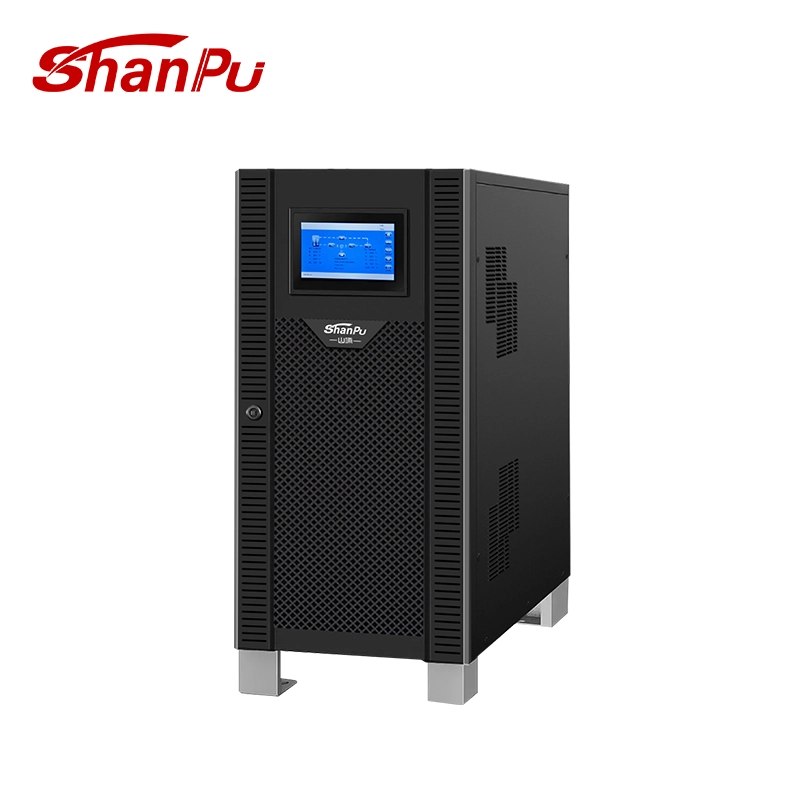
ShanPu 3C33 10-800kVA three-phase industrial UPS is a low-frequency UPS with transformer-based online double conversion for factories and plants. Equipment, automation and control loads stay online through grid disturbance and outage with 0ms transfer.
- Rated 10-800kVA with three-phase input and output at 380/400/415Vac, the 3C33 scales from single machines to full production lines. A low-frequency isolation transformer blocks surge, harmonic and common-mode disturbance before reaching PLCs and drives; microprocessor control keeps output within ±1% across a 304-456Vac input window. External VRLA banks size backup time to the process.
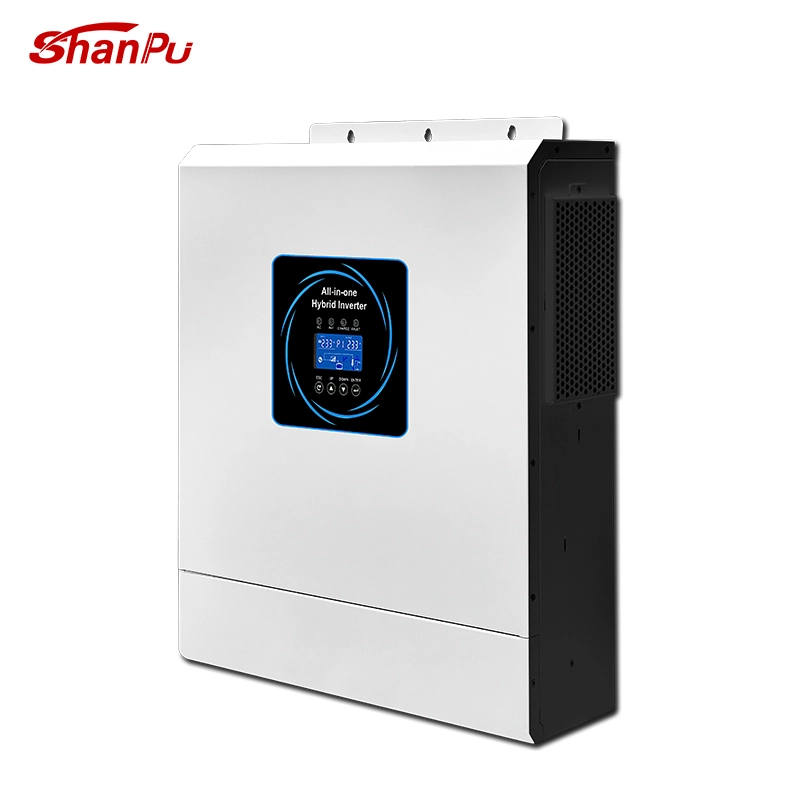
ShanPu SP-12KW/48V is an all-in-one hybrid inverter that integrates dual MPPT solar charging, 48V battery management and dual-output DC-to-AC inversion in one unit for large residential, commercial and light industrial storage systems. Two independent MPPT channels harvest power from separate PV arrays and convert it into regulated 48V DC, charging the battery bank at up to 160A while feeding the inverter stage; the controller automatically selects between solar, utility and battery based on the configured priority mode (SUB / SBU / SUF).The dual AC output design separates critical loads from non-critical circuits, while the 160A MPPT charging current and up to 160A AC charging rapidly recharge 48V battery banks after prolonged cloudy periods or heavy discharge. The 48V architecture reduces line losses and supports higher power delivery, and the Pro model adds parallel expansion plus optional WiFi monitoring for larger projects.
ShanPu SP-3.6KW/24V is an all-in-one hybrid inverter that combines a 100A MPPT solar charger, 24V battery management and DC-to-AC inversion in one compact unit. Built for residential and small commercial systems, it delivers reliable power management with efficient energy conversion and straightforward installation.The inverter supports up to 5000W PV array power with a 60-500Vdc MPPT tracking range and up to 96% peak conversion efficiency from PV to AC. It can also run directly from solar PV or utility without a battery connected, and RS485 communication with automatic lithium battery activation makes LiFePO4 integration straightforward.
ShanPu SP-6.2KW/48V is an all-in-one hybrid inverter that integrates MPPT solar charging, 48V battery management and DC-to-AC inversion into a single unit for medium residential and small commercial storage systems. Solar PV power is processed by the MPPT charger and converted into regulated 48V DC, which simultaneously charges the battery bank and supplies the inverter stage, while the built-in controller automatically selects the energy source - solar, utility or battery - based on the configured operating mode.
© 2026 ShanPu. All Rights Reserved.
YouTube
SHANPU UPS
Shanpu